
When a senior falls, the fear is real. A broken hip, a head injury, a trip to the ER - it’s enough to make families and even doctors hesitate. And when that senior has atrial fibrillation, the question becomes even harder: should they stay on blood thinners? The answer isn’t what most people think.
Why Seniors Need Blood Thinners
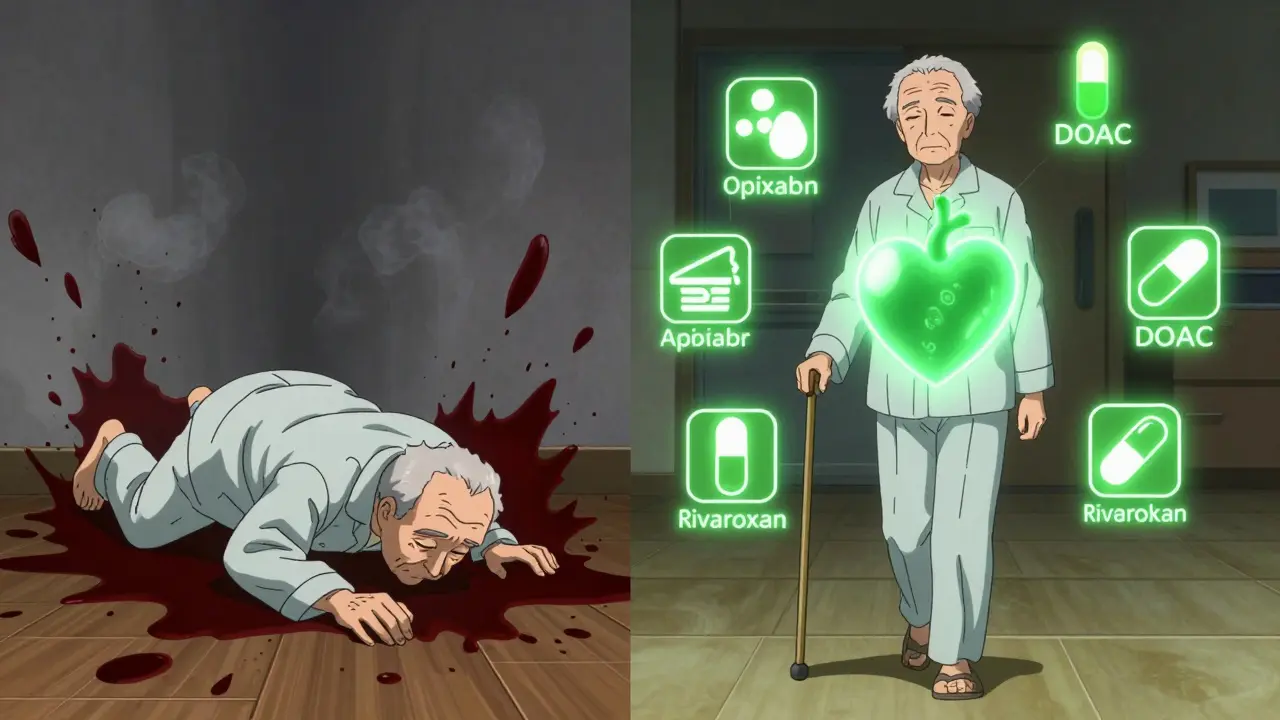
About 9 out of every 100 people over 65 have atrial fibrillation - an irregular heartbeat that lets blood pool and clot. Those clots can travel to the brain and cause a stroke. And the older you get, the higher the risk. At 80, your chance of having a stroke from AFib jumps to nearly 1 in 4 each year. That’s not a small number. It’s a life-altering, often deadly risk. Warfarin has been the go-to blood thinner since the 1950s. It cuts stroke risk by about two-thirds. But now, newer drugs - DOACs like apixaban, rivaroxaban, dabigatran, and edoxaban - are even better for most seniors. They work just as well, or better, without the constant blood tests warfarin needs. Apixaban, for example, reduces stroke risk by 21% compared to warfarin and causes 31% fewer major bleeds in people over 75.The Fall Fear Is Real - But Misplaced
People worry: if Grandpa falls, won’t the blood thinner make it worse? Yes, it can. A fall on anticoagulants increases the chance of a serious bleed - especially inside the skull. Studies show elderly patients on these drugs have a 50% higher risk of intracranial hemorrhage than those not on them. And 90% of fall-related deaths in this age group involve either someone over 85 or someone on a blood thinner. But here’s the critical point: the risk of stroke is far greater than the risk of a fatal fall. The BAFTA trial followed 81-year-olds on average. Those on anticoagulants had 52% fewer strokes or clots than those on aspirin. And there was no big jump in dangerous bleeding. Another study of patients aged 85 to 90 showed they got the most benefit - not less - from being on anticoagulants. Their stroke risk was highest, so the reward for preventing it was too.Doctors Are Still Overestimating the Danger
Despite the evidence, many doctors still avoid prescribing blood thinners to seniors who’ve fallen. A 2021 survey found 68% of primary care doctors would withhold anticoagulants from an 85-year-old who’d had two falls in the past year - even if their stroke risk score was high. That’s not just outdated. It’s dangerous. The American College of Cardiology, the American Heart Association, and the Heart Rhythm Society all say clearly: age alone is not a reason to skip anticoagulation. The 2020 European guidelines go even further: all AF patients with a CHA2DS2-VASc score of 2 or higher should get anticoagulants - no exceptions for age. The American Geriatrics Society’s Beers Criteria, which lists potentially inappropriate medications for seniors, still lists fall risk as a concern - but it doesn’t say to stop the drug. It says to manage it.
It’s Not About Stopping - It’s About Managing
You don’t have to choose between falling and having a stroke. You can reduce both risks at the same time. Start with a fall risk assessment. Tools like the Morse Fall Scale help identify what’s making someone likely to fall. Is it weak legs? Poor vision? Medications like sleeping pills or painkillers? Many seniors are on drugs that make them dizzy - those can and should be reviewed and replaced. Then, make the home safer. Install grab bars, remove loose rugs, add nightlights, use non-slip mats in the shower. Simple things. A 2018 meta-analysis found the Otago Exercise Program - a gentle strength and balance routine done at home - cuts falls by 35% in seniors. For medication monitoring: DOACs need kidney checks every 6 to 12 months. If creatinine clearance drops below 50 mL/min, the dose may need to be lowered. Warfarin needs regular INR tests - but only about once a month. That’s a small price to pay for preventing a stroke.What About Reversing the Blood Thinner?
A big worry is: what if there’s a bad fall and bleeding starts? Can we stop it? Yes - and that’s changed everything. Since 2015, we’ve had reversal agents. Idarucizumab stops dabigatran in minutes. Andexanet alfa reverses rivaroxaban, apixaban, and edoxaban. These aren’t perfect, but they’re life-saving tools now. Hospitals keep them on hand. Emergency teams know how to use them. This wasn’t possible 10 years ago.What’s the Real Trade-Off?
Let’s look at numbers from real data. For every 100 octogenarians on anticoagulants for a year:- 24 strokes are prevented
- 3 major bleeds occur
What About Aspirin?
Some families think aspirin is a safer alternative. It’s not. Aspirin reduces stroke risk by only 22%. Anticoagulants reduce it by 64%. That’s a huge difference. The AFI meta-analysis showed warfarin cut stroke risk by 64% compared to placebo. Aspirin? Barely half that. And it doesn’t protect against clots the same way. For AFib, aspirin is not a substitute.What Do Families Really Need to Know?
If your parent or grandparent has atrial fibrillation and a stroke risk score of 2 or higher - which most seniors over 75 do - they need anticoagulation. Period. A history of falls doesn’t change that. In fact, the more falls they’ve had, the more they need protection. Don’t let fear make the decision. Let data make it. Talk to the doctor about:- Their CHA2DS2-VASc score (stroke risk)
- Their HAS-BLED score (bleeding risk - includes falls, but doesn’t cancel treatment)
- Which DOAC is best for their kidney function
- How to reduce fall risk at home
- What to do if they have a serious fall
Bottom Line
Falls are scary. But strokes are worse. For seniors with atrial fibrillation, anticoagulants save more lives than they endanger. The tools to manage the risks - from safer homes to reversal drugs - are here. The guidelines are clear. The data doesn’t lie. The real question isn’t whether to use anticoagulants. It’s how to use them wisely. And that starts with not letting fear stop the right treatment.Should seniors stop taking blood thinners after a fall?
No. A fall alone is not a reason to stop anticoagulants. The risk of stroke in seniors with atrial fibrillation is far higher than the risk of a fatal bleed from a fall. Stopping the medication increases stroke risk by up to 5 times. Instead, focus on reducing future fall risk through home safety, exercise, and reviewing other medications that cause dizziness.
Are DOACs safer than warfarin for elderly patients?
Yes, for most seniors. DOACs like apixaban and rivaroxaban cause fewer major bleeds - especially brain bleeds - than warfarin. Apixaban reduces major bleeding by 31% in patients over 75. They also don’t require regular blood tests, making them easier to manage. However, they depend on kidney function, so renal checks every 6-12 months are needed.
Can you reverse a DOAC if there’s bleeding?
Yes. Specific reversal agents exist. Idarucizumab reverses dabigatran within minutes. Andexanet alfa reverses rivaroxaban, apixaban, and edoxaban. These are available in most hospitals and emergency departments. While not perfect, they’ve dramatically improved safety for elderly patients on DOACs.
Is aspirin a good alternative for seniors who can’t take blood thinners?
No. Aspirin only reduces stroke risk by about 22% in atrial fibrillation. Anticoagulants reduce it by 60-70%. For AFib, aspirin is not an effective substitute. Guidelines from the American Heart Association do not recommend aspirin for stroke prevention in AFib patients - regardless of age.
What’s the best way to prevent falls in seniors on anticoagulants?
Start with a fall risk assessment. Remove tripping hazards like rugs and cords. Install grab bars and nightlights. Review all medications - especially sleep aids, painkillers, and antihypertensives that cause dizziness. Add the Otago Exercise Program, which reduces falls by 35%. Regular vision checks and proper footwear also help. These steps reduce fall risk without stopping the life-saving medication.

Comments
Evan Smith January 9, 2026 AT 04:55
So let me get this straight - we’re scared of Grandpa falling, but not scared enough of him having a stroke that leaves him a vegetable? That’s like refusing to drive because you might get in an accident, then walking into traffic.
Joanna Brancewicz January 9, 2026 AT 13:45
DOACs changed everything. No more weekly INRs. No more warfarin-food fights. Apixaban’s the gold standard for seniors - lower bleed risk, no monitoring. If your doc still pushes warfarin, ask why.
Lois Li January 9, 2026 AT 21:19
I’ve seen this too many times - families panic after a fall, doctor says ‘let’s stop the blood thinner,’ and then six months later, the stroke happens. It’s heartbreaking. The data doesn’t lie. Falls aren’t a contraindication - they’re a call to action.
christy lianto January 10, 2026 AT 15:50
Stop letting fear run medicine. We fix broken hips. We fix vision. We fix dizziness from meds. But we won’t fix the real threat? That’s not care - that’s surrender. Anticoagulants aren’t the enemy. Complacency is.
Kristina Felixita January 11, 2026 AT 22:34
My grandma’s on apixaban - fell last winter, hit her head, went to ER… no bleed. Doc said ‘you’re lucky you didn’t stop it.’ Home’s got grab bars, no rugs, nightlights. She does Otago twice a week. Still walks the dog. Still lives. That’s the win.
Luke Crump January 12, 2026 AT 03:13
What if the real problem isn’t anticoagulants… but our society’s obsession with ‘safe’ aging? We treat seniors like fragile porcelain. But maybe the real danger isn’t falling - it’s being told you’re too old to take risks. Is living longer really the goal… or just living smaller?
Aubrey Mallory January 12, 2026 AT 22:34
Don’t let ‘fall risk’ be a cop-out. The guidelines are crystal clear. CHA2DS2-VASc ≥2 = anticoagulate. Period. If your doctor won’t follow that, get a new one. This isn’t debate - it’s standard of care.
Dave Old-Wolf January 13, 2026 AT 10:04
I’m 78, AFib since 65. On rivaroxaban. Fell twice. Once cracked my pelvis. No brain bleed. No hospital stay beyond the fracture. Doc said ‘you’re lucky you didn’t quit the pill.’ I didn’t. And I’m still here. Talking. Walking. Cooking.
Prakash Sharma January 14, 2026 AT 00:11
Why do Americans always think their medicine is best? In India, we don’t overthink this. If patient has AFib and stroke risk - give anticoagulant. Simple. No fear. No over-testing. We don’t have 10 different reversal drugs - but we don’t need them. We just give the right drug and manage the risk. No drama.
Manish Kumar January 15, 2026 AT 07:18
There’s a deeper philosophical question here: when we medicalize aging, do we lose the dignity of natural decline? Is it ethical to prolong life at the cost of constant vigilance - blood tests, fall-proofed homes, reversal agents on standby? Are we saving lives… or just extending suffering under the guise of safety?
Donny Airlangga January 16, 2026 AT 03:49
My mom’s on dabigatran. We had the reversal agent talk with her cardiologist. She asked, ‘what if I fall and you’re not here?’ He said, ‘call 911, tell them you’re on dabigatran, they’ll give idarucizumab.’ She felt better after that. Knowledge = power.
Molly Silvernale January 16, 2026 AT 11:31
Anticoagulants aren’t just pills - they’re acts of rebellion against the myth that aging means surrender. We don’t stop driving because we might get a ticket. We don’t stop hiking because we might twist an ankle. So why stop living because we might bleed? The body’s a storm - we don’t tame it by hiding from it. We navigate it.
Ken Porter January 17, 2026 AT 22:37
Aspirin is for heart attacks, not AFib. Stop pretending it’s a ‘safer’ option. It’s not. It’s placebo with side effects. If your doc recommends it for stroke prevention in AFib, they’re either lazy or outdated. Both are dangerous.
swati Thounaojam January 18, 2026 AT 16:15
My aunt stopped her blood thinner after a fall… 3 months later, stroke. Paralyzed. Now in rehab. We should’ve listened to the cardiologist. Don’t make our mistake.
Annette Robinson January 19, 2026 AT 10:58
Thank you for this clear, evidence-based breakdown. As a nurse who’s seen too many seniors suffer avoidable strokes, I wish every family read this. It’s not about fear. It’s about informed courage. And yes - DOACs are the future. Warfarin is the past.