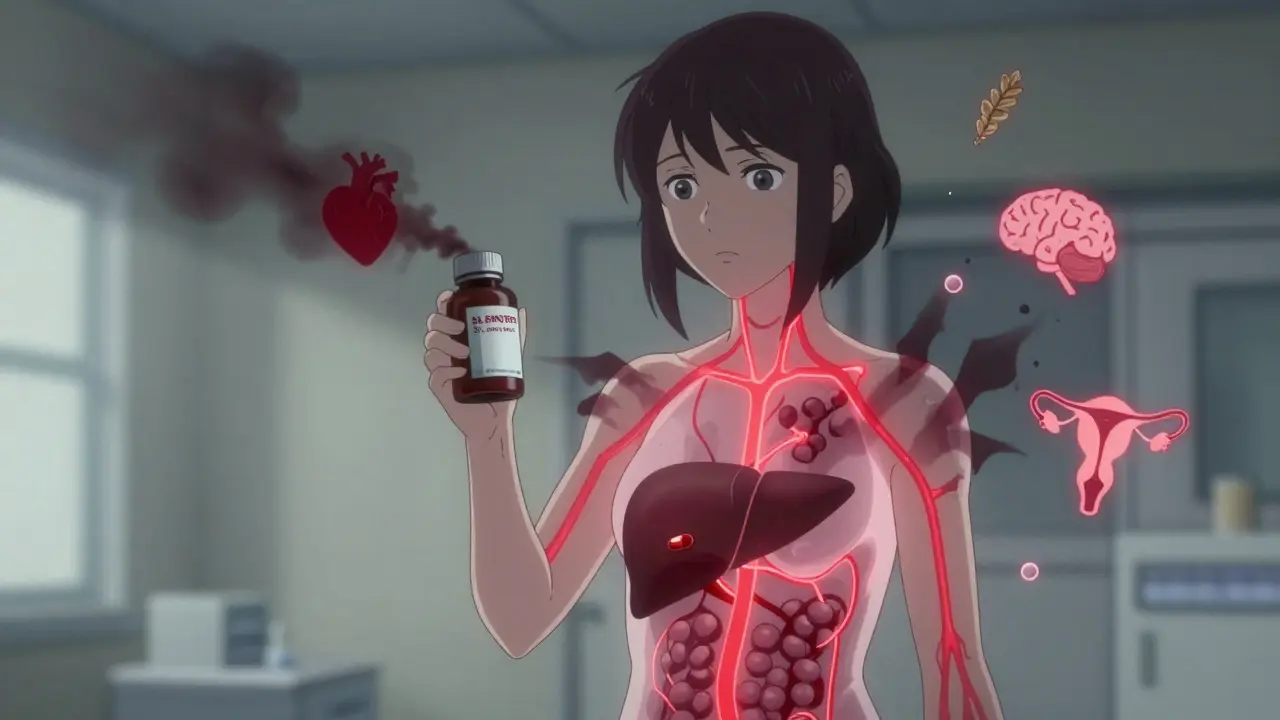
Many people believe that if something is "natural," it must be safe. You see it on labels: "all-natural," "herbal," "plant-based." It sounds gentle, harmless, even virtuous. But when you start mixing these products with prescription drugs, the story changes fast. Natural products aren’t inherently safer than pharmaceuticals. In fact, some of the most dangerous drug interactions happen when people think they’re being careful by choosing "natural."
Why "Natural" Doesn’t Mean Safe
The idea that nature equals safety is deeply rooted, but it’s not science. It’s marketing. The Dietary Supplement Health and Education Act (DSHEA) of 1994 made it legal for herbal supplements and vitamins to be sold without proving they’re safe or effective before hitting store shelves. Meanwhile, pharmaceuticals go through years of clinical trials, strict manufacturing rules, and constant monitoring after they’re approved. One is treated like medicine. The other is treated like cereal.Take St. John’s wort. It’s sold as a natural remedy for mild depression. Sounds harmless, right? But it can make birth control pills fail, reduce the effectiveness of blood thinners like warfarin, and even trigger mania in people with bipolar disorder. The FDA doesn’t require warning labels for these risks because, under DSHEA, manufacturers don’t have to prove the product is safe before selling it. The burden falls on you-the consumer-to figure out what it might do when mixed with your other meds.
And it’s not just herbs. Even common supplements like garlic, ginkgo, or high-dose vitamin E can thin your blood. If you’re on aspirin or Eliquis, that’s a recipe for internal bleeding. A 2022 study in JAMA Internal Medicine found that 70% of patients never told their doctor they were taking supplements. That’s not just oversight-it’s a silent health risk.
The Hidden Danger: Interactions You Can’t See
Pharmaceuticals come with detailed interaction warnings. You get a leaflet. Your pharmacist asks questions. The system is designed to catch problems. Natural products? Not so much.Kava, once popular for anxiety, was linked to severe liver damage. The FDA issued warnings, but it was already on shelves for years. Ephedra was banned in 2004 after causing heart attacks and strokes. Yet, similar products still pop up under new names-"energy boosters," "weight loss formulas," "adaptogens."
Here’s the kicker: many natural products are processed, concentrated, or extracted. What you’re holding isn’t a leaf from a plant. It’s a capsule filled with isolated chemicals-sometimes at doses far higher than you’d get from eating the plant. Turmeric, for example, contains curcumin. In food, it’s fine. In supplement form, at 500mg per pill, it can interfere with chemotherapy drugs and blood thinners. But you won’t find that warning on the bottle.
And then there’s the contamination issue. A 2021 analysis by Consumer Reports found that 1 in 5 herbal supplements contained undeclared pharmaceuticals-like sildenafil (Viagra) or steroids. Others had heavy metals like lead or arsenic. No one tested them. No one told you.
Pharmaceuticals Aren’t Perfect Either
Let’s be clear: pharmaceuticals aren’t harmless. They cause serious side effects. Around 100,000 people die each year in the U.S. from adverse drug reactions, according to the Mayo Clinic. Opioids cause addiction. Antibiotics wreck gut bacteria. Statins can damage muscles. These are real, documented dangers.But here’s what’s different: when a drug causes harm, it’s tracked. The FDA’s MedWatch system collects reports. Manufacturers are required to investigate. Recalls happen. Labels get updated. The system has flaws, but it exists. For natural products? There’s no such system. In 2022, only 1,200 adverse events were reported for dietary supplements. That’s not because they’re safe-it’s because most people don’t know they should report them. And even if they did, there’s no guarantee anyone would act on it.
Who’s Really in Control?
The supplement industry is worth $50 billion in the U.S. alone. That’s a lot of money riding on the idea that "natural" means safe. The FDA has limited resources. In 2023, they issued just 35 warning letters to supplement makers despite thousands of products being sold with false claims or dangerous ingredients.Meanwhile, pharmaceutical companies spend $100 billion a year on research and development. They have to prove their drugs work and are safe. They pay for long-term studies. They monitor patients for years after approval. It’s expensive. It’s slow. But it’s designed to protect you.
For supplements? The cost to bring a product to market is a fraction. No clinical trials needed. No safety data required. Just a label that says "dietary supplement" and a shipment to Amazon.
What You Can Do to Stay Safe
You don’t have to give up natural products. But you need to treat them like medicine-not magic.- Always tell your doctor what you’re taking. Even if it’s "just a vitamin." Write it down. Bring the bottle. Don’t assume they’ll ask.
- Check for third-party verification. Look for the USP Verified Mark, NSF Certified, or ConsumerLab Tested labels. These mean the product was independently tested for what’s inside-and what’s not.
- Don’t assume "more is better." High doses of vitamin D, iron, or calcium can be toxic. Just because it’s natural doesn’t mean your body can handle it.
- Research before you buy. Go to the NIH Office of Dietary Supplements website. It’s free, science-based, and doesn’t sell anything.
- Be skeptical of claims. "Cures arthritis," "boosts immunity," "all-natural energy"-these are red flags. Real science doesn’t promise miracles.
The truth is simple: safety isn’t about whether something is natural or synthetic. It’s about dosage, purity, and interactions. A deadly poison can come from a plant-foxglove, for example, is the source of digoxin, a heart medication. Eat the plant, and you’ll die. Take the purified drug under supervision, and it can save your life.
The Bottom Line
Natural products aren’t safer than pharmaceuticals. They’re different. And in many ways, they’re riskier because we’re not taught how to use them safely. The system doesn’t protect you. You have to protect yourself.Don’t let the word "natural" fool you. If you’re taking pills for a condition, every supplement you add is a potential wildcard. Talk to your doctor. Do your homework. And remember: just because something comes from the earth doesn’t mean it won’t hurt you.

Comments
phara don February 2, 2026 AT 10:22
I took St. John’s wort for a month last year because I was stressed. Didn’t tell my doctor. Turns out my birth control was basically useless. 😳 Never again. Learned the hard way.
Chinmoy Kumar February 3, 2026 AT 07:12
natural doesnt mean safe but pharma is also not perfect.. i think we need balance. maybe better education not fear? 🤔
Vatsal Srivastava February 3, 2026 AT 16:21
The FDA regulates cereal more than supplements. That’s not a bug it’s the entire business model
Brittany Marioni February 3, 2026 AT 17:22
I can’t believe how many people just pop pills like candy-'Oh, it’s just turmeric!'-and then wonder why they’re bleeding out after surgery. Please, please, PLEASE tell your doctor. Your life isn’t a TikTok trend.
Ellie Norris February 4, 2026 AT 08:57
I work in a pharmacy and people bring in supplements with no labels all the time. One guy had a bottle that just said 'Energy Boost'-turned out to have hidden sildenafil. We had to call poison control. This isn’t theoretical.
Marc Durocher February 4, 2026 AT 11:17
So let me get this straight… you’d rather trust a $12 bottle from Amazon than a $500 drug that’s been studied since the 80s? Cool. Cool cool cool.
larry keenan February 5, 2026 AT 00:10
The pharmacokinetic profiles of botanical extracts are often highly variable due to agronomic factors, extraction methodologies, and lack of standardization. This introduces significant clinical uncertainty when co-administered with narrow therapeutic index pharmaceuticals.
Nick Flake February 6, 2026 AT 13:32
Nature gave us foxglove. Humans turned it into digoxin. That’s not magic. That’s evolution. 🌿💊 We’re not choosing between nature and science-we’re choosing between ignorance and wisdom. Choose wisely.
Akhona Myeki February 6, 2026 AT 21:58
In South Africa we know this. Traditional medicine is powerful. But we don’t call it 'natural' to sell it. We respect it. You Americans treat herbs like discount candy. That’s why you die.
Ansley Mayson February 8, 2026 AT 16:37
So what? People die from everything. Stop being dramatic.