
When you pick up a prescription, you might not realize you’re holding a piece of a massive cost-saving system that’s quietly keeping healthcare affordable for millions. Generic drugs aren’t cheaper because they’re weaker-they’re cheaper because the system works the way it was designed to. And the numbers don’t lie.
90% of prescriptions, 12% of the cost
In 2024, Americans filled 3.9 billion generic prescriptions. That’s 90% of all prescriptions written. But those same generics made up only 12% of total prescription drug spending. Meanwhile, brand-name drugs accounted for just 10% of prescriptions but consumed 88% of the money spent. That’s not a glitch-it’s the result of decades of regulatory design and market competition.
The average out-of-pocket cost for a generic prescription in 2024 was $6.95. For a brand-name drug? $28.69. That’s more than four times as much. For people without insurance, the gap is even wider. Brand-name drugs jumped to $130.18 per prescription since 2019, while generic prices actually dropped by 6% over the same period. If you’re paying cash, choosing a generic could save you over $120 per fill.
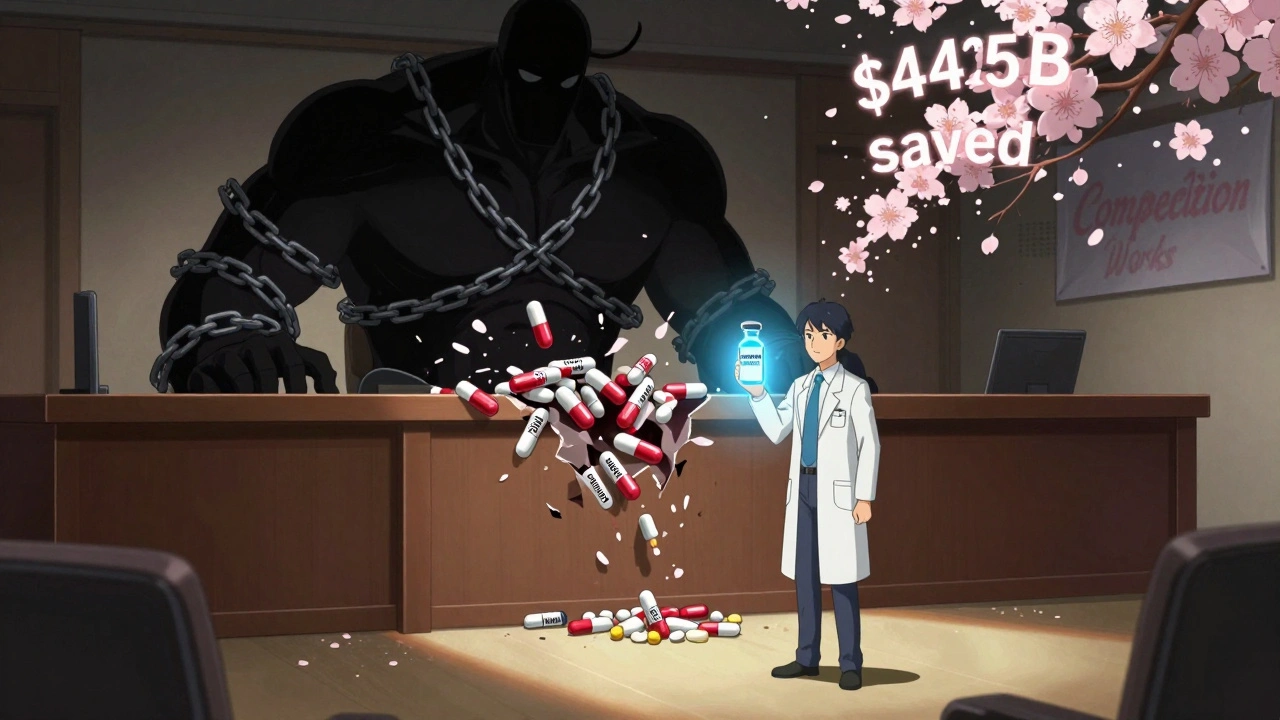
$445 billion saved in one year
In 2023 alone, generic and biosimilar drugs saved the U.S. healthcare system $445 billion. That’s not a projection. That’s what happened. Over the past decade, those same drugs have saved consumers a staggering $3.4 trillion. To put that in perspective, that’s more than the entire annual GDP of Australia.
The FDA estimates that just the generics approved in 2022 will save $18.9 billion over their lifetimes. And that’s just one year. The real power of generics comes from volume. With over 16,000 generic drugs available today, every time a patient chooses a generic instead of a brand, the system saves money-fast.
The patent game: how brands delay savings
Here’s the catch: not every brand-name drug loses its monopoly fairly. Some companies use a tactic called “patent thickets”-filing dozens, sometimes over 75 patents, on a single drug to block generics from entering the market. One heart medication, originally set to lose patent protection in 2016, kept generics out until 2034 thanks to this strategy.
These delays aren’t just legal loopholes-they cost real money. Blue Cross Blue Shield found that “pay-for-delay” settlements, where brand companies pay generic makers to stay off the market, cost consumers nearly $3 billion a year. And the broader impact? Over $12 billion in extra drug spending annually.
These tactics are why, despite generics being safe, effective, and approved by the FDA, some patients still pay way more than they should. The system is designed for competition, but some players are gaming it.
Biosimilars: the next wave of savings
Biosimilars are the generic version of biologic drugs-complex medications made from living cells, like those used for cancer, rheumatoid arthritis, and Crohn’s disease. They’re harder to copy than regular pills, but they’re still cheaper.
Since they entered the market, biosimilars have saved the U.S. healthcare system $56.2 billion. In 2024 alone, they saved $20.2 billion. One example: Stelara, a drug for psoriasis and Crohn’s, had nine biosimilars launch by mid-2025. Prices dropped as much as 90% compared to the original. Suddenly, patients who couldn’t afford treatment could get it.
Oncology biosimilars have cut the growth rate of cancer drug spending nearly in half since 2019. In 2020, they saved $18 billion on cancer medicines alone. Yet, even with these wins, biosimilars still make up less than 30% of the market in most cases. That means there’s room for even bigger savings-if more doctors and patients feel confident using them.
Why don’t more people use generics?
Most people who try generics don’t notice a difference. The FDA requires them to be bioequivalent-meaning they deliver the same amount of active ingredient into the bloodstream at the same rate as the brand. Over 99% of generic prescriptions work exactly as expected.
But there are exceptions. For drugs with a narrow therapeutic index-like warfarin, lithium, or levothyroxine-tiny differences in absorption can matter. That’s why some doctors still default to brand names for these. But even here, the FDA says generics are safe. In fact, adverse event reports for these drugs from generics are less than 1% of total prescriptions.
Still, some patients report feeling “different” on a generic. That’s often psychological. Or it’s because they switched between different generic manufacturers. Generic drugs can come from different companies, and while they’re all approved, the fillers and coatings might vary slightly. For most people, it doesn’t matter. For a small number, it might. That’s why pharmacists are trained to monitor and advise.
What’s changing in 2025?
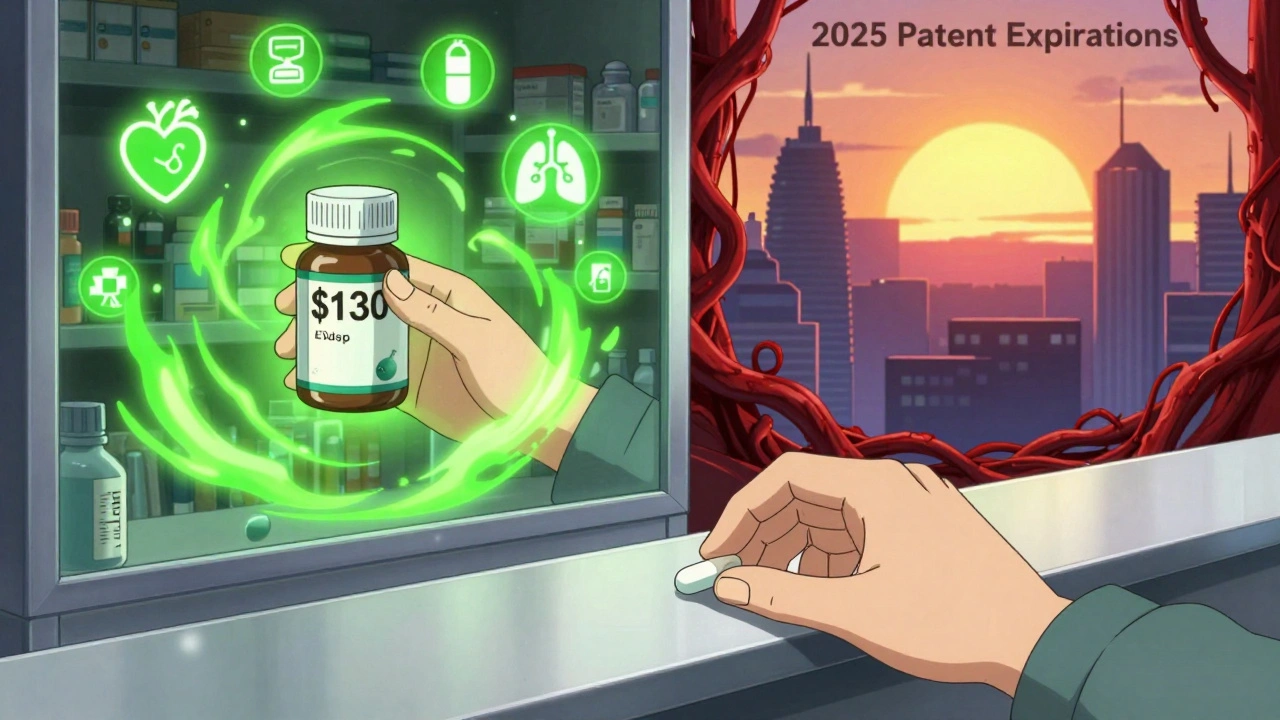
2025 is a big year for generic savings. Three major brand-name drugs are losing patent protection: Entresto (heart failure), Tradjenta (diabetes), and Opsumit (pulmonary hypertension). Together, they brought in $8.6 billion in sales in 2023. Once generics enter, prices will drop-fast.
The FDA approved 745 new generics in 2024, up 12% from the year before. That’s the highest rate in a decade. And it’s not slowing down. The agency is actively working to reduce red tape for biosimilars, and Congress is pushing bills like the Affordable Prescriptions for Patients Act to shut down patent thickets.
Meanwhile, pharmacy benefit managers (PBMs)-the middlemen who negotiate drug prices-are now requiring generic substitution in 87% of commercial health plans. That means if a generic exists, you’ll get it unless your doctor writes “dispense as written.”
What you can do right now
If you’re on a brand-name drug, ask your pharmacist: “Is there a generic?” It’s not always obvious. Some drugs have generics you didn’t know about. Others have multiple generic brands, and one might be cheaper than another.
Check your copay. If your generic costs more than $10, you might be able to get it cheaper with a coupon or through a mail-order pharmacy. Many generics cost less than $5 at Walmart, Target, or CVS with their discount programs.
And if your doctor resists switching you to a generic, ask why. Is it because of effectiveness? Or because they’re not up to date? Most doctors support generics-they just don’t always know which ones are available.
Generic drugs aren’t a compromise. They’re the smart choice. They’re not cheaper because they’re worse. They’re cheaper because competition works.
Are generic drugs really as effective as brand-name drugs?
Yes. The FDA requires generic drugs to have the same active ingredient, strength, dosage form, and route of administration as the brand-name version. They must also be bioequivalent-meaning they work the same way in your body. Over 99% of generic prescriptions perform just like their brand-name counterparts. The only exceptions are a tiny fraction of drugs with very narrow therapeutic windows, like warfarin or levothyroxine, where small differences in absorption can matter. Even then, generics are approved as safe and effective.
Why do some generics cost more than others?
Generic drugs are made by different manufacturers, and prices vary based on competition. If only one company makes a generic, it might be more expensive. But once a second or third manufacturer enters the market, prices drop fast. For example, a generic version of a common blood pressure pill might cost $15 at one pharmacy and $4 at another. Always ask your pharmacist for the lowest-priced generic option. Many pharmacies have $4 or $5 generic lists for common medications.
Can I switch from a brand-name drug to a generic safely?
In most cases, yes. The FDA approves generics only after proving they’re equivalent to the brand. If your doctor hasn’t specifically said “dispense as written,” your pharmacist can legally substitute a generic. If you’ve been stable on a brand-name drug and your doctor is open to it, switching is usually safe and can save you hundreds per year. If you notice any changes after switching-like new side effects or reduced effectiveness-talk to your doctor. But for most people, the only difference is the price.
Do biosimilars work the same as biologic drugs?
Yes. Biosimilars are not exact copies-biologics are too complex-but they’re proven to have no clinically meaningful differences in safety, purity, or potency. The FDA requires extensive testing before approving them. For example, biosimilars for drugs like Humira and Enbrel have been used by millions of patients worldwide with the same results as the original. In 2024, biosimilars saved $20.2 billion in the U.S., proving they deliver real value without sacrificing outcomes.
Why aren’t all pharmacies pushing generics?
Most pharmacies do push generics-they make more money on them, and insurance plans encourage it. But some patients are misinformed and ask for brand names. Others are prescribed by doctors who aren’t aware of the latest generics. Also, some states still have outdated laws that make it harder for pharmacists to substitute generics without extra paperwork. In 2024, only 42 out of 50 states had modern pharmacy laws allowing automatic substitution. That’s changing, but slowly.
How do I find out if a generic is available for my drug?
Ask your pharmacist. They have access to databases that show which generics are approved and available. You can also check the FDA’s Orange Book online, which lists all approved generics and their therapeutic equivalence ratings. Or use apps like GoodRx or SingleCare-they’ll show you the lowest cash price for both brand and generic versions in your area. If a generic exists and your insurance doesn’t cover it, you can often pay cash and still save 70-90%.

Comments
Ignacio Pacheco December 4, 2025 AT 05:31
So let me get this straight-we’re saving $445 billion a year because people are just choosing pills that cost $7 instead of $28? And the real villain isn’t Big Pharma, it’s the patent thickets? I mean, sure, the numbers add up, but why does it feel like we’re cheering for a system that’s only working because it’s not being fully exploited yet?
bobby chandra December 5, 2025 AT 11:01
GENERIC DRUGS ARE THE UNDERRATED HEROES OF AMERICAN HEALTHCARE. No cap. You think you’re paying for science? Nah. You’re paying for marketing, lawyers, and a fancy logo. The active ingredient? Identical. The pill? Same shape, same color, same effect. The only thing different? The price tag. And if you’re still buying brand-name because you think it’s ‘better’-you’re being played. Save your money. Buy the generic. Your wallet will thank you. Your body won’t notice the difference.
Jim Schultz December 5, 2025 AT 12:30
Let’s be real: the FDA’s ‘bioequivalence’ standard is a joke. It allows for a 20% variation in absorption-20%! That’s not ‘equivalent,’ that’s a gamble. And don’t get me started on the fillers-magnesium stearate, lactose, dyes-all these inert ingredients that ‘don’t matter’ until you’re the one with the rash, the nausea, or the sudden panic attacks after switching. I’ve seen it. It’s not placebo. It’s pharmacology. And the system ignores it because it’s cheaper to pretend everyone’s fine.
Francine Phillips December 6, 2025 AT 08:47
I switched to generic levothyroxine last year and my TSH went nuts. Took me three months to stabilize. Not saying generics are bad. Just saying-don’t assume it’s always seamless.
Makenzie Keely December 6, 2025 AT 21:05
Francine, I hear you. And you’re not alone. That’s why pharmacists are trained to track these things-if you switch generics and feel off, go back to the one that worked. But don’t throw the whole system out. The FDA’s data shows adverse events from generics are under 1% of prescriptions. That’s better than your coffee giving you heart palpitations. The real win? You’re saving $120 a month. That’s a weekend trip. A new pair of shoes. A month of Netflix. That’s power.
Gene Linetsky December 7, 2025 AT 22:59
Wait. So the government says generics are safe, but the same people who approved the Vioxx recall are now telling us to trust them? And you really believe the FDA isn’t influenced by lobbying? Look at the patent thickets-75 patents on one drug? That’s not innovation. That’s corporate warfare. And biosimilars? They’re not even fully tested for long-term effects. They’re rushing these things out because Big Pharma’s profits are collapsing. Don’t be fooled. This isn’t about savings-it’s about control. And someone’s still making money off your desperation.
Kidar Saleh December 9, 2025 AT 18:26
Let me tell you something from across the pond: in the UK, generics are the default. No questions asked. Doctors don’t even mention brand names unless absolutely necessary. And guess what? The NHS saves billions. People don’t panic. They don’t feel like they’re getting second-rate medicine. They feel like they’re getting smart medicine. The problem isn’t the drugs-it’s the narrative. We’ve been sold the myth that expensive equals better. It’s not true. And it’s costing lives.
Katherine Gianelli December 11, 2025 AT 11:24
My grandma’s on a generic blood thinner. She’s 82. She’s hiking in the Rockies every summer. She didn’t know the difference between brand and generic until I explained it. Now she tells everyone at the senior center: ‘If it’s got the same little pill inside, why pay extra?’ She saved $900 last year. That’s her monthly Social Security check. That’s not a discount. That’s dignity.
Archie singh December 12, 2025 AT 01:34
90% of prescriptions? 12% of cost? Cute. That’s because generics are the disposable diapers of pharmaceuticals-cheap, mass-produced, and designed to be replaced before you notice the leak. The real story isn’t savings-it’s the erosion of quality. You want to know why drug development is slowing? Because no one’s making money on innovation anymore. They’re just repackaging old molecules and calling it a win. This isn’t progress. It’s capitulation.
Vincent Soldja December 12, 2025 AT 22:53
Generic drugs work. End of story.
Chloe Madison December 14, 2025 AT 03:03
Chloe, you’re right. But let’s not pretend this is just about money. It’s about access. A single mom working two jobs doesn’t have time to argue with her doctor about why she can’t afford her insulin. A veteran on fixed income shouldn’t have to choose between his heart med and his groceries. Generics aren’t just cost-effective-they’re life-saving. And if we want a system that actually works for people, not just shareholders, we need to stop treating medicine like a luxury and start treating it like a right. The data proves it’s possible. Now we just need the will.
sagar bhute December 14, 2025 AT 18:52
You people are naive. The FDA? Controlled by the same lobbyists who own the brand-name companies. The ‘generic’ you’re taking? Made in China or India. Same factory. Same pill. But the label says ‘Made in USA’ because that’s what sells. The real savings? The companies that own the patents still own the generic versions. It’s all the same players. You’re not fighting the system. You’re just paying the same guy a different price. And you think you’re winning?