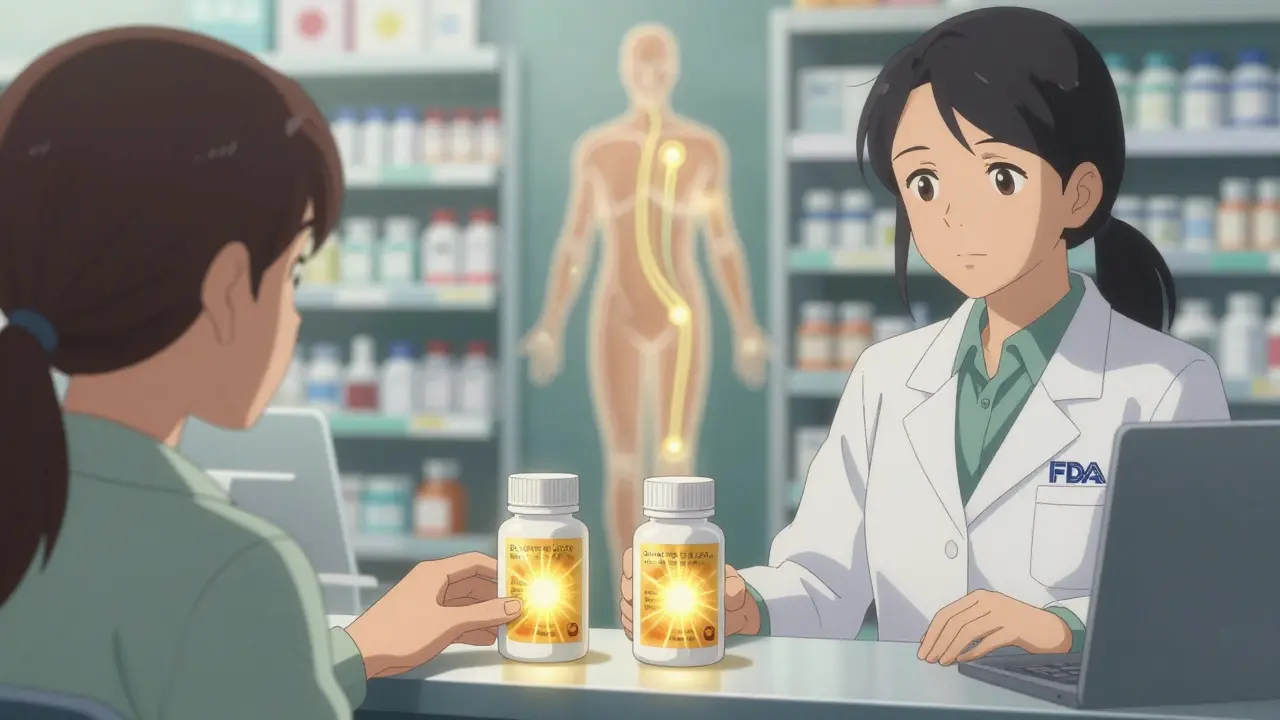
When you pick up a prescription, you might see two options: the brand-name pill you’ve heard of, or a cheaper version with a different name and color. That cheaper version is a generic drug. And if you’ve ever wondered whether it’s just as good, the answer is simple: yes, it is.
What Exactly Is a Generic Drug?
A generic drug is a medicine that contains the exact same active ingredient as the original brand-name version. It works the same way in your body, treats the same condition, and has the same risks and benefits. The only real differences are in the name, shape, color, or flavor - things that don’t affect how the drug works.Generic drugs become available after the patent on the brand-name version expires. Patents usually last 20 years, but because of testing and approval time, most brand-name drugs get about 10-12 years of market exclusivity. Once that time is up, other companies can make and sell the same drug under its chemical name - that’s the generic.
The U.S. Food and Drug Administration (FDA) requires that every generic drug meet the same strict standards as the brand-name drug. That means identical active ingredients, same strength, same dosage form (tablet, capsule, injection, etc.), and same way of being taken (by mouth, through the skin, etc.). The FDA calls this pharmaceutical equivalence.
How Do We Know Generic Drugs Work the Same Way?
The biggest concern people have is whether a generic drug will work as well. The answer lies in something called bioequivalence.Before a generic drug can be approved, the manufacturer must prove that it delivers the same amount of active ingredient into your bloodstream at the same rate as the brand-name drug. This is tested in small clinical studies with healthy volunteers. The FDA requires that the absorption levels fall within 80% to 125% of the brand-name drug’s levels. That’s not a wide range - it’s tight enough to ensure there’s no meaningful difference in how the drug performs in your body.
Think of it like two identical cars: one made by the original manufacturer, the other by a different company. They might have different paint jobs or wheel covers, but under the hood, they have the same engine, fuel system, and transmission. If one gets you from point A to point B in 30 minutes, so will the other.
The FDA inspects over 3,500 manufacturing sites each year - including those making generics - to make sure they follow the same quality rules as brand-name makers. These are called Current Good Manufacturing Practices (cGMP). There’s no special lower standard for generics.
Why Are Generic Drugs So Much Cheaper?
Brand-name drugs cost a lot because the company that invented them had to pay for years of research, clinical trials, and marketing. On average, it takes about $2.6 billion and over a decade to bring a new drug to market.Generic manufacturers don’t have to repeat those expensive studies. They only need to prove bioequivalence - which costs a fraction of the original development cost. That’s why generic drugs typically cost 80% to 85% less than their brand-name equivalents.
In the U.S., generics make up 90% of all prescriptions filled, but they account for only about 13% of total drug spending. Over the past decade, they’ve saved the healthcare system more than $2 trillion.
When more than five companies start making the same generic, prices can drop even further - sometimes to just 9% of the original brand price. That’s why competition matters. The more manufacturers involved, the lower the cost.

What’s Different About Generic Drugs?
You might notice that your generic pill looks different from the brand-name one. Maybe it’s a different color, shape, or has a different imprint. That’s because trademark laws require generics to look different. But those differences are only in the inactive ingredients - things like fillers, dyes, or flavorings.These inactive ingredients, called excipients, don’t affect how the drug works. They’re there to help with manufacturing, stability, or taste. The FDA checks them to make sure they’re safe and don’t interfere with absorption.
Some people worry that changing the color or shape might confuse them, especially if they take multiple pills. That’s why pharmacists are trained to explain the difference. If you’re ever unsure, ask your pharmacist - they can tell you exactly what’s in each version.
Are There Any Exceptions?
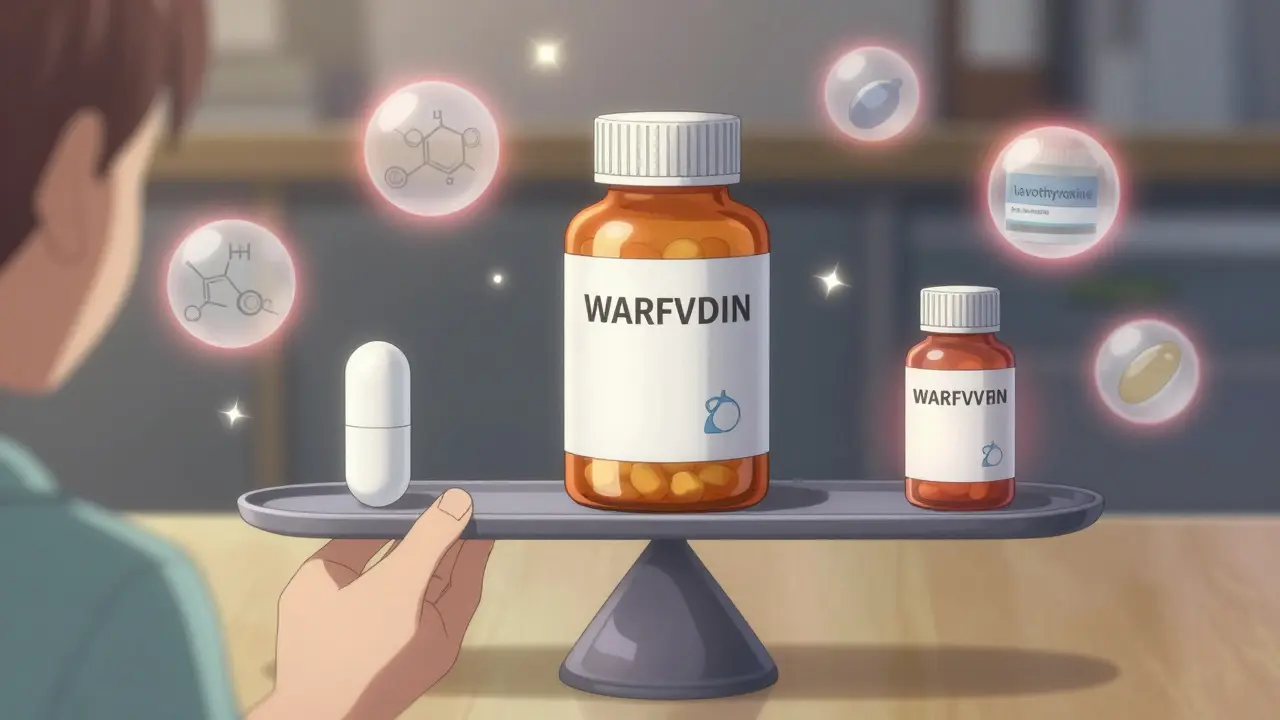
For most drugs, generics are a safe and effective substitute. But there are a few exceptions.Some medications have a narrow therapeutic index - meaning the difference between a helpful dose and a harmful one is very small. Examples include warfarin (a blood thinner), levothyroxine (for thyroid problems), and some seizure medications. With these, even tiny changes in how the drug is absorbed can matter.
Doctors and pharmacists may recommend sticking with one version - brand or generic - for these drugs to avoid any risk. But that doesn’t mean generics are unsafe. It just means extra care is taken. Studies show that switching between brand and generic versions of these drugs doesn’t cause problems for most people, but close monitoring is still advised.
Another exception is biologics - complex drugs made from living cells, like insulin or rheumatoid arthritis treatments. These can’t be copied exactly, so instead, we have biosimilars. These are highly similar, but not identical, to the original. They’re also cheaper, but not as dramatically as traditional generics - usually 20% to 30% less.
How Are Generic Drugs Approved?
The process for getting a generic drug approved is called the Abbreviated New Drug Application, or ANDA. It’s called “abbreviated” because it skips the long, expensive animal and human trials that the brand-name drug went through.Instead, the generic company must prove:
- The active ingredient matches the brand-name drug exactly
- The dosage form and strength are the same
- The route of administration is identical (e.g., oral, injectable)
- The product is bioequivalent
- The manufacturing facility meets FDA quality standards
The FDA reviews about 1,000 ANDAs each year. The average review time is around 10 months. Once approved, the generic can be sold immediately.
Manufacturing sites - whether in the U.S., India, or China - are inspected without notice. The FDA checks 177 specific quality points, from raw materials to packaging. There’s no loophole for foreign factories.
Can Pharmacists Substitute Generics?
In 49 out of 50 U.S. states, pharmacists are allowed to substitute a generic for a brand-name drug unless the doctor writes “dispense as written” on the prescription. That’s called generic substitution, and it’s standard practice.Some states require pharmacists to notify the patient when a substitution is made. Others allow automatic substitution unless the patient objects. Either way, you have the right to ask for the brand-name version - but you’ll pay more.
Doctors often encourage generics because they’re just as effective and help lower overall healthcare costs. The American Medical Association says prescribing generics is one of the easiest ways to practice cost-effective medicine.
What’s Next for Generic Drugs?
More than 350 brand-name drugs are expected to lose patent protection between 2023 and 2027. That means a wave of new generics will hit the market - potentially saving billions more.But there are challenges. About 80% of the active ingredients in generic drugs come from just two countries: India and China. Supply chain disruptions - like those seen during the pandemic - can cause shortages. The FDA has been working to diversify sourcing and improve inspections in these regions.
There’s also growing interest in “authorized generics” - when the original brand-name company makes its own generic version and sells it under a different label. This can happen when a brand wants to compete with other generics right after patent expiry.
Regulators are also paying more attention to complex generics - things like inhalers, eye drops, and topical creams. These are harder to copy, so the FDA has issued dozens of new guidelines to make sure they’re truly equivalent.
Bottom Line: Generics Are Safe, Effective, and Smart
There’s no reason to avoid generic drugs. They’re not second-rate. They’re not cheaper because they’re weaker. They’re cheaper because the system was designed to make them that way - without cutting corners on safety or effectiveness.Every generic drug you take has been reviewed and approved by the FDA. Every batch is tested. Every factory is inspected. And every one of them delivers the same result as the brand-name version - at a fraction of the cost.
If your doctor prescribes a brand-name drug, ask if a generic is available. If your pharmacist gives you a different-looking pill, don’t assume it’s inferior. Ask if it’s the same medicine. You might save hundreds - or even thousands - a year.
When it comes to your health, you don’t need to pay more to get the same result. Generic drugs prove that.
Are generic drugs as safe as brand-name drugs?
Yes. The FDA requires that generic drugs meet the same strict safety and quality standards as brand-name drugs. They contain the same active ingredient, work the same way in the body, and are held to identical manufacturing rules. The FDA inspects generic drug factories just as often as brand-name ones.
Why do generic drugs look different from brand-name drugs?
By law, generic drugs must look different to avoid trademark infringement. That means they can have different colors, shapes, or markings. But these changes are only in inactive ingredients like dyes or fillers - they don’t affect how the drug works. The active ingredient is identical.
Can I switch from a brand-name drug to a generic safely?
For most medications, yes. The FDA approves generics only after proving they’re bioequivalent. However, for drugs with a narrow therapeutic index - like warfarin or levothyroxine - your doctor may recommend staying on one version to avoid any small changes in absorption. Always talk to your doctor or pharmacist before switching.
Do generic drugs take longer to work?
No. Generic drugs must deliver the same amount of active ingredient into your bloodstream at the same rate as the brand-name version. Studies show no meaningful difference in how quickly they start working or how long they last.
Are generic drugs made in the same places as brand-name drugs?
Yes. Many brand-name and generic drugs are made in the same factories. Others are made in facilities around the world - including India and China - but all must pass the same FDA inspections. The FDA doesn’t allow lower standards just because a drug is generic.
Why do some people say generics don’t work as well?
Most reports of generics not working are due to placebo effects, changes in routine, or misunderstanding. Some people associate the look or price with quality. But decades of research and real-world use show no difference in effectiveness. Major medical groups, including the American Medical Association and the Institute of Medicine, confirm that generics are therapeutically equivalent.

Comments
Spencer Garcia December 24, 2025 AT 03:59
Generics are literally the same medicine. No magic, no secret ingredients. Just cheaper because the R&D was already paid for.
Delilah Rose December 25, 2025 AT 03:18
I used to be skeptical too-until I had to switch my blood pressure med after insurance dropped the brand. I was convinced I’d feel weird, or it wouldn’t work. But nothing changed. Not my energy, not my readings, not even how the pill tasted (which, honestly, was gross either way). I’ve been on generics for six years now, and my doctor says my labs look better than ever. People act like generics are some kind of compromise, but they’re not. They’re just the same drug without the marketing fluff. The FDA doesn’t cut corners just because it’s cheaper. If anything, they’re more vigilant now because so many are made overseas. Factories in India and China get inspected just as often as the ones in New Jersey. I’ve seen the reports. They’re not playing games. If your doctor says it’s safe, trust them. And if you’re worried about the color? Ask your pharmacist to explain the inactive ingredients. They’re usually just food dyes or starches. It’s not a different drug. It’s the same drug in a different T-shirt.
Lindsey Kidd December 25, 2025 AT 17:50
Generics saved my mom’s life 💙
She’s on levothyroxine and switched after her Medicare plan changed. She was terrified. I was too. But her TSH levels? Perfect. Same as before. No headaches. No fatigue. Just a $120 monthly savings. 🙌
Stop fearing the white pill. It’s not a downgrade. It’s a win.
Bret Freeman December 26, 2025 AT 18:31
Let’s be real-big pharma doesn’t want you to know this because they’re making billions off your fear. They spent decades convincing you that if it doesn’t have a fancy logo and a jingle, it’s not real medicine. But here’s the truth: the same factory that makes your $200 brand-name drug also makes the $12 generic version. The only difference? The label. The FDA doesn’t play favorites. They inspect the same lines. The same machines. The same workers. The only thing that changed is your perception. You’re paying for a brand, not a better drug. And if you think generics are ‘weaker,’ then you’re the one who needs a dose of reality. Wake up. The system is rigged to keep you spending. Don’t be the sucker.
Christine Détraz December 28, 2025 AT 15:32
My uncle took generic statins for five years. Then he had a heart attack. Coincidence? Maybe. But I’m not taking chances. If I need a drug, I want the one with the name I’ve seen on TV. I don’t care if it costs twice as much-I care that it’s the one the doctors advertised. There’s a reason brand names exist. They’ve been tested on millions. Generics? Tested on a few hundred volunteers. That’s not the same thing. And don’t tell me the FDA says it’s fine. The FDA is underfunded and overwhelmed. They approve thousands of applications a year. They can’t possibly check every batch. I’d rather pay more for peace of mind.
Aurora Daisy December 30, 2025 AT 09:32
Oh, so now we’re supposed to be grateful that American jobs are outsourced to India and China so we can save $50 a month on pills? How noble. The FDA inspects these factories? Sure. But how often? And who’s really watching when the inspectors fly in with a week’s notice? Meanwhile, our own drug manufacturing capacity has collapsed. We’re dependent on foreign supply chains for our medicine. That’s not ‘smart.’ That’s national suicide. Generics might be cheaper, but they’re also a vulnerability. And if you think that doesn’t matter until a pandemic hits-you’re already dead in the water.
Paula Villete December 30, 2025 AT 13:18
Okay, but if generics are so identical, why do some people swear they ‘feel different’? Because the placebo effect is real, and so is the nocebo effect. If you think you’re getting the cheap version, your brain will convince you it’s not working. I’ve had patients tell me their generic antidepressant ‘doesn’t help’-until we switched them back and they said, ‘Oh wow, I feel better!’ Turns out, they never switched. The pill was the same. They just thought it wasn’t. The mind is a powerful thing. And no, I’m not being sarcastic-I’m just stating facts. Also, typo: ‘therapeutically’ has two t’s. Just saying. 🤓
Payson Mattes January 1, 2026 AT 05:44
Have you ever looked at the ingredients list on a generic? No? Good. Because if you did, you’d know they use fillers that are banned in the EU. I’ve got a friend who works at a warehouse in Ohio-supplies 30% of the generics in the Midwest. He says they get rejected batches from China and repackage them as ‘new stock.’ The FDA doesn’t care. They’re too busy chasing TikTok influencers. And don’t get me started on the color dyes. Some of them are linked to ADHD in kids. You think your kid’s hyperactivity is from sugar? Nah. It’s from the blue dye in their generic ADHD med. I’ve got the docs’ notes. Want to see them? I’ll DM you. This isn’t conspiracy. It’s documentation.
Isaac Bonillo Alcaina January 1, 2026 AT 17:00
Anyone who takes generics without consulting a specialist is playing Russian roulette with their health. The bioequivalence window of 80%-125% is a joke. That’s a 45% variance. One pill could be nearly half as potent. That’s not equivalence-that’s gambling. And the FDA’s approval process? A rubber stamp for corporate greed. They don’t test long-term effects. They don’t track adverse events in real time. You think your generic blood thinner is safe? Ask the 12 people who bled out last year after switching. Their stories aren’t in the brochures. But I’ve read the FDA’s adverse event database. It’s not pretty. And you’re just going to trust the system? You’re either naive or reckless.
Sidra Khan January 2, 2026 AT 12:10
Yeah, but what about the ones that actually don’t work? I took generic Adderall and felt like a zombie. Switched back to brand. Instant clarity. So no, not all generics are equal. The system is broken, and you’re just repeating the corporate line.
Diana Alime January 3, 2026 AT 21:45
Okay but like… WHY do they make them look so weird?? Like why is my generic Xanax a tiny purple oval?? Who decided that?? It’s not just the price-it’s the vibe. It feels like I’m taking something from a discount bin at Walmart. And then I have to explain to my grandma why it’s not the blue diamond one. It’s not just about efficacy-it’s about dignity. 🤦♀️
John Pearce CP January 5, 2026 AT 11:49
Let me be clear: the United States of America should not be importing 80% of its pharmaceutical active ingredients from foreign nations with no accountability. This is not a matter of cost-it is a matter of national security. Generics are not the problem. The erosion of domestic manufacturing capacity is. We used to produce our own medicine. Now we beg for pills from Beijing and Mumbai. That is not progress. That is surrender. And anyone who defends this system is complicit in the weakening of American sovereignty. If you want to save money, cut your Netflix subscription. Don’t compromise your health on a foreign supply chain that could be cut off tomorrow.
Spencer Garcia January 6, 2026 AT 14:14
@6192: For Adderall, the issue isn’t generic vs brand-it’s immediate-release vs extended-release. Many generics are IR, while the brand is ER. That’s not bioequivalence failure-that’s formulation mismatch. Check your prescription.