When you pick up a generic pill at the pharmacy, you probably don’t think about how long it took to get there. But behind every affordable medication is a complex, high-stakes review process run by the U.S. Food and Drug Administration (FDA). For manufacturers, waiting months-or even years-for approval can mean lost revenue, delayed patient access, and financial strain. For patients, delays can mean higher costs and limited treatment options. So how long does it actually take the FDA to approve a generic drug in 2025?
The Standard Timeline: 10 Months, But It’s Not That Simple
The FDA’s official goal for standard generic drug reviews is 10 months after accepting the application. That’s the number you’ll see on their website and in press releases. But this isn’t a hard deadline-it’s a target. In reality, the clock starts only after the FDA confirms your application is complete enough to review. That first step, called the filing review, takes up to 60 days. If your paperwork is missing key details-like incomplete chemistry data or unclear manufacturing specs-the FDA will send back a refusal to file letter. You’ll have to fix it and resubmit. That resets the clock.
Once the application is accepted, the real review begins. For simple, well-understood drugs like generic ibuprofen or metformin, the process often finishes close to the 10-month mark. But for complex formulations-think inhalers, injectables, or extended-release tablets-the review can stretch far beyond that. The FDA doesn’t treat all generics the same. A basic tablet? That’s straightforward. A nasal spray with a tricky delivery system? That’s a whole different challenge.
What’s Actually Happening During Those 10 Months?
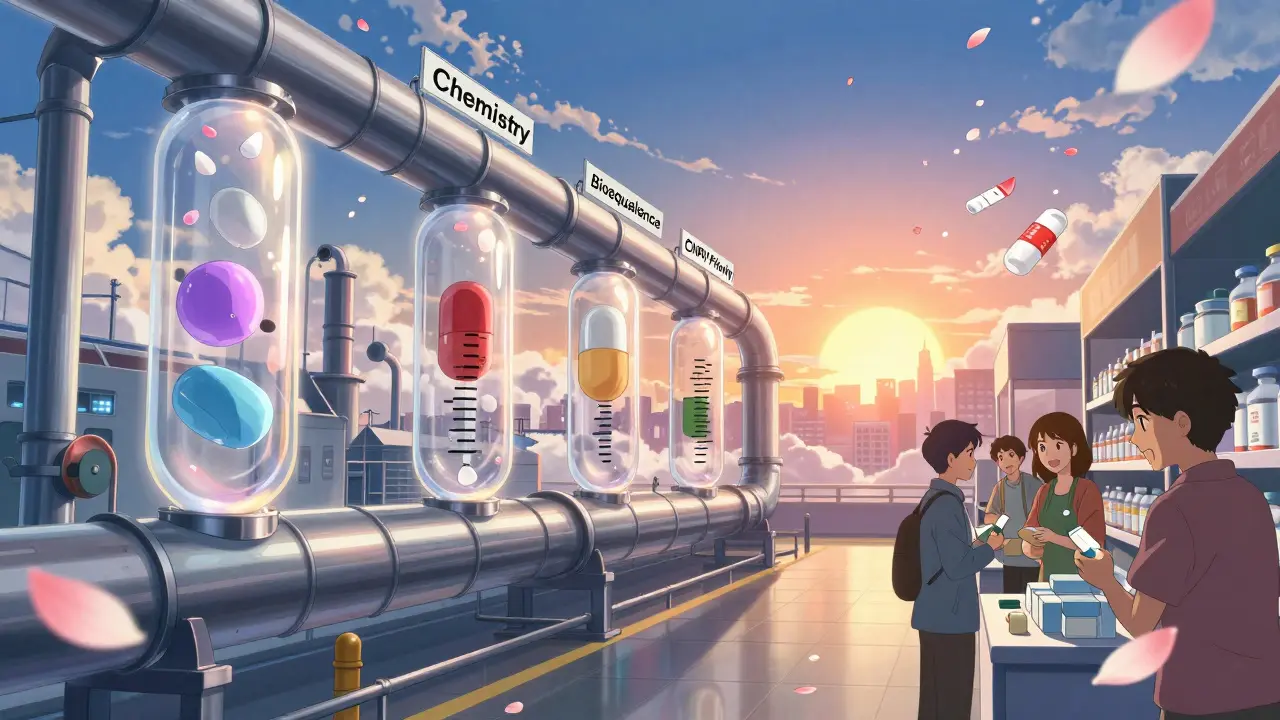
The FDA doesn’t just read a stack of papers. Their team of scientists and inspectors digs into every detail:
- Chemistry and manufacturing: They check if the generic drug is made the same way as the brand-name version-same ingredients, same processes, same quality controls.
- Bioequivalence: They confirm the generic delivers the same amount of medicine into your bloodstream at the same speed as the original. No guessing. No shortcuts.
- Facility inspections: Before approval, the FDA sends inspectors to the manufacturing plant. If the site has past violations or fails inspection, approval gets delayed.
- Labeling and packaging: Even the tiny font on the box gets reviewed. If the label doesn’t match the brand-name drug’s safety info exactly, it’s sent back.
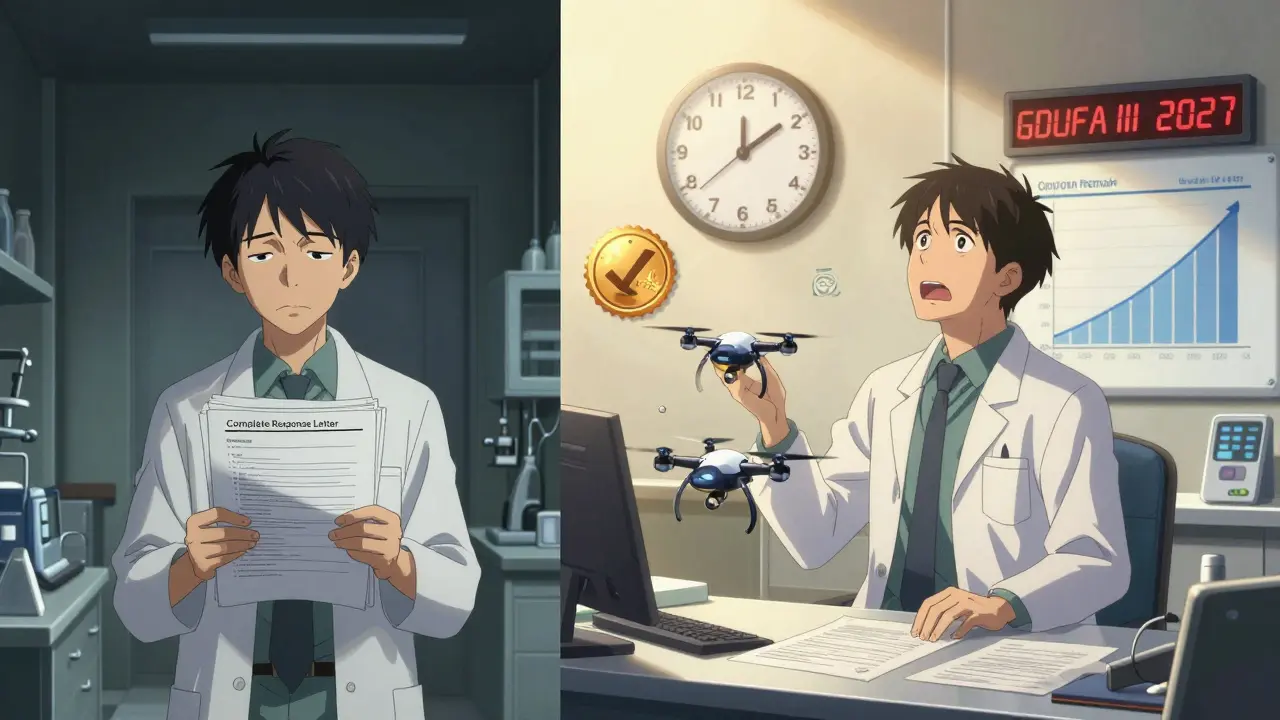
After the review, the FDA either approves the drug-or sends a complete response letter. This isn’t a rejection. It’s a list of problems that need fixing. About 42% of these letters come in the first round, up from 38% just two years ago. That means more applications are getting it right the first time. But if you get one of these letters, you’re looking at another 3 to 6 months to respond, resubmit, and restart the review.
Priority Review: Fast-Tracking Critical Drugs
Not all generics are created equal. The FDA gives priority status to drugs that fill critical gaps-like medicines in short supply or ones with no other generic options. For example, if a life-saving antibiotic has only one manufacturer and production halts, the FDA can fast-track a new generic version. There’s no official timeline for priority reviews, but they’re consistently approved faster than standard ones. Some finish in as little as 6 to 8 months.
And now, there’s something new: the Commissioner’s National Priority Voucher program (CNPV). Announced in late 2025, this initiative targets the toughest cases. If a generic drug is for a condition with no existing treatment-or if the brand-name drug is too expensive for most patients-the manufacturer can apply for this voucher. Approved applications under CNPV could be reviewed in just 1 to 2 months. That’s a radical shift from the usual 10-month window.
AI and Technology Are Speeding Things Up
The FDA isn’t relying on paper files and manual checks anymore. Since 2024, they’ve been testing artificial intelligence tools to scan applications for common errors, flag missing data, and even predict which submissions are most likely to pass. In pilot programs, AI cut review time for standard generics by 15.8%. That’s not just faster-it’s more consistent. Human reviewers still make the final call, but AI handles the grunt work: matching data points, spotting inconsistencies, cross-checking references.
They’re also using rolling review for some applications. Instead of waiting to submit the entire 1,000-page application at once, companies can send parts as they’re ready-chemistry data first, then manufacturing details, then bioequivalence results. This lets the FDA start reviewing earlier and catch problems sooner.
Real Numbers: What’s Happening Right Now?
Numbers don’t lie. Here’s what the FDA’s latest data shows for FY 2025:
- Mean approval time: 35.59 days (down from 42.4 days in 2023)
- Median approval time: 25.26 days
- Tentative approvals: 39.45 days mean, but these aren’t final-manufacturers still need to pass inspections
These numbers might seem confusing. Why is the mean approval time under 40 days if the goal is 10 months? Because the FDA counts the time from when the application is accepted to when it’s approved-not the full journey from submission. The 10-month goal includes the initial filing review. Once the application is accepted, most of the work is done in weeks, not months.
First-time generic approvals are also increasing. In 2025, the FDA approved more first generics than in any previous year. Drugs like epinephrine injections, bosentan suspensions, and doxycycline oral suspensions are hitting the market faster. That’s good news for patients who’ve been waiting years for affordable versions.
Why Some Approvals Take Over a Year
Not everyone gets a quick approval. Some manufacturers report wait times of 1,000+ days. Why? Three big reasons:
- Complex products: Inhalers, transdermal patches, and injectables require advanced science to prove equivalence. The FDA needs more time to verify.
- Incomplete submissions: Missing data, unclear instructions, or poorly written documents cause delays. One company spent 18 months fixing a single labeling error.
- Inspection delays: The FDA can’t approve a drug until they’ve inspected the factory. If the site is overseas or has a history of violations, inspections get backed up.
For example, a generic nasal spray took 1,087 days from submission to approval because the manufacturer had to redesign the delivery device twice. That’s not normal-but it’s not rare either.
Who’s Winning the Race?
Some companies consistently get their drugs approved faster. Teva, Viatris, and Sandoz lead the pack. Why? They don’t just submit applications-they build relationships. They hold pre-submission meetings with the FDA to get feedback before filing. They invest in high-quality data. They know what the FDA wants before they even write the application.
Small companies and first-time applicants often struggle. The FDA offers fee waivers for small businesses, but only 4.7% of applicants qualify. Most still pay the $138,400 application fee. Without experience, it’s easy to make mistakes that cost months.
What’s Next? The Future of Generic Approval
The FDA’s goals for 2027 are bold: 20-day median approval time for standard generics and 10 days for priority ones. That’s not fantasy-it’s built into their GDUFA III plan. But it’s not without risk. Critics worry rushing approvals could mean missing quality issues. The Congressional Budget Office warns that without more funding, progress might stall after 2027.
Still, the trend is clear: the system is getting faster, smarter, and more efficient. Generic drugs now make up 90% of all prescriptions in the U.S. but cost only 23% of total drug spending. That’s a $1.7 trillion savings over the past decade-thanks to faster approvals and more competition.
For manufacturers, the message is simple: quality matters more than speed. Submit a clean, complete application. Work with the FDA early. Don’t guess what they want-ask them. For patients, the message is just as clear: the system is working. More affordable drugs are reaching shelves faster than ever before.
What You Can Do If You’re Waiting
If you’re a patient waiting for a generic version of your medication:
- Check the FDA’s Approved Drug Products with Therapeutic Equivalence Evaluations (Orange Book) online. It’s updated daily.
- Ask your pharmacist if a generic is available-even if your doctor hasn’t prescribed it yet.
- If your drug is in short supply, contact the FDA’s Drug Shortages page. They track and respond to shortages.
If you’re a manufacturer:
- Use the FDA’s pre-submission meeting program. It’s free and saves time.
- Invest in quality data. Don’t cut corners on chemistry or manufacturing details.
- Consider applying for priority review if your drug addresses a shortage or unmet need.
How long does it take the FDA to approve a generic drug?
The FDA’s official goal is 10 months from the time they accept your application. But this doesn’t include the initial 60-day filing review. For simple generics, approval often happens within 10 to 12 months total. For complex drugs, it can take 18 months or longer. With the new Commissioner’s National Priority Voucher program, some applications are approved in as little as 1 to 2 months.
What’s the difference between a standard and priority review?
Standard review targets a 10-month timeline for most generic drugs. Priority review is for drugs that address shortages, have no existing generic, or are critical for public health. There’s no fixed timeline for priority reviews, but they’re consistently approved faster-often within 6 to 8 months. The new CNPV program can cut this even further, to just 1 to 2 months.
Why do some generic approvals take over a year?
Delays usually happen because of incomplete applications, complex drug formulations (like inhalers or injectables), or issues with manufacturing inspections. If the FDA issues a complete response letter, you’ll need to fix the issues and resubmit, which adds 3 to 6 months per cycle. Poorly prepared submissions are the biggest cause of long delays.
Can AI really speed up FDA approvals?
Yes. Since 2024, the FDA has used AI to scan applications for errors, flag missing data, and predict approval risks. In pilot programs, AI reduced review times for standard generics by 15.8%. It doesn’t replace human reviewers, but it handles repetitive tasks, letting experts focus on complex scientific questions.
How do I know if a generic drug is approved?
Check the FDA’s Approved Drug Products with Therapeutic Equivalence Evaluations, commonly called the Orange Book. It’s updated daily and lists every approved generic drug, its manufacturer, and its approval status. Your pharmacist can also tell you if a generic is available and approved.
Final Thoughts
The FDA’s generic drug approval process isn’t perfect, but it’s getting better. Thanks to new tools, smarter processes, and focused funding, more affordable medicines are reaching patients faster than ever. The days of waiting five years for a generic are fading. Today, the average wait is measured in months-not years. For patients, that means lower prices and better access. For manufacturers, it means a clearer, more predictable path to market. And for the system as a whole, it’s proof that regulation can evolve without sacrificing safety.

Comments
Aliyu Sani December 23, 2025 AT 00:31
man i just realized how much we take this for granted. you pop a pill like it’s candy, but behind it? teams of scientists, inspections, AI scanning pages like it’s a crossword. it’s wild how much infrastructure goes into making something cheap feel invisible. we complain about prices but don’t wanna see the gears turning. peace.
Jim Brown December 24, 2025 AT 00:37
The regulatory apparatus of the United States Food and Drug Administration, while often maligned for its perceived sluggishness, remains an indispensable bulwark against the commodification of human health. The transition from a 10-month target to a 20-day median, though laudable, necessitates rigorous epistemological scrutiny: are we optimizing for velocity, or for veracity? The integrity of bioequivalence data cannot be sacrificed on the altar of efficiency.
Sai Keerthan Reddy Proddatoori December 24, 2025 AT 18:16
ai is just a distraction. they're letting china make all the pills now and calling it 'efficiency'. you think they're checking every batch? no. they're just stamping papers and calling it a day. next thing you know, your blood pressure med is made in a basement with tap water. this is how empires fall. america used to make things. now we just approve them.
Nader Bsyouni December 25, 2025 AT 03:00
10 months my ass. the real timeline is whatever the FDA feels like that day. they’re not scientists they’re bureaucrats with clipboards. and don’t get me started on ‘priority review’ - that’s just how big pharma bribes their way to the front of the line. they call it innovation. i call it corruption dressed in lab coats
Julie Chavassieux December 26, 2025 AT 01:14
Okay so like... I just found out my generic Adderall took 14 months to get approved?? And I was literally crying in the pharmacy because I couldn’t afford the brand?? And now they’re saying AI is speeding it up?? But what about the people who were suffering for 18 months?? I just... I just need someone to acknowledge that this isn’t just data points. This is people’s lives. And also?? I’m so mad.
Vikrant Sura December 27, 2025 AT 19:10
stats look good on paper. but where’s the breakdown by manufacturer? who’s getting approved fast? who’s getting rejected? also why is no one talking about the 42% complete response rate? that’s just a fancy way of saying ‘you failed’. lazy analysis.
Gabriella da Silva Mendes December 28, 2025 AT 08:37
OMG I JUST REALIZED THE FDA IS USING AI?? LIKE... ACTUAL AI?? 😱 That’s so cool!! I mean, imagine a robot reading your drug application while sipping coffee ☕️ and then being like ‘yo this chemistry section is trash’ 💥 I’m so here for it. Also why isn’t this tech in every government agency?? We need robots everywhere!! 🤖🇺🇸 #FutureIsNow #FDAIsCoolNow
Kiranjit Kaur December 29, 2025 AT 19:43
if you’re a small company trying to get a generic out there, don’t wait for perfection - just start. talk to the FDA early. they want you to succeed. this isn’t a maze, it’s a roadmap. and yeah, the fees are brutal, but the savings for patients? priceless. we’ve got this. keep pushing. your medicine matters. 💪❤️