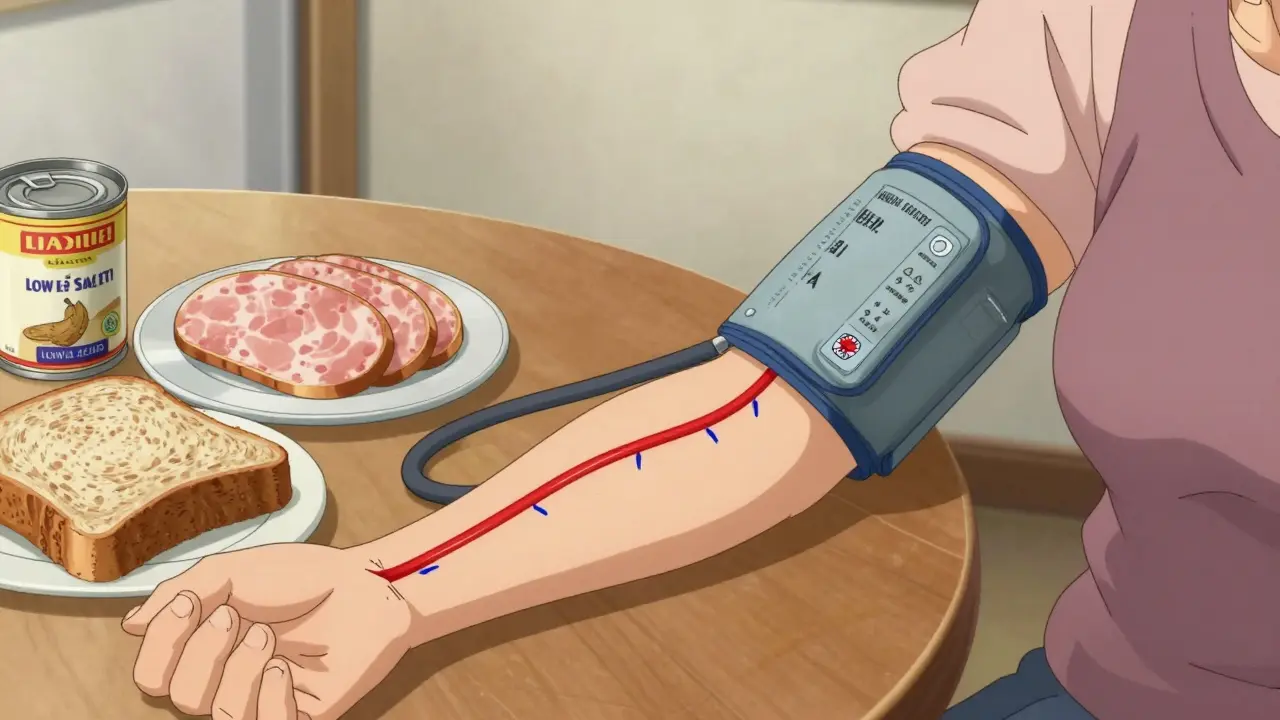
Your blood pressure medication might not be working as well as it could if you're not watching your sodium intake. A major study published in the Journal of the American Medical Association (JAMA) in 2023 found that reducing salt consumption can lower blood pressure as much as starting a new medication. This isn't just for people with high blood pressure-it applies to almost everyone. Let's explore what this means for you.
The research, led by Dr. Deepak Gupta and Dr. Norrina Allen, tracked 213 participants with an average age of 61. They compared usual diets to low-sodium and high-sodium diets. The results were clear: cutting sodium by about one teaspoon (2,300 mg) daily dropped systolic blood pressure by 6 mm Hg. That's equivalent to the effect of first-line blood pressure medications like ACE inhibitorsA class of blood pressure medications that block angiotensin-converting enzyme to relax blood vessels.. The study included both medicated and non-medicated patients, proving sodium reduction helps even when you're already on treatment.
High sodium makes your body hold onto water, increasing blood volume and pressure. This extra fluid strains your heart and blood vessels. Blood pressure medications work to counteract this, but too much salt overwhelms them. For example, ACE inhibitors relax blood vessels, but sodium causes fluid retention that fights their effect. Diuretics help flush out fluid, but too much salt makes them less effective. By lowering sodium, you help these drugs work better.
Most people think they control sodium by not adding salt to food. But here's the truth: about 70% of dietary sodium comes from processed and restaurant foods. A single serving of canned soup can have over 800 mg of sodium-more than half your daily limit. Even bread contributes significantly; a slice often contains 150 mg. This hidden sodium is the real issue.
| Food Item | Sodium per Serving (mg) | Low-Sodium Alternative |
|---|---|---|
| Canned soup | 800 | Low-sodium soup (100mg) |
| Single slice of bread | 150 | Whole grain bread (100mg) |
| Two slices of ham | 600 | Roasted turkey breast (50mg) |
| 1 cup frozen lasagna | 900 | Homemade lasagna (400mg) |
| 2 tablespoons salad dressing | 300 | Oil and vinegar (10mg) |
Reading nutrition labels carefully is key. Look for 'mg' of sodium, not just the percentage daily value. Choose products with less than 140 mg per serving. Use herbs and spices like garlic, lemon, or cumin instead of salt. Avoid processed meats like bacon and deli slices-they're packed with sodium. When eating out, ask for sauces on the side and choose grilled over fried options.
Different blood pressure meds interact with sodium in unique ways. Angiotensin II Receptor Blockers (ARBs)Medications that block angiotensin II receptors to relax blood vessels. work by blocking hormones that narrow blood vessels. High sodium intake makes these hormones more active, reducing the drugs' effectiveness. DiureticsMedications that help the body remove excess fluid through urine. help flush out fluid, but too much salt makes them work harder. By managing sodium, you help these medications do their job better.
If you have diabetes or kidney issues, high sodium can worsen protein in urine. Medications like ACE inhibitors work better when sodium is controlled, protecting your kidneys. Always talk to your doctor before using Potassium-based Salt SubstitutesSalt alternatives containing potassium chloride instead of sodium chloride., especially if you have kidney problems or take certain medications.
How Quickly Does Sodium Reduction Work?
The JAMA study found measurable blood pressure changes within seven days of reducing sodium intake. Participants in the study saw lower blood pressure after just one week of following a low-sodium diet. This means you don't have to wait months to see results. Cutting back on salt can start helping your blood pressure medication work better in a matter of days.
What About Salt Sensitivity?
About 46% of people are 'salt sensitive,' meaning their blood pressure drops significantly (5+ mmHg) when they reduce sodium. This includes older adults and those with higher baseline blood pressure. The American Heart Association reported that 73.4% of participants experienced meaningful blood pressure reduction on low-sodium diets. Even if you're not salt sensitive, reducing sodium still benefits your overall cardiovascular health.
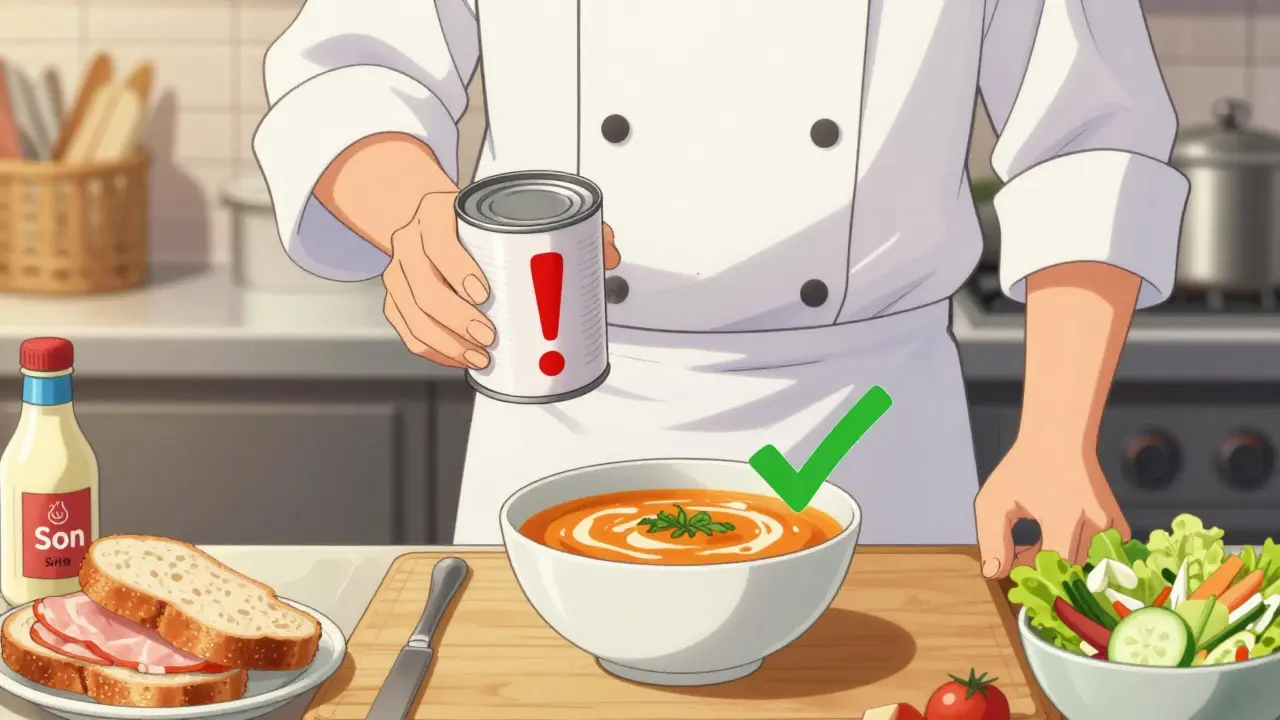
Why Do Processed Foods Contain So Much Sodium?
Food manufacturers use sodium for taste, preservation, and texture. The FDA has set voluntary sodium reduction targets for 163 food categories, aiming to lower average intake to 3,000 mg daily by 2026. However, researchers argue these targets are still too high for optimal heart health. The American Heart Association recommends 1,500 mg daily, but most people consume over 3,400 mg. This gap shows why label reading is so important.
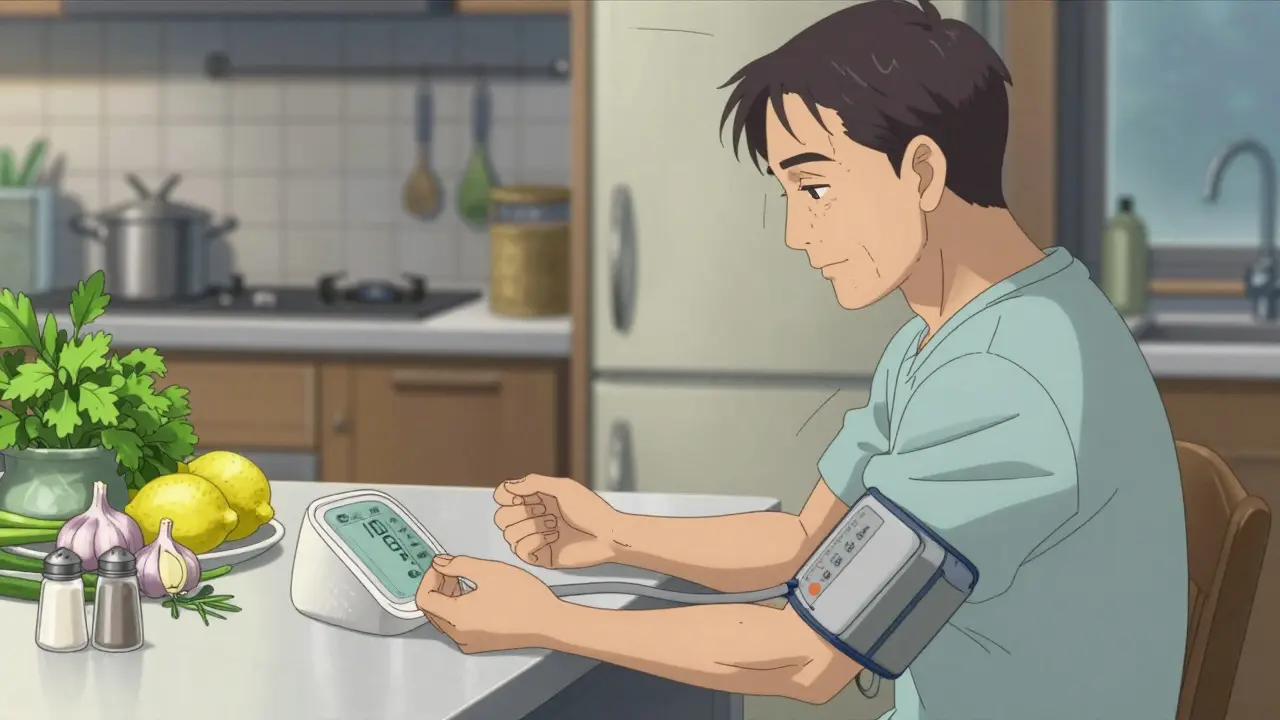
What's the Best Way to Track Sodium?
Use apps like MyFitnessPal or Fooducate to scan barcodes and track sodium intake. The Vanderbilt team is developing a mobile app with real-time sodium tracking and medication interaction alerts, currently in Phase II trials. For now, focus on choosing whole foods like fresh fruits, vegetables, and lean proteins. Cooking at home gives you complete control over sodium content.
FAQ
Does reducing salt intake help if I'm already on blood pressure medication?
Yes, absolutely. A major 2023 JAMA study showed that lowering sodium intake by about one teaspoon (2,300 mg) daily can reduce systolic blood pressure by 6 mm Hg-equivalent to the effect of starting a first-line blood pressure medication. This means your current meds may work better when paired with lower sodium intake.
How quickly does reducing sodium affect my blood pressure?
You can see measurable changes in as little as one week. The JAMA study tracked participants for seven days and found blood pressure improvements within that timeframe. This rapid effect makes sodium reduction a powerful tool for immediate blood pressure control.
Are salt substitutes safe to use?
Potassium-based salt substitutes can be a good alternative for most people, but they're not safe for everyone. If you have kidney disease, diabetes, or take certain medications like ACE inhibitors or potassium-sparing diuretics, they can raise potassium levels to dangerous levels. Always check with your doctor before using them.
What's the best way to reduce sodium when eating out?
Ask for sauces and dressings on the side, choose grilled or baked options instead of fried, and request no added salt. Many restaurants now offer low-sodium menus or can accommodate requests. Focus on simple dishes like grilled chicken or fish with steamed vegetables.
Can I still eat out if I'm managing sodium intake?
Yes, but you need to be strategic. Choose restaurants that offer healthier options, check nutrition information online before going, and don't be afraid to ask for modifications. Many fast-casual places now have sodium-conscious menu items. Remember, even small changes like skipping the cheese or dressing can make a big difference.
Managing sodium intake isn't about perfection-it's about making consistent, smart choices. By understanding where sodium hides and how it affects your medications, you can take control of your blood pressure and overall health. Start small: read one label today, choose a low-sodium snack, or swap salt for herbs in your next meal. Your body-and your medications-will thank you.

Comments
lance black February 5, 2026 AT 19:33
Cut salt, feel better! 💪
jan civil February 7, 2026 AT 06:23
Reducing sodium intake can significantly lower blood pressure. I never realized how much salt is in bread. Time to check my labels.
Carl Crista February 7, 2026 AT 19:54
FDA targets too high hiding truth 😏
Joyce cuypers February 7, 2026 AT 23:04
Lets all work on reducing sodium together! 💪
Matthew Morales February 8, 2026 AT 23:12
Totally agree! 👍 but sometimes its hard to avoid processed food. 🤷♂️
anjar maike February 9, 2026 AT 02:07
In India we use spices not salt. Good tip! 😃
Bella Cullen February 9, 2026 AT 18:28
Eh too much work. Just take meds. 😒
Elliot Alejo February 10, 2026 AT 19:31
Check labels more often. Processed foods hide sodium everywhere.
Georgeana Chantie February 11, 2026 AT 11:36
US food is the best but yeah salt is bad 🤷♀️
Jenna Elliott February 12, 2026 AT 16:50
Salt is the real enemy. No one talks about this. 😠
Nancy Maneely February 14, 2026 AT 06:22
Yall don't even know how much salt is in that soup! 🤯
Seriously, I checked a can of soup and it had over 800mg!
That's more than half your daily limit.
And bread? A single slice has 150mg.
People are clueless.
The FDA is failing us.
They need to regulate this better.
We're dying from salt, not from the meds.
It's all about the hidden sodium.
Processed foods are killing us.
We need to wake up.
Stop eating that garbage.
Read the labels.
It's simple.
But nobody does.
This study is proof.
We need to take action.
Now.
Before it's too late. 🤬