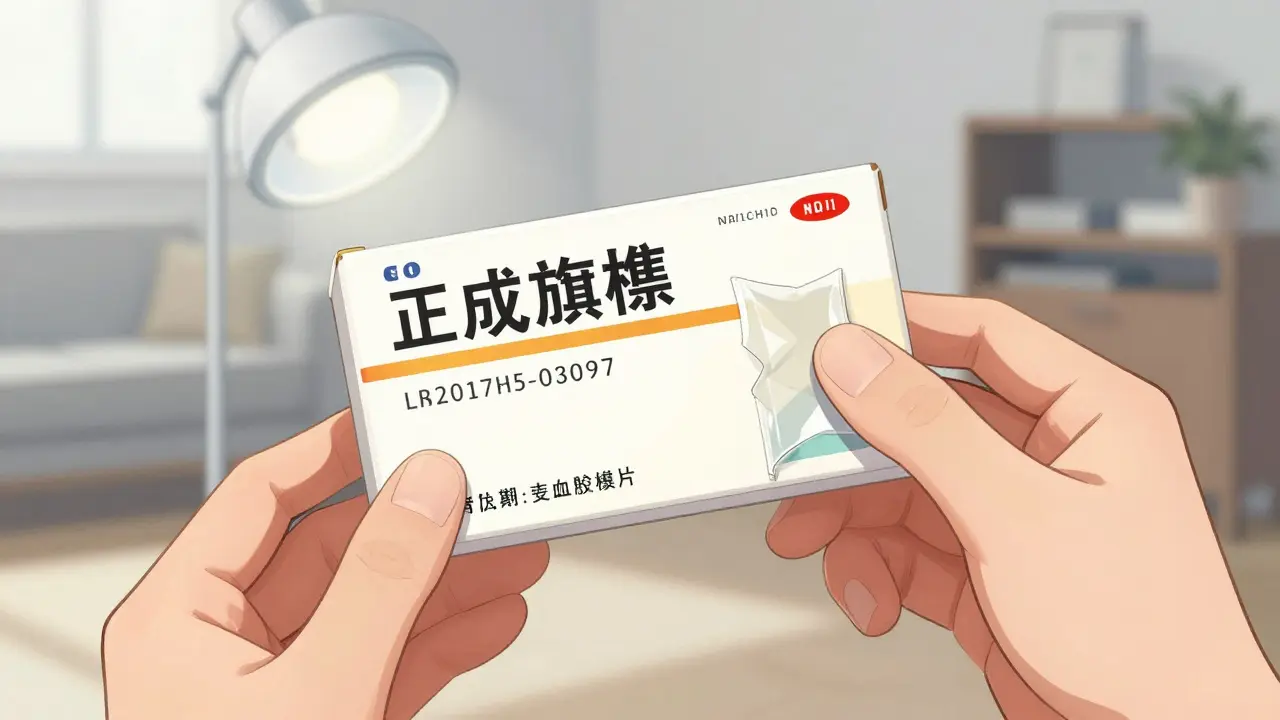
Imagine buying a life-saving medication, only to find out later that the pills inside are actually made of crushed drywall or cheap flour. It sounds like a movie plot, but for millions of people, it's a terrifying reality. The global market for fake drugs is worth roughly $200 billion annually, and the people running these operations are incredibly good at one thing: making a fake box look exactly like the real thing. While professional labs use lasers and chemicals to spot fakes, most of us just have our eyes and a bit of common sense. The goal isn't to make you a forensic expert, but to give you a practical way to identify counterfeit medication packaging before a dangerous product ever reaches your medicine cabinet.
Quick Indicators of Fake Packaging
Before getting into the technical details, there are a few "red flags" that should make you stop immediately. If you notice any of these, do not take the medication and contact your pharmacist.
- The "Off-Color" Look: Authentic pharmaceutical companies use precise color matching. If the box looks slightly yellowed or the blue is a different shade than your last prescription, it's a warning sign.
- Typos and Font Weirdness: Look closely at the lot numbers and expiration dates. Are the letters slightly different sizes? Is the ink smudged? Real packaging uses high-end industrial printing that doesn't "bleed."
- The Seal Test: If the plastic wrap is loose, wrinkled, or doesn't have a clean, factory-grade seam, the product may have been tampered with or poorly replicated.
- Missing QR Codes: Many modern meds now have batch-specific QR codes. If the code is missing or takes you to a generic website instead of the manufacturer's verification portal, be wary.
How to Inspect Seals and Safety Features
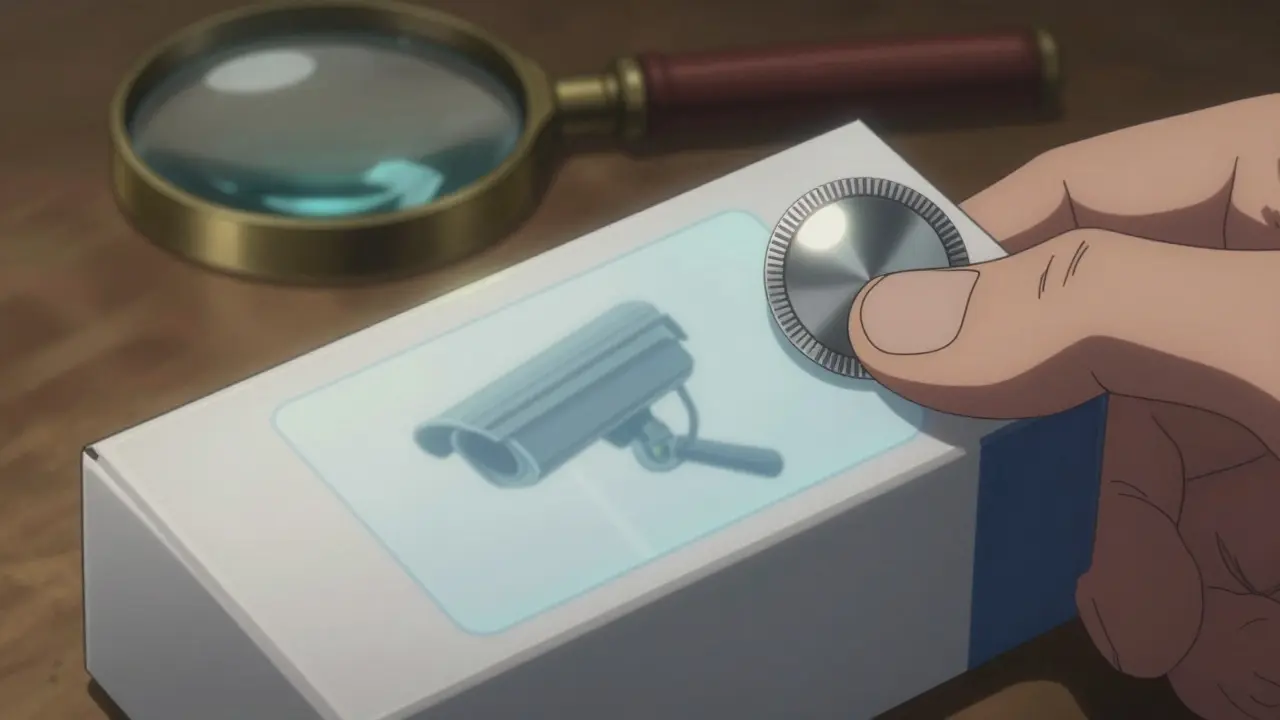
Pharmaceutical companies use a variety of "overt" (visible) and "covert" (hidden) security features. Understanding how these should behave can help you spot a fraud. Holograms are specialized optical security labels that use light diffraction to create 3D images. While they were the gold standard for years, counterfeiters have become very good at mimicking them. A real hologram should have a crisp, clear shift in image when you tilt it. If the image looks flat or "blurry," it's likely a fake.
Then there are the tamper-evident seals. These are designed to break or change color if someone opens the package. If you see a seal that looks like it was glued back on, or a foil peel-off tab that is already torn, the integrity of the drug is gone. In some high-end packaging, companies use serialization, which is a unique serial number for every single box. If you see the same serial number on multiple boxes in a shipment, you've found a counterfeit batch.
| Method | What it Checks | Accuracy | Who Uses It? |
|---|---|---|---|
| Visual Check | Color, spelling, seals | Low (12-35%) | Consumers |
| Microscopic Analysis | Print alignment, microtext | Medium (45-60%) | Pharmacists |
| Raman Spectrometry | Chemical "fingerprint" | Very High (98%+) | Lab Experts |
| Blockchain Scan | Digital supply chain trail | Extreme (99.9%) | Regulators |
The Red Flags of Digital Printing
Counterfeiters now use advanced digital printing that can fool a quick glance, but they often fail at the microscopic level. For example, real pharmaceutical packaging often includes "microtext"-tiny words that look like a solid line to the naked eye but are actually legible under a magnifying glass. If you have a 10x loupe or a strong magnifying glass, check the borders of the labels. If that "line" is just a blurry smudge of ink, you're likely looking at a fake.
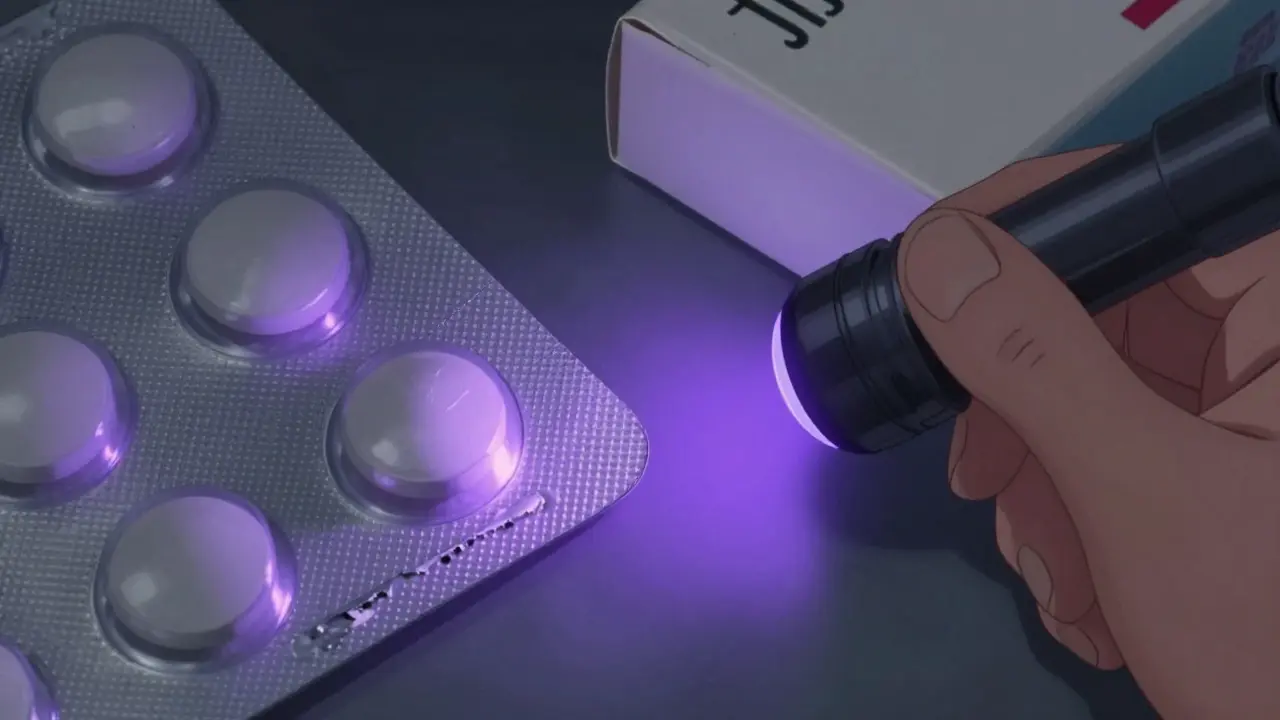
Another common failure is the ink itself. Some manufacturers use specialized inks that react to UV light or absorb infrared radiation. While you might not have an infrared scanner at home, a simple UV flashlight (the kind used to check currency) can sometimes reveal that a fake package lacks the fluorescent security marks found on the original. If the genuine product usually glows a certain color under UV and yours stays dark, put it aside.
Common Scenarios and Real-World Examples
To make this concrete, let's look at some actual cases reported by regulators. Recently, there were alerts about counterfeit Ozempic, where the fakes had inconsistent font weights in the lot numbers-some numbers were thicker than others. In another case involving ophthalmic products, the packaging was slightly yellowed compared to the crisp white of the authentic boxes. Even the weight of the paper can be a giveaway; some pharmacists have noted that fake Adderall packaging used paper that was 5% heavier than the genuine stock, making the boxes feel slightly "stiffer" and less natural.
The most dangerous fakes are often those bought from "too good to be true" online pharmacies. If a site offers a brand-name drug at a 70% discount without a prescription, the packaging is almost certainly fake. These operations often replicate the look of the box but fail to replicate the internal blister pack quality. Check the pills themselves: are they chipped? Is the imprint inconsistent in depth? If the pill doesn't fit snugly in the blister pocket, the packaging was likely made by a third party, not the manufacturer.
Step-by-Step Verification Process
If you're unsure about your medication, follow this layered approach to verify it. Don't rely on just one check; the more layers you use, the safer you are.
- The Outer Box: Check for spelling errors, smudged ink, and color accuracy. Compare it to a previous box you know was real.
- The Security Seal: Ensure the hologram is crisp and the tamper-evident seal is unbroken. Check for any signs of regluing.
- The Digital Check: Scan the QR code or enter the serialization number into the manufacturer's official verification portal.
- The Pill Inspection: Remove one pill and check the imprint. It should be sharp and consistent. If it's blurry or the depth varies, stop immediately.
- The Pharmacy Call: If something feels off, call your pharmacist. They have the training and tools to perform a more detailed inspection.
What to Do if You Find a Fake
If you suspect your medication is counterfeit, the most important rule is: Do not ingest it. Even if the packaging looks 99% correct, the chemical composition could be toxic or completely inactive.
First, secure the packaging and the medication in a safe place. Do not throw them away, as they are evidence. Next, report the incident to your local health authority or a program like the FDA's MedWatch. Reporting is critical because it helps regulators track the batch and stop other people from getting poisoned. Finally, contact the pharmacy where you purchased the drug. If it was a legitimate pharmacy, they need to know their supply chain was breached; if it was an unregulated online source, you now know never to trust them again.
Can I tell if a drug is fake just by looking at the pill?
While you can spot obvious flaws like chipping, odd colors, or blurry imprints, many sophisticated fakes look identical to the real thing. Packaging and seal inspection is usually a better first step, but if the pill looks "off," it's a major red flag.
Are holograms still a reliable way to spot fakes?
Not entirely. Modern counterfeiters can replicate many holograms. Look for a sharp, clean transition in the image when tilting the box. If the image is flat or lacks a clear 3D effect, it may be a fake.
Why do some authentic boxes look slightly different?
Manufacturers sometimes update their packaging design or change suppliers for cardboard and ink. This is why you should check for serialization numbers and QR codes, which are harder to fake than a color shade.
What is serialization in medicine?
Serialization is the process of assigning a unique electronic identifier (a serial number) to each individual unit of a drug. This allows the drug to be tracked from the factory to the patient, making it nearly impossible for fakes to enter the legal supply chain.
Where is the safest place to buy medication to avoid fakes?
The safest option is always a licensed, reputable pharmacy. Avoid "no-prescription" websites or third-party sellers on marketplaces, as these are the primary channels for counterfeit pharmaceutical products.
