
MAOI Tyramine Calculator
How This Works
This calculator estimates tyramine content in your meal based on food choices. Remember: you must keep tyramine intake below 6mg per meal to avoid dangerous blood pressure spikes. Enter the foods you plan to eat and their portions to see your total tyramine content.
Add Foods to Your Meal
Your Meal
Results
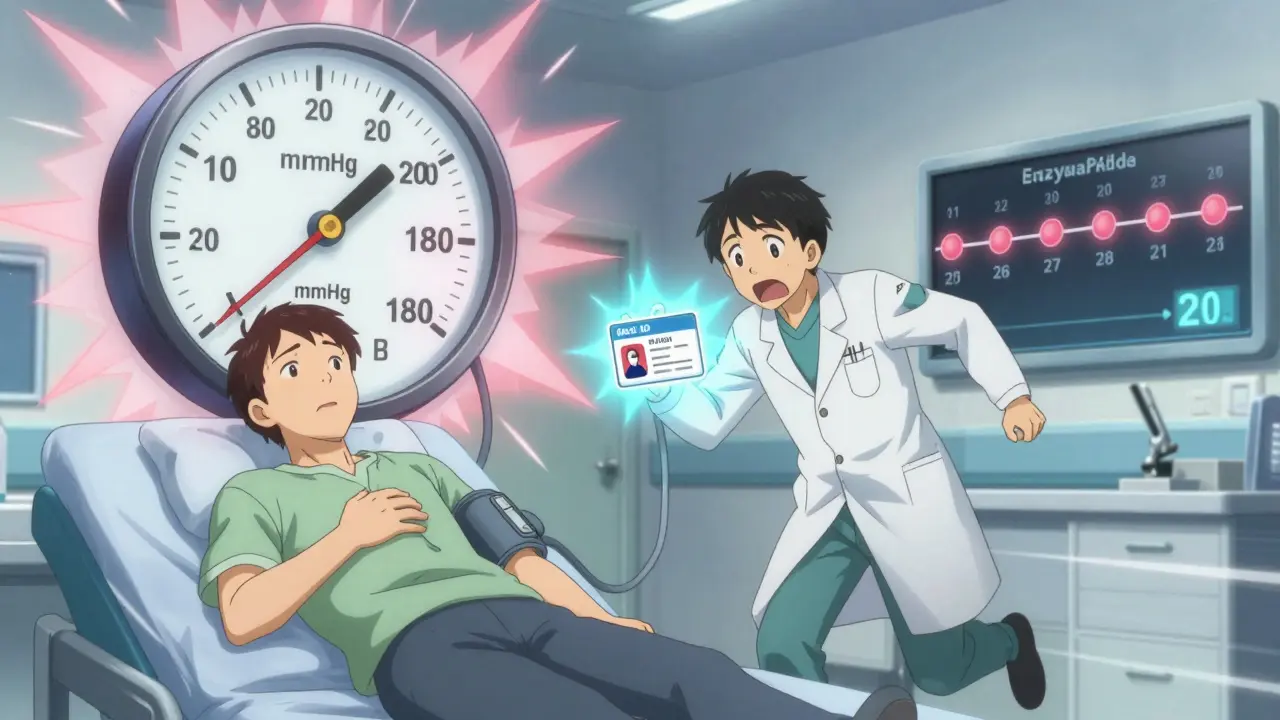
When you’re on an MAOI antidepressant, your food choices aren’t just about nutrition-they’re about survival. Monoamine oxidase inhibitors like phenelzine (Nardil), tranylcypromine (Parnate), and isocarboxazid (Marplan) work differently than SSRIs. They stop your body from breaking down excess tyramine, a compound found naturally in aged, fermented, or spoiled foods. If tyramine builds up, it can trigger a sudden, dangerous spike in blood pressure-sometimes over 180 mmHg-that can lead to stroke, heart attack, or death. This isn’t a myth. It’s a real, documented risk that’s been known since 1964, when a patient eating cheddar cheese while on phenelzine had a life-threatening reaction.
What Exactly Is Tyramine and Why Does It Matter?
Tyramine is an amino acid that forms when proteins break down over time. It’s not toxic by itself. But when you’re taking an irreversible MAOI, your body can’t process it properly. Normally, the enzyme monoamine oxidase-A (MAO-A) in your gut and liver breaks down tyramine before it hits your bloodstream. MAOIs block that enzyme. Without it, tyramine floods your system, forcing your body to release huge amounts of norepinephrine. That’s what causes your blood pressure to rocket.
The danger isn’t from eating one small piece of cheese. It’s from hitting a threshold-usually above 6 mg per meal, and often above 25 mg in a single sitting. That’s why the old rule of “avoid all aged cheese” was overblown. Modern cheddar, if properly refrigerated and eaten fresh, contains only 0.1-1.0 mg of tyramine per 100g. But if that same cheese sits unrefrigerated for days? Tyramine can jump to 30 mg or more. That’s the real problem: storage, not the food itself.
Which Foods Are Actually Dangerous?
Not every old or fermented food is risky. Here’s what you need to avoid:
- Aged cheeses (over 6 months old): Parmesan, blue cheese, cheddar aged longer than 6 months, Swiss, Gouda. These can contain 20-100 mg of tyramine per 100g. A 150g slice of aged cheddar could hit 30 mg-enough to trigger a crisis.
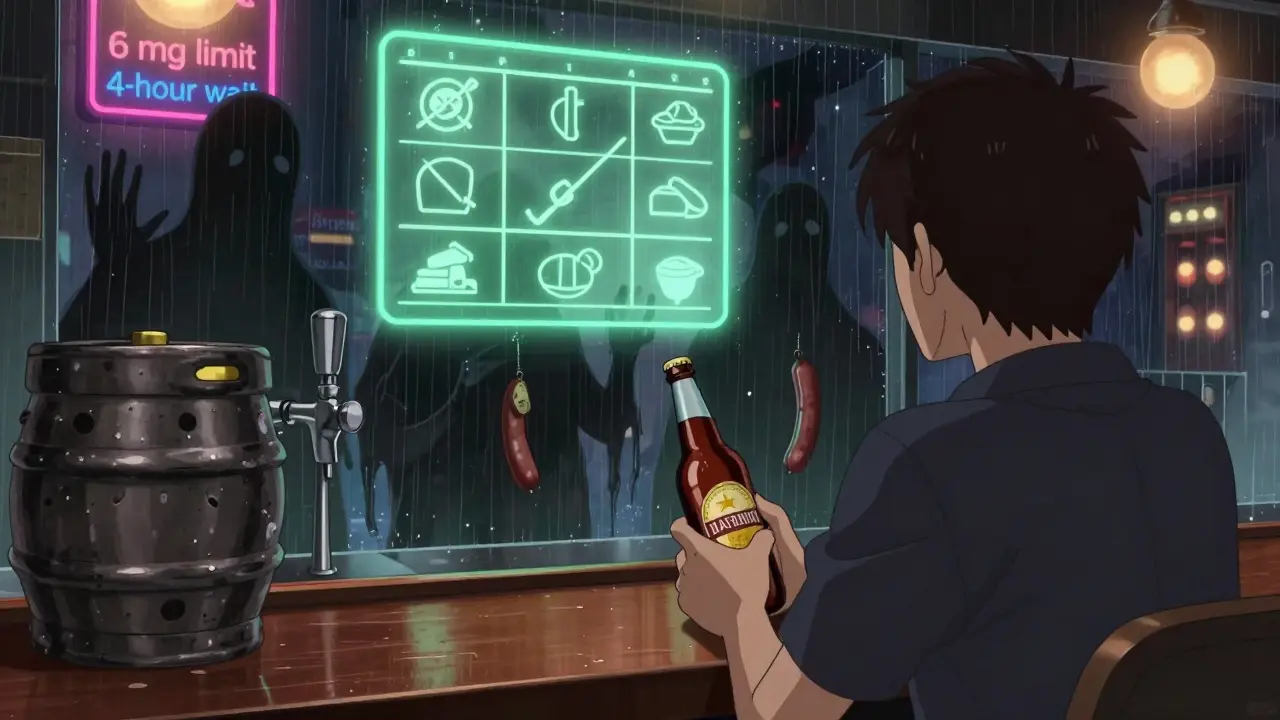
- Tap beer and unpasteurized beer: These are fermented and not pasteurized, so tyramine builds up. Tap beer has 5-19 mg per 100g. One pint could be 15-20 mg. Bottled, pasteurized beer is fine.
- Dry fermented sausages: Salami, pepperoni, summer sausage. These are preserved with fermentation and can contain 25-150 mg per 100g. One slice can push you over the limit.
- Improperly stored meat or fish: If meat sits in the fridge for more than 48 hours, tyramine levels can spike 10-100 times. Raw or smoked fish stored past its freshness window can hit 200 mg per 100g.
- Soy sauce and miso: Soy sauce ranges from 10-118 mg per 100g. Even a tablespoon can be 10-15 mg. Tofu is safer if fresh and under 100g per serving.
- Overripe bananas and avocados: The pulp of a ripe banana is safe-under 1.5 mg. But if the peel turns black and the fruit is mushy, tyramine rises. Same with avocados: 0.5-1.2 mg in fresh, under 5 mg if overripe.
Safe foods? Fresh chicken, beef, pork, fish (eaten within 24 hours), cottage cheese, mozzarella, yogurt, fresh fruits (bananas, apples, berries), eggs, most breads, and pasteurized dairy. Chocolate under 30g is fine. Coffee? No problem. Tea? Fine. Alcohol? Only if it’s pasteurized and not fermented-like wine in a sealed bottle, not tap wine or homebrew.
Why the Rules Have Changed
For decades, patients were told to avoid everything that had ever been aged. That’s outdated. In the 1960s, food storage was poor. Cheese sat on shelves for months. Meat wasn’t refrigerated properly. Today’s supply chains are better. Refrigeration is standard. Tyramine levels in most commercial foods are far lower than they were 50 years ago.
A 2023 USDA database tested over 500 foods. It found that 68% of foods once labeled “dangerous” now contain less than 2 mg of tyramine per 100g under proper storage. That means you don’t have to live on boiled chicken and rice. You can eat fresh mozzarella. You can have a small slice of aged cheese once every few days. You can drink a bottle of pasteurized beer once a week.
But here’s the catch: you can’t mix risks. One slice of salami plus a glass of tap beer plus a spoon of soy sauce? That’s 25+ mg in one meal. That’s dangerous. The problem isn’t one food-it’s the combination. That’s why experts now recommend a “single-item rule”: eat only one moderate-tyramine food per meal, and wait at least 4 hours before eating another.
Your Safety Plan: What to Do Every Day
Don’t just memorize a list. Build a system.
- Keep a food diary for the first 4 weeks. Write down everything you eat and your blood pressure before and 2 hours after meals. Use a home monitor. If your systolic pressure jumps 30+ mmHg after eating, stop that food.
- Buy fresh, eat fresh. Don’t keep leftovers. If it’s been in the fridge more than 24 hours, throw it out. Meat, fish, cooked vegetables-they all develop tyramine over time.
- Check labels. Look for “unpasteurized,” “fermented,” or “aged.” Avoid anything labeled “artisanal” or “traditional” unless you know how it was stored.
- Limit soy sauce. Use tamari instead-it’s lower in tyramine. Or skip it entirely. If you must use soy sauce, stick to 1 teaspoon per day.
- Don’t drink tap beer. Stick to bottled, pasteurized beer. Avoid homebrew, craft beer on tap, and any beer sold in kegs.
- Carry an MAOI ID card. The Mayo Clinic recommends this. It should say: “I am taking an MAOI antidepressant. Do not give me decongestants, stimulants, or serotonin-boosting drugs. Risk of hypertensive crisis.”
What If You Accidentally Eat Something Risky?
Most people won’t have a crisis from one slip-up. But if you feel a pounding headache, your heart races, you’re sweating, or your vision blurs-act fast.
Step 1: Check your blood pressure. If systolic is above 180 mmHg, take 0.2-0.4 mg of sublingual nifedipine (if prescribed). This is a fast-acting blood pressure reducer. Do not wait.
Step 2: Call 999 or go to the ER immediately. Tell them you’re on an MAOI and suspect a hypertensive crisis. Don’t say “I ate cheese.” Say “I’m on an MAOI and my blood pressure is over 180.” That gets you treated faster.
Step 3: Avoid all stimulants. No caffeine, no decongestants (like pseudoephedrine), no ADHD meds, no MDMA, no LSD. These can make things worse.
What About the Emsam Patch?
If you’re on the transdermal selegiline patch (Emsam), your diet is less restricted-at least at lower doses. At 6 mg/24 hours, it doesn’t block MAO-A in your gut the same way oral MAOIs do. That means you can eat most foods without restriction. But if you go above 6 mg (like the 9 mg or 12 mg patches), you’re back to full dietary rules.
Many doctors now prescribe Emsam 6 mg as a first choice for patients who want MAOI benefits without the strict diet. It’s not for everyone-it doesn’t work as well for severe depression-but for mild to moderate treatment-resistant cases, it’s a game-changer.
What Happens After You Stop?
You can’t just quit MAOIs and go back to your old diet. The enzyme MAO-A takes 2-3 weeks to regenerate. Until then, your body still can’t break down tyramine. That means you must keep the diet for at least 14 days after your last pill. For some, 21 days is safer. Your doctor should tell you exactly how long.
And don’t start a new antidepressant right away. SSRIs, SNRIs, and even some OTC supplements like St. John’s Wort can cause serotonin syndrome if taken too soon after MAOIs. Wait at least 14 days before switching.
Is This Worth It?
MAOIs aren’t first-line anymore. Only 1-2% of antidepressant prescriptions in the U.S. are for them. But for the 1 in 3 people who don’t respond to SSRIs, they’re often the only thing that works. Studies show 50-60% of treatment-resistant patients respond to MAOIs. That’s higher than any other class.
Yes, the diet is a hassle. But it’s not the 1970s anymore. You’re not living on plain rice. You can eat fresh cheese, bananas, and even a glass of wine. You just need to be smart. You need to monitor. You need to know your limits.
If you’re willing to do the work, MAOIs can change your life. For many, it’s the difference between chronic misery and real relief. The food rules aren’t punishment-they’re protection. And with today’s knowledge, they’re far more manageable than they used to be.
Can I eat blue cheese on MAOIs?
Only if it’s fresh and stored properly. Aged blue cheese (over 6 months) can contain 20-50 mg of tyramine per 100g. A small 30g serving could push you over the 6 mg limit. If you want to try it, eat no more than 15g once every 3 days, and monitor your blood pressure. Better yet, stick to fresh cheeses like mozzarella or cottage cheese.
Is soy sauce completely off-limits?
Not completely, but it’s high-risk. Soy sauce contains 10-118 mg of tyramine per 100g. One tablespoon (15ml) can be 10-15 mg-enough to trigger a reaction if combined with other foods. Use tamari instead, or limit soy sauce to 1 teaspoon per day. Avoid it entirely if you’re new to MAOIs or have had a reaction before.
Can I drink coffee while on MAOIs?
Yes. Coffee does not contain tyramine and does not interact with MAOIs. However, if you’re prone to anxiety or high blood pressure, caffeine can make those symptoms worse. Stick to 1-2 cups a day. Avoid energy drinks-they often contain stimulants that can be dangerous with MAOIs.
Are bananas safe on MAOIs?
Yes, but only the pulp of fresh, yellow bananas. A ripe banana has under 1.5 mg of tyramine. If the peel is black and the fruit is mushy, tyramine levels rise. Avoid overripe bananas. Other fruits like apples, berries, and oranges are all safe.
How long do I need to follow the diet after stopping MAOIs?
At least 14 days, but 21 days is safer. Monoamine oxidase enzymes take 2-3 weeks to fully regenerate after stopping irreversible MAOIs. Until then, your body still can’t process tyramine properly. Don’t rush it. Even one risky meal during this time can cause a hypertensive crisis.
Can I take over-the-counter cold medicine with MAOIs?
No. Most decongestants like pseudoephedrine, phenylephrine, and dextromethorphan can cause dangerous spikes in blood pressure when mixed with MAOIs. Even some antihistamines and cough syrups are risky. Always check with your pharmacist or doctor before taking anything OTC. Use saline nasal spray or acetaminophen for pain instead.

Comments
Jeanette Jeffrey December 26, 2025 AT 17:22
Okay but let’s be real - if you’re the type to eat blue cheese that’s been sitting in the back of your fridge since 2022, you probably also think ‘artisanal’ means ‘I made it in my garage with expired milk.’ You’re not being careful, you’re being dramatic. Tyramine isn’t a boogeyman, it’s a biochemistry problem. Stop acting like you’re on a survival show.
Shreyash Gupta December 27, 2025 AT 16:54
Bro i tried a slice of cheddar after reading this and my head felt like it was gonna explode 😵💫 maybe i just need to stop eating cheese forever 🥲
Ellie Stretshberry December 28, 2025 AT 00:53
i just started on an maoi last week and honestly i was terrified but this post made it feel way less scary. fresh mozzarella and bananas are my new best friends 🙌 thanks for breaking it down so simply
Zina Constantin December 29, 2025 AT 21:05
As a clinical nutritionist who’s worked with MAOI patients for over 12 years, I can confirm: the real game-changer isn’t the list of banned foods - it’s the single-item rule. People think they’re being safe by avoiding one thing, then they pile on three ‘safe’ foods and wonder why their BP spiked. Discipline > dogma. And yes, tamari is your friend.
Dan Alatepe December 31, 2025 AT 12:16
They say MAOIs are dangerous but honestly? The real danger is living in a world where you can’t even enjoy a good slice of salami without feeling like you’re committing a crime. I’ve been on this med for 5 years. I’ve had one scare. One. And I’m still here. Don’t let fear write your life’s menu.
Angela Spagnolo December 31, 2025 AT 12:41
...i just wanted to say... thank you... for writing this... so clearly... i’ve been scared to even look at cheese... and now... i feel like i can breathe again... 🥺
Jay Ara December 31, 2025 AT 21:34
man i used to think i had to eat nothing but chicken and rice on this stuff but now i know i can have a beer once a week if its bottled? that’s a win. i’m gonna start keeping a food diary too. small steps right?
Kuldipsinh Rathod January 2, 2026 AT 19:01
what about miso soup? i love it but now i’m scared to even open the container
SHAKTI BHARDWAJ January 3, 2026 AT 05:10
you’re all just scared of your own shadows. i ate 3 different aged cheeses with soy sauce and tap beer last week and my bp was fine. if you’re not willing to take risks, why even take the med? you’re just trading depression for boredom
david jackson January 3, 2026 AT 13:07
Let me just say - this is one of the most comprehensive, beautifully structured, clinically accurate pieces I’ve ever read on MAOI dietary management. The distinction between storage-dependent tyramine accumulation versus inherent food content? Brilliant. The 6mg threshold? Spot on. The Emsam dose-dependent clarification? Lifesaving. The fact that you included the 14-21 day washout period? That’s the detail most doctors skip. This isn’t just advice - it’s a public health service. Thank you. I’ve shared this with three other patients already.
wendy parrales fong January 4, 2026 AT 14:23
i think the biggest thing here is that you dont have to be perfect. you just have to be aware. i had a slip-up last month with leftover beef - turned out fine. i checked my bp. i didnt panic. i just adjusted. its about awareness, not punishment
Ryan Cheng January 6, 2026 AT 08:38
For anyone thinking about switching to Emsam 6mg: it’s not a magic bullet, but for mild-moderate TRD, it’s the closest thing to freedom I’ve seen in 15 years of practice. The diet freedom is real. Just don’t go above 6mg unless you’re ready to go back to the full list.
carissa projo January 6, 2026 AT 16:11
Reading this made me cry. Not because I’m scared - but because for the first time, someone didn’t treat me like a broken patient who needs to be controlled. They treated me like a person who’s trying to live. You didn’t just list rules - you gave me back my dignity. Thank you. I’ll be keeping this page saved forever.