
When you're managing type 2 diabetes, choosing the right oral medication isn't just about lowering blood sugar-it's about finding a balance between effectiveness, side effects, cost, and your daily life. Three main classes of pills and injections dominate treatment: metformin, sulfonylureas, and GLP-1 receptor agonists. Each works differently, has different risks, and fits different people. Knowing how they compare helps you make smarter choices with your doctor.
Metformin: The Long-Standing Starter
Metformin has been the go-to first-line drug for type 2 diabetes for decades. It’s not flashy, but it’s reliable. Approved in the U.S. in 1995, it’s been used worldwide since the 1950s. It doesn’t make your pancreas pump out more insulin. Instead, it tells your liver to stop making so much glucose and helps your muscles use insulin better. That’s why it rarely causes low blood sugar-unless you’re drinking alcohol or skipping meals.
Most people see their A1C drop by 1% to 2% on metformin. At the highest dose (2,000 mg daily), it’s as effective as many other drugs, but with fewer side effects. The catch? About 20% to 30% of users get stomach issues-diarrhea, nausea, bloating. That’s why doctors start low (500 mg once a day) and slowly increase. Extended-release versions help a lot; many people switch to these and tolerate it better.
It’s also one of the cheapest options. Generic metformin costs $4 to $10 a month without insurance. Most insurance plans cover it fully. It’s also weight-neutral or may help you lose 2 to 3 pounds over time. Unlike some other drugs, it doesn’t raise your risk of heart problems. In fact, some studies suggest it might help protect your heart and blood vessels.
Sulfonylureas: Old School, High Risk
Sulfonylureas like glipizide and glimepiride were the first oral diabetes pills ever made, dating back to the 1950s. They work by forcing your pancreas to release more insulin-no matter what your blood sugar is. That’s powerful, but dangerous. If you skip a meal, exercise more than usual, or drink alcohol, your blood sugar can crash. About 15% to 30% of people on sulfonylureas have at least one mild low blood sugar episode each year. Around 2% to 4% end up in the ER because it gets severe.
They lower A1C by about 1% to 1.5%, similar to metformin. But here’s the problem: they make you gain weight. On average, people gain 2 to 4 kilograms (4 to 9 pounds) in the first year. That’s the opposite of what most people with type 2 diabetes need. And unlike metformin, they don’t offer any heart protection. Some studies even suggest they might slightly increase heart risks over time.
They’re still used because they’re cheap-$10 to $30 a month-and work fast. But their use is dropping. In 2023, fewer than 8.2 million prescriptions were written in the U.S., down from over 12 million a decade ago. Doctors now reserve them for people who can’t afford newer drugs or who have kidney problems that rule out metformin. If you’re on one, your doctor should check your blood sugar regularly and teach you how to treat low blood sugar fast.

GLP-1 Agonists: The New Power Players
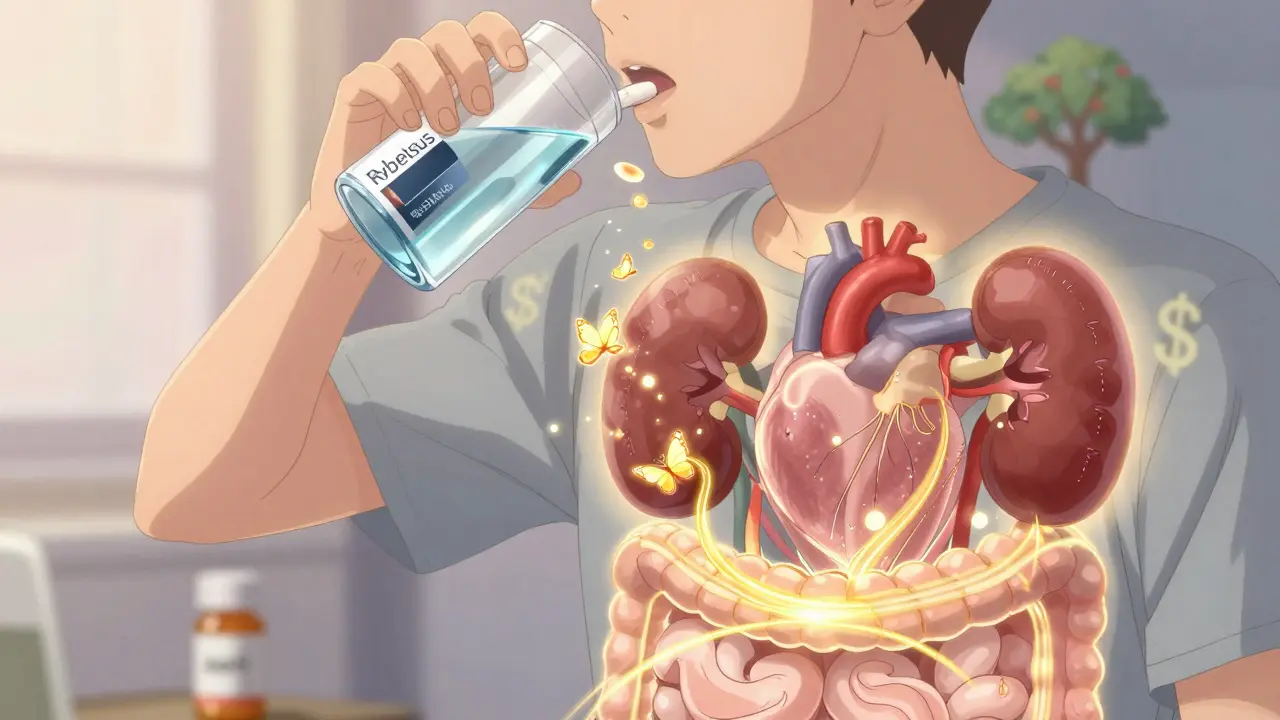
GLP-1 receptor agonists changed the game. Originally injectable drugs like liraglutide (Victoza) and semaglutide (Ozempic), they now include an oral version: semaglutide (Rybelsus). These drugs mimic a natural gut hormone that tells your body to release insulin only when blood sugar is high. They also slow digestion, reduce appetite, and help your pancreas make more insulin over time-without overworking it.
They lower A1C by 0.8% to 1.5%, and most people lose 3 to 6 kilograms (7 to 13 pounds). Some users report losing over 20 pounds. That’s huge. But the biggest win? Heart protection. In major trials, liraglutide cut major heart events by 13%. Semaglutide did even better. These drugs are now recommended for people with heart disease, kidney disease, or heart failure-even if their A1C is already under control.
The downside? Side effects. Nausea, vomiting, and diarrhea affect 20% to 40% of users, especially when starting or increasing the dose. Most people get used to it within 4 to 12 weeks. The injectable versions need refrigeration and daily or weekly shots. Rybelsus, the pill, avoids injections but must be taken on an empty stomach with just a sip of water-no food, no coffee, no other meds-for 30 minutes after. That’s hard to stick to.
Cost is the biggest barrier. Without insurance, injectable GLP-1 agonists cost $700 to $900 a month. Rybelsus is similar. Some manufacturers offer copay cards that bring it down to $0 for eligible patients. But if you’re uninsured or underinsured, it’s often out of reach. Still, prescriptions for GLP-1 agonists surpassed sulfonylureas in 2023, with over 12 million U.S. prescriptions written.
Real People, Real Experiences
Patients don’t always follow the guidelines. Real life gets messy. One user on the American Diabetes Association forum switched from metformin to Ozempic after five years. The nausea was bad at first, but after a month, their A1C dropped from 7.8 to 6.2, and they lost 18 pounds without changing their diet. "Life-changing," they said.
Another person couldn’t tolerate metformin at all-not even the extended-release version. "Constant diarrhea," they wrote. "I’ve tried every brand, every dose. I’m done with it." They switched to a GLP-1 agonist and now manage their blood sugar better, though the cost is a struggle.
On Reddit, someone shared that after three years on glipizide, they had four severe low blood sugar episodes that required ER visits. "I didn’t even know I was going low until I passed out." They switched to Jardiance (an SGLT2 inhibitor), and while their blood sugar stabilized, they got yeast infections-a known side effect.
Survey data backs this up. On Drugs.com, metformin has a 6.5/10 rating: 42% say it works, but 58% say stomach issues ruin it. Sulfonylureas rate 5.8/10: 47% effective, but 35% had hypoglycemia. GLP-1 agonists rate 7.2/10: 68% effective, but 41% had nausea. The trade-offs are clear.
Which One Is Right for You?
There’s no one-size-fits-all answer. But here’s how most doctors think about it now:
- If you’re just starting out, healthy, and want to avoid weight gain and low blood sugar-metformin is still the best first choice.
- If you have heart disease, kidney disease, or need to lose weight-GLP-1 agonists are now the top pick, even as first-line for some.
- If cost is your biggest concern and you’re young and healthy with no heart issues-sulfonylureas might still be used, but only if nothing else works.
Doctors are moving away from "one drug fits all." They now look at your whole picture: Do you have heart disease? Are you overweight? Can you afford this? Do you hate needles? Have you had low blood sugar before? Your answer to these questions shapes your treatment.
Also, don’t assume you’re stuck with one drug forever. Many people start on metformin, then add a GLP-1 agonist later. Some switch directly. Others try sulfonylureas for a few months and switch when side effects hit. Treatment is flexible. Your goal isn’t just to take a pill-it’s to live better, longer, and with fewer complications.
What’s Next?
The future of diabetes meds is moving fast. New triple agonists-hitting GLP-1, GIP, and glucagon receptors-are in late-stage trials. One drug, retatrutide, lowered A1C by 3.3% and caused over 24% body weight loss in early studies. That’s more than most people lose on bariatric surgery.
More oral GLP-1 agonists are coming. Cheaper biosimilars are expected to hit the market in the next few years. Insurance coverage is slowly improving. In five years, experts predict GLP-1 agonists will be first-line for most people-not because they’re better at lowering sugar, but because they protect your heart, kidneys, and weight.
Right now, though, you have choices. And knowing the trade-offs between metformin, sulfonylureas, and GLP-1 agonists puts you in control. Talk to your doctor-not just about numbers on a lab report, but about your life, your fears, your budget, and your goals. The best medicine isn’t the one with the strongest label. It’s the one you can take, every day, without fear.

Comments
Frank Drewery December 19, 2025 AT 19:02
Metformin saved my life after I was diagnosed. Started at 500mg, worked up slowly, and now I barely notice the stomach stuff. Lost 12 pounds without trying. Best part? I can afford it. No drama, no needles, just a pill that works.
benchidelle rivera December 19, 2025 AT 20:19
The fact that sulfonylureas are still prescribed at all is a scandal. They’re a relic from a time when doctors didn’t care about hypoglycemia or weight gain. If your provider still pushes glipizide as a first-line option, find a new one. This isn’t 1998 anymore.
Isabel Rábago December 20, 2025 AT 22:56
People act like GLP-1 agonists are some miracle drug, but let’s be real-they’re just fancy diet pills with a side of diabetes control. You’re not treating the disease, you’re masking it with a $900 monthly habit. And don’t get me started on the nausea. If you can’t handle a little discomfort, maybe you shouldn’t be managing your own health.
Metformin has been around for 70 years. It’s not glamorous, but it’s proven. The fact that we’re now treating diabetes like it’s a cosmetic issue says more about our culture than our medicine.
Matt Davies December 22, 2025 AT 02:43
GLP-1s are the rockstars of diabetes meds, no doubt. But man, the cost? It’s like getting a Ferrari for your blood sugar while everyone else is stuck with a bicycle. I’ve seen folks skip doses just to stretch their script. And then there’s the whole ‘take it on an empty stomach with a sip of water’ nonsense-it’s a full-time job just to take your pill.
Still… I’d rather have nausea than a trip to the ER from a low. And losing 20 pounds without lifting a finger? That’s not magic, that’s science. Kudos to the chemists.
Mike Rengifo December 23, 2025 AT 03:05
My aunt’s on metformin. She says it’s like having a grumpy roommate in your gut. But she’s had zero lows and her A1C’s at 5.9. Meanwhile, my cousin tried Ozempic, lost 30 lbs, and now she’s into hiking. Different strokes. Just wish insurance didn’t make it feel like a luxury.
Dev Sawner December 24, 2025 AT 03:14
It is imperative to note that the empirical efficacy of metformin, as validated by the UKPDS trial in 1998, remains statistically superior in long-term microvascular outcomes when compared to sulfonylureas, which exhibit no such benefit. Furthermore, the pharmacoeconomic analysis of GLP-1 agonists reveals a cost-per-QALY ratio that exceeds acceptable thresholds in most public health systems. One must therefore question the clinical rationale for prioritizing cost-prohibitive agents over established, evidence-based first-line therapy.
Moses Odumbe December 26, 2025 AT 01:36
GLP-1s are 🔥🔥🔥 but the price is 💸💸💸. I got mine for $0 thanks to the copay card. Metformin gave me the runs like a caffeinated squirrel. Sulfonylureas? Nah. I nearly died once from a low. Now I’m on Rybelsus. Nausea for 2 weeks, then boom-no more cravings. My A1C dropped from 8.1 to 6.0. Worth it. 💪
bhushan telavane December 27, 2025 AT 10:38
In India, metformin is sold for less than $1 a month. We don’t even think about GLP-1s-they’re for rich countries. But here, people still use glibenclamide because it’s cheap and works. We don’t have the luxury of side effects. We just need to survive.
mark shortus December 28, 2025 AT 14:48
MY BEST FRIEND’S DAD DIED FROM A LOW BLOOD SUGAR ON GLIPIZIDE. HE WAS JUST WALKING TO THE FRIDGE. ONE MINUTE HE WAS FINE. THE NEXT-HE WAS ON THE FLOOR. NO ONE KNEW. HE WAS 67. THIS ISN’T MEDICINE. THIS IS A TRAGEDY WAITING TO HAPPEN. WHY ARE WE STILL PRESCRIBING THIS? WHY?!
Elaine Douglass December 30, 2025 AT 03:21
I switched from metformin to Ozempic and my stomach was not happy at first but now I feel like a new person. No more foggy brain. No more cravings. And I lost 18 lbs without even trying. My doctor said it’s not just about sugar it’s about my heart too and that made me cry
Takeysha Turnquest December 30, 2025 AT 20:06
We treat diabetes like a problem to be solved with a pill when really it’s a mirror. A reflection of our food system our stress our sleep our loneliness. The drugs just patch the hole while the whole house burns down. Metformin? A bandaid. GLP-1? A flamethrower. But neither fixes why the fire started.