When you pick up a generic pill at the pharmacy, you expect it to work just like the brand-name version. And for most people, it does. But how does the FDA make sure that generic drugs stay safe and effective after they hit the shelves? Unlike new drugs, which go through years of clinical trials, generics get approved based on one key fact: they’re bioequivalent to the original. That means they deliver the same amount of active ingredient into your bloodstream at the same rate. But bioequivalence doesn’t tell the whole story. What happens when a patient has a strange reaction months after switching? What if a generic made in a different factory behaves differently? That’s where post-market surveillance comes in - and it’s far more active than most people realize.
How Generic Drugs Get Approved - and Why That’s Not Enough
The Hatch-Waxman Act of 1984 changed everything. It let companies skip expensive clinical trials if they could prove their generic version matched the brand-name drug’s performance. That’s how we got 90% of prescriptions filled with generics today. But here’s the catch: those approval studies usually involve fewer than 100 people. They’re not designed to catch rare side effects, long-term risks, or differences in how the drug behaves in real-world conditions. A pill might be bioequivalent in a lab but still cause more stomach upset in elderly patients. Or a generic inhaler might not deliver the same dose if the propellant formula is slightly off. The FDA knows this. That’s why approval is just the start - not the finish line.
The Tools the FDA Uses to Watch Generic Drugs After Approval
The FDA doesn’t wait for problems to pile up. It’s always listening. Three main systems keep watch:
- FAERS (FDA Adverse Event Reporting System) - This is the backbone. Doctors, pharmacists, patients, and even drug companies report side effects, allergic reactions, or unexpected failures. In 2023 alone, FAERS received over 2 million reports - more than half involving generics. The system doesn’t prove a drug caused the problem, but it flags patterns. If 200 people report the same rare rash after switching to a new generic version of a blood pressure pill, that’s a signal.
- Sentinel Initiative - This is the FDA’s real-time data network. It taps into health records from over 200 million Americans, pulling from insurance claims, hospital systems, and electronic medical records. Instead of waiting for someone to report a problem, Sentinel can spot trends automatically. For example, if a new generic version of a diabetes drug suddenly shows a spike in kidney-related hospital visits across multiple states, Sentinel picks it up within weeks.
- MedWatch - This is the public-facing portal where anyone can report a problem. A patient who feels dizzy after switching to a cheaper generic can file a report in minutes. These reports matter. In 2019, a study of 47,000 reports found that 15% of complaints about generics involved patients saying the drug “just didn’t work like it used to.” Sometimes, it’s the nocebo effect - people expect to feel worse, so they do. But sometimes, it’s real.
On top of that, the FDA sends inspectors to manufacturing plants - unannounced. They check if the generic maker is still producing the drug exactly as approved. A change in the filler, coating, or even the shape of the tablet can affect how the drug dissolves. That’s why a pill made in India might behave differently than one made in Pennsylvania, even if they’re labeled the same.
Complex Generics Are the Biggest Challenge
Not all generics are created equal. Simple pills - like metformin or lisinopril - are easy to copy. But complex drugs? That’s where things get tricky. Think inhalers, creams, injections, or extended-release pills. These aren’t just about the active ingredient. They depend on delivery systems, particle size, or chemical coatings that are hard to replicate. The FDA calls these “complex generics,” and they’re growing fast. In 2023, over 40% of new generic approvals were for complex products.
For these, bioequivalence studies often fall short. Two inhalers might deliver the same amount of drug, but if one releases it too fast, it could cause throat irritation. Or if a topical cream absorbs differently, it might not heal the rash as well. That’s why the FDA launched the Center for Research on Complex Generics in 2020, partnering with universities to study these issues. They’re also building AI tools to predict problems before they happen. Right now, it takes months to spot a safety signal. The goal? Cut that to weeks.
What Happens When Something Goes Wrong?
When the FDA spots a red flag, it doesn’t just sit on it. Here’s what happens next:
- Investigation - The Office of Generic Drugs and the Office of Surveillance work together. They look at all reports, check manufacturing records, and compare data from Sentinel.
- Communication - If there’s a real risk, the FDA issues a “Dear Healthcare Provider” letter. These go out to doctors and pharmacists, warning them about the issue. Sometimes, they update the drug’s label to add new warnings.
- Enforcement - If a manufacturer is cutting corners, the FDA can demand a recall. In 2022, a generic version of a heart medication was pulled after reports of inconsistent dosing. The company had changed the manufacturing process without telling the FDA.
These actions aren’t common - but they happen. And they’re why the FDA doesn’t just approve generics and walk away.
Why Patient Perception Matters - Even When It’s Not Scientific
Here’s something surprising: sometimes, the problem isn’t the drug. It’s the patient’s mind. Studies show that when people switch from a brand-name drug to a generic, they’re more likely to report side effects - even if the drugs are identical. This is called the nocebo effect. A patient who believes generics are inferior might feel worse simply because they expect to. But that doesn’t mean it’s not real to them. The FDA has to account for this too. If 500 people report the same issue after switching, even if it’s psychological, the FDA still investigates. Why? Because if patients stop taking their meds because they think the generic doesn’t work, that’s a public health risk.
The Future: AI and Real-World Data
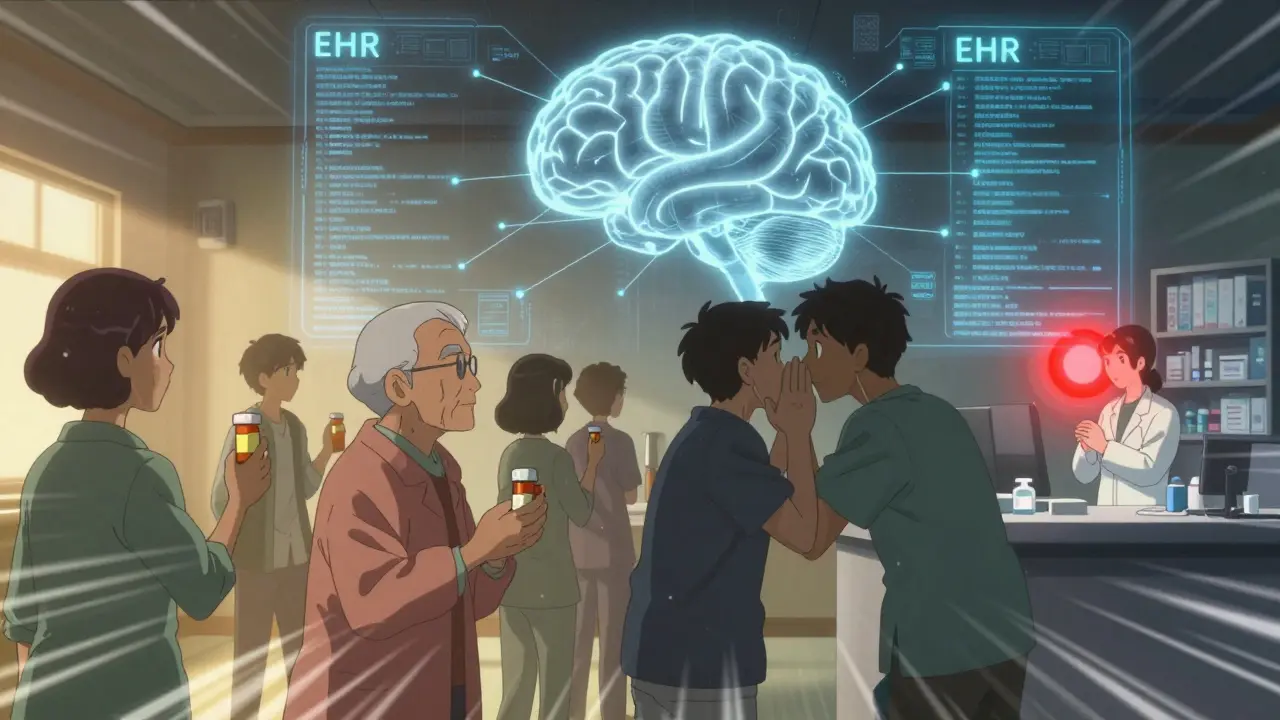
The FDA isn’t standing still. In 2023, it invested $5.2 million into AI and machine learning projects to improve generic drug surveillance. The goal? Use real-world data - from EHRs, pharmacy records, even wearable devices - to predict problems before they spread. Imagine an AI that notices a pattern: patients taking Generic X from Manufacturer Y are 30% more likely to have elevated liver enzymes than those taking Generic X from Manufacturer Z. That kind of insight used to take years. Now, it could be detected in days.
The Sentinel Initiative is also expanding. More hospitals, insurers, and clinics are joining. That means more data, faster. By 2027, experts predict AI tools could cut signal detection time by two-thirds for complex generics. That’s not science fiction - it’s the next step.
What You Can Do
You don’t have to wait for the FDA to act. If you notice something off after switching to a generic - whether it’s a new side effect, reduced effectiveness, or even just a strange feeling - report it. Use MedWatch. Talk to your doctor. Your report could be the one that triggers an investigation. And if you’re worried about a generic you’re taking, ask your pharmacist: “Is this the same formulation as before?” Sometimes, a switch between manufacturers can make a difference.
Generic drugs save the U.S. healthcare system over $300 billion a year. They’re safe, effective, and essential. But safety doesn’t end at approval. It’s an ongoing conversation - between regulators, manufacturers, doctors, and patients. And that’s how we make sure the next pill you take is just as good as the one before it.
Are generic drugs as safe as brand-name drugs?
Yes, for the vast majority of patients. The FDA requires generics to meet the same strict standards for quality, strength, and purity as brand-name drugs. But because generics are approved based on bioequivalence - not full clinical trials - post-market surveillance is critical to catch rare or long-term issues that might not show up during approval. Most people experience no difference at all.
How does the FDA know if a generic drug is causing side effects?
The FDA uses multiple systems: FAERS collects voluntary reports from patients and doctors, Sentinel analyzes real-world health data from millions of people, and MedWatch lets anyone report problems. When patterns emerge - like a spike in reports of dizziness after switching to a specific generic - the FDA investigates. They don’t rely on single reports; they look for trends across thousands of cases.
Can a generic drug be different from the brand-name version?
The active ingredient must be identical. But the inactive ingredients - like fillers, dyes, or coatings - can be different. For simple pills, this rarely matters. But for complex drugs like inhalers, creams, or extended-release tablets, even small changes can affect how the drug is absorbed or released. That’s why the FDA pays extra attention to these products.
What should I do if I think my generic medication isn’t working?
Don’t stop taking it. Talk to your doctor or pharmacist. Ask if your prescription was switched to a different manufacturer. If you’re experiencing new side effects or reduced effectiveness, report it to MedWatch. Sometimes, switching back to the original generic or brand-name version helps. But always consult a professional first.
Are there more problems with generics made overseas?
The FDA inspects all manufacturing facilities - whether in the U.S., India, China, or elsewhere - using the same standards. In fact, most generic drugs sold in the U.S. are made overseas. The FDA has inspection teams in over 100 countries. Problems aren’t tied to location; they’re tied to quality control. A poorly made pill, no matter where it’s made, is a risk.

Comments
henry mateo December 31, 2025 AT 04:04
just switched to a generic for my blood pressure med and honestly? felt kinda weird for a week. not sure if it was the drug or my head playing tricks. but i filed a medwatch report anyway. better safe than sorry.
Nadia Spira December 31, 2025 AT 21:44
Oh please. The FDA's 'post-market surveillance' is a theater of the absurd. They approve generics based on 80 people in a lab and then act shocked when people start reporting side effects six months later. It's not surveillance-it's damage control with a PowerPoint presentation. And don't get me started on the 'nocebo effect' excuse. Patients aren't delusional-they're just tired of being treated like lab rats with a prescription.
Meanwhile, the same companies that make the brand-name drugs also make the generics. Same factories. Same supply chains. But suddenly, when it's generic, it's 'bioequivalent' and not 'identical'? Bullshit. You're not fooling anyone with your jargon.
The real issue? Profit. Generics are cheaper because corners are cut. Fillers change. Coatings thin out. The FDA doesn't have the resources to catch every variation. And when they do? They issue a 'Dear Healthcare Provider' letter like it's a polite note from your librarian. Meanwhile, people are getting sicker.
Stop pretending this is science. It's regulatory appeasement dressed up as public health. And if you think AI will fix this? Good luck training an algorithm on data that's 80% garbage reports and 20% silent suffering.
Glendon Cone January 1, 2026 AT 13:36
Big respect to the FDA for even trying to keep up with this stuff 🙌
Generics save lives and money, and I get that people get nervous switching-but honestly, most of the time it’s fine. My grandma’s been on generic metformin for 8 years and still hikes every weekend. But yeah, if something feels off? Report it. Seriously. That MedWatch thing is low-key powerful.
Also, AI detecting liver enzyme spikes in days? That’s wild. We’re living in the future, folks. 🤖💊
Aayush Khandelwal January 2, 2026 AT 23:35
Let’s not romanticize the FDA or demonize generics. The system is flawed but functional. Complex generics? Yeah, they’re a beast. I’ve worked in pharma R&D in Bangalore-we replicated an extended-release tablet for 18 months just to match the dissolution profile. The inactive ingredients? More critical than most realize. A single polymer change can turn a 12-hour pill into a 4-hour one.
But here’s the kicker: the FDA doesn’t just rely on reports. They do batch-to-batch analytics. They sequence the API. They test for impurities. And yes, they send inspectors to plants in India, China, even Poland. It’s not perfect-but it’s not a free-for-all either.
Patients aren’t wrong to feel uneasy. But the solution isn’t fear. It’s transparency. Tell patients which manufacturer made their pill. Let them choose. That’s the real innovation waiting to happen.
Kelly Gerrard January 4, 2026 AT 00:58
While I appreciate the thoroughness of the FDA’s surveillance protocols, I must emphasize that patient autonomy and informed consent remain fundamentally unaddressed in the current framework. The absence of mandatory manufacturer labeling on generic substitutions constitutes a systemic failure in ethical pharmaceutical practice. Without standardized identification of batch origin, patients are rendered passive subjects in a clinical experiment they never consented to. This is not merely a regulatory oversight-it is a moral lapse.
Sandeep Mishra January 4, 2026 AT 10:07
Hey, I get why people are nervous. I’m from India-we make a ton of these generics. I’ve seen the factories. Some are clean, some are... not. But the FDA doesn’t care where it’s made-they care if it passes the test. And honestly? Most of the time it does.
But here’s what nobody talks about: the pharmacist. They’re the ones switching your pill without telling you. You walk in for your lisinopril, and suddenly it’s a different color. No warning. No explanation. That’s where the fear starts.
Maybe the answer isn’t more AI or more inspections. Maybe it’s just: tell the patient. Let them know. Give them a choice. That’s not complicated. That’s just human.
Joseph Corry January 4, 2026 AT 15:12
How quaint. The FDA ‘investigates’? Please. They have 300 inspectors for over 10,000 manufacturing sites globally. That’s one inspector per 33 facilities. And they get 2 million FAERS reports? Most are noise. Spam. People blaming their headaches on their blood pressure med because they had a bad night’s sleep.
AI? Machine learning? Please. You can’t train an algorithm on data that’s 90% garbage and expect it to find signal. This is technobabble wrapped in bureaucratic vanity. The truth? We’re gambling with millions of lives because it’s cheaper to let the market decide than to fund proper oversight.
And don’t even get me started on the ‘nocebo effect.’ That’s the go-to excuse for regulators who don’t want to admit they’re out of their depth. Patients aren’t irrational-they’re observant. And they’re being gaslit by a system that profits from their silence.
Henry Ward January 5, 2026 AT 16:47
Wow. Just wow. You wrote a whole essay about how the FDA ‘monitors’ generics like it’s some kind of heroic public service. Meanwhile, people are dying because their generic thyroid med suddenly stopped working. And you think a ‘Dear Healthcare Provider’ letter fixes that?
Let me guess-you’ve never had to switch from brand-name Synthroid to a generic and wake up with your heart pounding at 3 a.m. for three weeks straight. No? Then don’t talk to me about ‘bioequivalence.’
This isn’t science. It’s corporate welfare. The FDA is a rubber stamp for Big Pharma’s profit margins. And you? You’re just the PR guy with a PhD.
Kunal Karakoti January 7, 2026 AT 11:19
It’s interesting how we treat medicine like a product, when in reality it’s a relationship between body, chemistry, and trust. The FDA tries to measure equivalence, but the human body doesn’t care about lab results-it cares about consistency. If your pill changes shape, color, or even taste, your nervous system notices-even if the active ingredient is identical.
Maybe the real question isn’t whether generics are safe, but whether we’ve forgotten how to trust. We expect perfection from medicine, but we’ve built a system that prioritizes speed and cost over continuity. The solution isn’t more surveillance-it’s more honesty. Let patients know when their pill changes. Let them choose. Let them feel heard.
And maybe, just maybe, we’ll stop treating illness like a bug to be patched, and start treating it like a conversation to be respected.