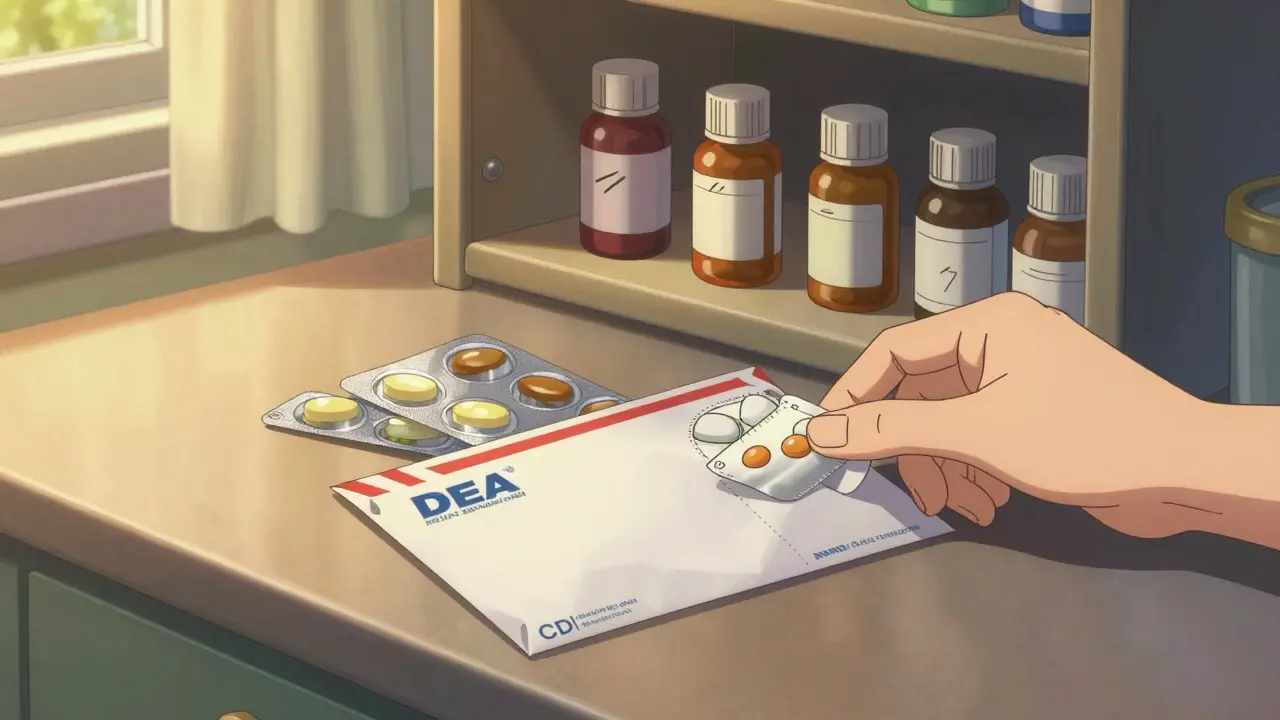
Every year, millions of unused or expired pills sit in medicine cabinets across the UK and US - not because people want to keep them, but because they don’t know how to get rid of them safely. Flushing them down the toilet? Throwing them in the trash? Both are dangerous. The first pollutes water supplies. The second makes it easy for kids, pets, or people looking for drugs to find them. That’s why prepaid drug mail-back envelopes have become one of the safest, simplest ways to dispose of unwanted medications - and they’re available right now.
What Exactly Are Prepaid Drug Mail-Back Envelopes?
These are special envelopes you can order online or pick up at a pharmacy. They come with prepaid postage, so you don’t pay to mail them back. You fill them with expired, unused, or unwanted pills, liquids, creams, or patches - then drop them in any mailbox. That’s it. No trips to police stations or pharmacies. No waiting for a take-back day. The envelope goes straight to a DEA-registered facility where everything inside is safely incinerated. No landfill. No water contamination. No risk of misuse.The system was created after the U.S. passed the Secure and Responsible Drug Disposal Act in 2010. Since then, it’s been backed by the FDA, DEA, and EPA. The FDA says mail-back envelopes are “one of the best ways to safely dispose of unused or expired prescription and nonprescription medicines.” They’re not just convenient - they’re the most environmentally responsible option you have.
What Can You Put in These Envelopes?
Not everything goes in. But most common medications do:- Prescription pills and liquids
- Over-the-counter drugs (like ibuprofen or allergy pills)
- Pet medications
- Medication samples from doctors
- Transdermal patches (like nicotine or pain patches)
- Lotions and creams (up to 4 ounces total)
What stays out?
- Needles, syringes, or sharps - those need special disposal kits
- Aerosols and inhalers - these require different packaging
- Illicit drugs or Schedule I substances (like heroin)
- Chemotherapy drugs
- Any non-medical items - no batteries, no plastic bottles, no candy wrappers
Some providers, like Med Take Back California, even offer separate envelopes for inhalers and injectables. If you’re unsure, check the provider’s website. Most list acceptable items clearly.
How Much Can You Send in One Envelope?
Each envelope holds up to 8 ounces - about the weight of a small bottle of cough syrup or a handful of pills. That’s enough for most households. If you have a lot of meds, you can order multiple envelopes. Some companies sell them in packs of 3, 50, or even 250, which is great for families, care homes, or pharmacies helping customers.Don’t overfill. If the envelope bulges or won’t seal, you’ve gone too far. Use a second envelope. Overfilling can cause leaks or delays in processing.
How Do You Use One?
It’s that simple:- Get the envelope. Order online or pick one up at a participating pharmacy. Some are free, especially if you’re getting opioids prescribed.
- Remove the meds. Take pills out of their original bottles. Don’t put the bottles in the envelope - just the medicine. Scratch out your name, address, and prescription number on the bottle. You can recycle the bottle later.
- Fill the envelope. Put pills, liquids, creams, or patches inside. Don’t crush pills. Don’t mix with cat litter or coffee grounds - that’s for trash disposal, not mail-back.
- Seal it. Use the tamper-evident seal provided. Some envelopes come with special orange tape - use it.
- Mail it. Drop it in any USPS mailbox. No stamp needed. No trip to the post office.
- Track it (optional). Some services let you check online when your envelope was received and destroyed. Great if you want proof it’s gone.
That’s it. No waiting. No cost. No hassle.

Where Can You Get Them?
You don’t have to wait for a take-back event. Here’s where to find them:- Online retailers: Mail Back Meds, Stericycle, American Rx Group, and DisposeRx sell envelopes directly to consumers. Search for “prepaid drug mail-back envelope” - you’ll find them.
- Pharmacies: Many pharmacies, especially chains like CVS, Walgreens, and independent ones, keep envelopes on hand. Ask at the counter.
- Doctors’ offices: Some providers give them out with prescriptions, especially for opioids.
- Upcoming: Opioid Analgesic REMS Program - Starting March 31, 2025, pharmacies filling opioid prescriptions will be required to offer free mail-back envelopes. This is a big step - it means anyone getting an opioid painkiller will get a disposal envelope with their prescription.
There’s also a free map from the Drug Takeback Solutions Foundation that shows locations where you can get envelopes or drop them off. Check it before you buy - you might find one nearby for free.
Why This Matters - Environment and Safety
Think about this: flushing one pill can pollute thousands of gallons of water. Medications in landfills leach into soil and groundwater. Fish and wildlife have been found with traces of antidepressants, antibiotics, and hormones in their bodies - all from improper disposal.Mail-back envelopes solve this. The contents are incinerated at high temperatures in certified facilities. That’s the only way to fully destroy pharmaceuticals without leaving toxins behind. Companies like American Rx Group partner with waste-to-energy plants - meaning the heat from burning meds actually generates electricity.
And it stops abuse. Unused painkillers in a cabinet are a major source of opioid misuse. Teens often find them there. Mail-back envelopes remove that risk. The DEA says 1.06 million pounds of prescription drugs were collected during one National Take Back Day in 2022. Mail-back envelopes help make that number even bigger - without requiring people to leave their homes.
What’s Not Covered?
Mail-back envelopes aren’t perfect. Here’s what you need to know:- Not all pharmacies offer them. Participation is voluntary. Always call ahead.
- No sharps. Needles and lancets? You need a sharps container. These envelopes won’t take them.
- No inhalers. These need special packaging. Some companies offer separate inhaler envelopes - check before you buy.
- Not available everywhere. While the system works in all 50 states, rural areas may have fewer drop-off points or slower delivery.
But here’s the key: if you can’t get a mail-back envelope, the next best thing is to take your meds to a local take-back event. The DEA runs two nationwide collection days each year. Find one near you.
What Happens After You Mail It?
Once the envelope reaches the facility, it’s logged, scanned, and tracked. The contents are destroyed using high-temperature incineration - the only method approved by the DEA for pharmaceutical waste. Nothing goes to landfills. Nothing gets recycled. Nothing is reused.Some services give you a digital receipt showing:
- Date you mailed it
- Date it arrived at the facility
- Date it was destroyed
That’s useful if you’re a caregiver managing meds for an elderly parent, or if you’re required to prove disposal for legal or insurance reasons.
Who Benefits the Most?
- Families: Keeps kids and pets safe from accidental poisoning. - Elderly: No need to drive or carry heavy bags of meds. - People with chronic illness: Easy way to dispose of unused refills. - Pharmacies and clinics: Shows they care about public health and sustainability. - The planet: Prevents drug pollution in rivers, lakes, and soil.It’s not just about getting rid of old pills. It’s about protecting your family, your community, and the environment.
Final Tip: Don’t Wait
If you have expired meds sitting in your cabinet, don’t wait for a take-back day. Don’t flush them. Don’t toss them. Get a prepaid envelope. It costs nothing. Takes five minutes. And it’s the only disposal method that’s truly safe, legal, and eco-friendly.Start today. Your water, your kids, and your planet will thank you.
Can I put pills in their original bottles inside the mail-back envelope?
No. Remove pills from their bottles before placing them in the envelope. The envelope is designed for the medication only. You can recycle the empty bottle after scratching out your personal information. Bottles can break, leak, or interfere with the sealing process.
Are these envelopes free?
Some are, some aren’t. Many providers sell them online for a small fee - often $5-$10 per envelope. But starting March 31, 2025, pharmacies filling opioid prescriptions will be required to give you a free mail-back envelope. Some pharmacies also offer them for free on a voluntary basis - ask when you pick up your prescription.
Can I mail back expired vitamins or supplements?
Yes. Most programs accept over-the-counter supplements like vitamin D, fish oil, or probiotics. If it’s a pill, capsule, or liquid meant for human consumption, it’s usually allowed. When in doubt, check the provider’s guidelines.
What if I live in a rural area with no nearby pharmacy?
Order online. Mail-back envelopes are shipped directly to your home. You don’t need to visit a pharmacy. Once you have the envelope, just fill it and drop it in any USPS mailbox. This is one of the biggest advantages - accessibility doesn’t depend on your location.
Is it legal to mail back controlled substances like opioids?
Yes - and it’s encouraged. The DEA and FDA specifically support this method for controlled substances. The envelopes are designed to meet strict federal security standards. The upcoming Opioid Analgesic REMS Program (starting March 31, 2025) will make this even easier by requiring pharmacies to offer free envelopes with every opioid prescription.
Can I use these envelopes for my pet’s medications?
Yes. Most providers accept pet medications, including antibiotics, pain relievers, and heartworm pills. Just make sure they’re not sharps or injectables - those require separate disposal. If you’re unsure, check the provider’s list of accepted items.

Comments
Ben Kono January 12, 2026 AT 09:19
These envelopes are a game changer ive been dumping my old pain meds in the trash for years thought no one cared turns out everyone cares and the planet too
Rinky Tandon January 12, 2026 AT 22:11
This is the most irresponsible waste management strategy i've ever seen pharmaceuticals are not to be trifled with and this postal system is a regulatory loophole disguised as convenience
Sonal Guha January 13, 2026 AT 01:37
Who even needs this system if you just throw pills in the bin with coffee grounds it works fine and costs nothing
Cassie Widders January 13, 2026 AT 19:08
I got one from my pharmacist last month filled it with my moms expired blood pressure pills and dropped it in the mailbox. Easy. No drama.
Rebekah Cobbson January 13, 2026 AT 20:03
This is exactly the kind of simple, practical solution we need more of. No one should have to choose between safety and convenience. Thank you for sharing the details.
Audu ikhlas January 15, 2026 AT 00:11
Why are we letting americans dictate how we dispose of medicine in the third world this system is useless where i live and its just another form of cultural imperialism
Alice Elanora Shepherd January 15, 2026 AT 21:36
Important note: Always check if your envelope is DEA-certified. Some third-party vendors sell non-compliant versions that may not be incinerated properly. Look for the official seal - it’s usually on the back. Also, if you’re mailing patches, fold them in half with the adhesive sides together before inserting. This prevents accidental exposure during handling.
Craig Wright January 17, 2026 AT 07:20
Let’s be honest - this is just another bureaucratic overreach. In the UK we’ve managed perfectly well for decades without American-style mail-back envelopes. The NHS already has take-back programs. Why reinvent the wheel? This feels like a corporate cash grab disguised as public service.
Jennifer Phelps January 17, 2026 AT 11:24
Can you mail back expired vitamins too i have a whole drawer of them and i dont know if they count as medicine or just fancy sugar pills
Alice Elanora Shepherd January 19, 2026 AT 10:36
Yes - most programs accept vitamins, supplements, and herbal capsules, as long as they’re meant for human consumption. Just make sure they’re not in glass bottles. Empty the contents into the envelope, and recycle the bottle after scrubbing off your info. Some providers even list supplements explicitly on their website - check there if you’re unsure.
Cecelia Alta January 20, 2026 AT 18:35
Okay but like… why is this even a thing? I mean, who’s really going to go through the trouble of ordering an envelope, removing pills from bottles, scratching off labels, and waiting for a USPS pickup? It’s not like anyone’s going to steal my expired ibuprofen - it’s basically sugar. And don’t even get me started on the environmental cost of shipping all these envelopes across the country - it’s like we’re trying to save the planet by burning fossil fuels to do it. This feels like performative activism wrapped in a tamper-evident seal.
Sona Chandra January 21, 2026 AT 11:43
THIS IS A SCAM the pharmaceutical companies are making money off this they know people will pay for envelopes so they can keep selling more drugs its all a cycle of greed
Prachi Chauhan January 22, 2026 AT 20:28
It’s funny how we treat medicine like it’s disposable when in reality it’s the most intimate part of our health. We hoard it out of fear, then flush it out of guilt. The mail-back envelope doesn’t just solve a disposal problem - it forces us to confront why we kept it in the first place. Maybe we didn’t need it. Maybe we were overprescribed. Maybe we were scared. The envelope doesn’t judge. It just takes it. And that’s quietly powerful.