Steroid Psychosis Risk Calculator
Steroid Psychosis Risk Calculator
Your Risk Assessment
How This Calculator Works: Your risk is calculated based on dose (converted to prednisone equivalents) and duration. According to medical studies, patients on high-dose steroids are at increased risk for psychosis. Symptoms typically appear within the first 5 days of starting treatment.
What Is Steroid-Induced Psychosis?
Steroid-induced psychosis isn’t just a rare side effect-it’s a real, dangerous psychiatric emergency that can happen to anyone taking high-dose corticosteroids. Whether it’s prednisone, dexamethasone, or methylprednisolone, these powerful drugs can flip a person’s mind overnight. Symptoms like hallucinations, paranoia, or wild mood swings don’t mean the patient is "going crazy." They’re a direct biological reaction to the drug. The DSM-5 classifies this as a steroid-induced psychosis a substance/medication-induced psychotic disorder triggered by corticosteroid exposure, and it’s more common than most doctors realize.
Studies show that between 2% and 60% of people on high-dose steroids develop psychiatric symptoms. The real red flag? About 6% develop full-blown psychosis. The Boston Collaborative Drug Surveillance Program found that 4.6% of patients on over 40 mg of prednisone daily had symptoms. That number jumps to 18.4% when the dose hits 80 mg or more. This isn’t rare. It’s predictable. And it’s preventable-if you know what to look for.
When Do Symptoms Show Up?
Steroid-induced psychosis doesn’t creep in slowly. It hits fast. Most people start showing signs within the first five days of starting treatment. Sometimes it’s as early as day two. Early warning signs aren’t dramatic. They’re subtle: confusion, restlessness, trouble sleeping, irritability, or being unusually emotional. These aren’t just "stress"-they’re the brain’s first alarm bell.
From there, things can escalate quickly. Hallucinations (seeing or hearing things that aren’t there), delusions (false, fixed beliefs), manic behavior (grandiosity, reckless spending, no need for sleep), or even violent outbursts can follow. In one review of 79 cases, 40% had depression, 28% had mania, and 14% had full psychosis. The pattern isn’t random. Short-term, high-dose steroids (like during a flare-up) often trigger mania. Long-term use tends to cause depression. But psychosis? That can happen at any point.
Why Does This Happen?
Corticosteroids mimic cortisol, your body’s natural stress hormone. When you take a synthetic version in high doses, it floods your system and throws off your brain’s chemistry. The hypothalamo-pituitary-adrenal (HPA) axis-the system that regulates stress, mood, and sleep-gets overloaded. Glucocorticoid receptors in the brain get overstimulated, while mineralocorticoid receptors are under-stimulated. This imbalance disrupts neurotransmitters like serotonin and dopamine, leading to cognitive fog, emotional instability, and psychotic symptoms.
It’s not just about the dose. Some people are genetically more vulnerable. That’s why researchers at the NIH are running a study (NCT04876321) tracking 500 patients on high-dose steroids to find biomarkers and genetic signals that predict who’s at risk. Until then, we treat everyone on high doses as potentially at risk.
How to Spot It in the Emergency Room
Emergency staff don’t always connect the dots. A patient pacing the hallway, yelling at imaginary people, or refusing to eat because they think the food is poisoned? Many assume it’s schizophrenia or bipolar disorder. But if they started steroids three days ago? That’s the clue.
Here’s what every ER team must do:
- Ask: "When did they start steroids? What’s the dose?" Don’t assume. Get the exact name and amount.
- Check for medical mimics: high blood sugar, low sodium, infection, kidney failure, or brain tumors. Steroid psychosis looks like these. Blood tests for glucose, electrolytes, CRP, and cortisol levels are essential.
- Rule out drugs or alcohol. Even a few drinks can worsen symptoms.
- Don’t jump to psychiatric diagnosis. Steroid psychosis is a medical condition first.
The American College of Emergency Physicians says: if psychosis follows steroid use, assume it’s steroid-induced until proven otherwise. That mindset saves lives.
Emergency Treatment: What Works
First rule: don’t give high-dose antipsychotics. Many ER doctors reach for 20 mg of olanzapine or 10 mg of haloperidol-doses meant for acute schizophrenia. That’s dangerous. Steroid psychosis responds to much lower doses. Overmedicating risks sedation, low blood pressure, and extrapyramidal symptoms like tremors or muscle rigidity.
Here’s what the evidence says:
- Olanzapine: 2.5 to 20 mg daily. Start with 5 mg orally. If the patient won’t swallow, use a disintegrating tablet or IM 10 mg.
- Risperidone: 1 to 4 mg daily. Effective, with fewer movement side effects than haloperidol.
- Haloperidol: 0.5 to 1 mg orally, or 2 to 5 mg IM. Always give with benztropine or diphenhydramine to prevent muscle spasms.
- Benzodiazepines (like lorazepam 1-2 mg): Helpful for acute agitation, but not a long-term fix.
Physical restraints? Only if someone is actively trying to hurt themselves or others. Restraints cause trauma and can worsen psychosis. De-escalation, calm voices, and a quiet room work better than force.
The Real Fix: Taper the Steroids
Medications help calm symptoms. But the only way to truly reverse steroid-induced psychosis is to lower the steroid dose. Studies show 92% of patients fully recover when steroids are tapered to under 40 mg of prednisone (or 6 mg of dexamethasone) per day.
But here’s the catch: you can’t just stop steroids cold. If someone is on them for lupus, asthma, or after a transplant, sudden withdrawal can cause adrenal crisis-low blood pressure, shock, even death. So tapering must be smart.
Work with the prescribing doctor. If the steroid was started for a flare-up, see if the condition has improved. Can you drop from 80 mg to 40 mg? Then to 20 mg? Sometimes switching from prednisone to a less potent steroid helps. The goal isn’t to stop the drug entirely-it’s to find the lowest dose that still controls the underlying disease.
What If You Can’t Taper?
Some patients need to stay on high-dose steroids for life. In those cases, antipsychotics become long-term tools. Olanzapine and risperidone are preferred. Lithium can help prevent mania, but it’s risky-it needs blood tests, kidney monitoring, and can cause tremors or thyroid problems. Only use it with a psychiatrist involved.
Other options like SSRIs, tricyclics, or mood stabilizers (valproate, carbamazepine) have been tried, but evidence is weak. Stick to what works: low-dose antipsychotics + cautious steroid reduction.

Why So Many Doctors Miss This
A 2022 survey of 127 ER doctors found that 89% knew steroids could cause psychosis. But only 43% followed the recommended tapering protocol. Why? Fear. Fear of triggering adrenal crisis. Fear of the patient’s primary doctor being angry. Fear of not acting fast enough. So they give high-dose antipsychotics instead-and the patient gets worse.
The American College of Emergency Physicians updated its guidelines in March 2023: for medication-induced psychosis, use 50-75% less antipsychotic than you would for primary psychosis. That’s the key. Less is more.
What’s Coming Next
By mid-2025, the American Psychiatric Association will release a clinical decision tool that tells doctors: "This patient is at 38% risk for psychosis based on dose, age, and history of depression." It’ll suggest a taper plan and medication dose in real time. That’s a game-changer.
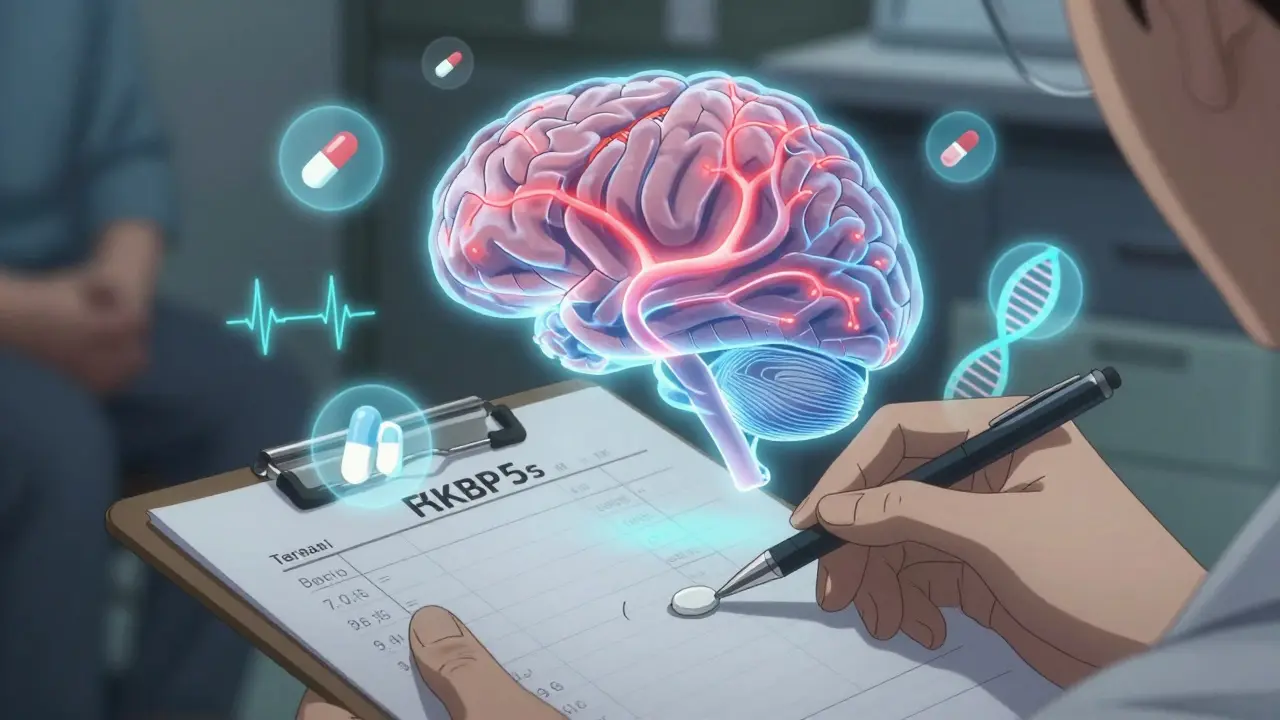
Meanwhile, research into genetic markers is moving fast. If you’re on high-dose steroids, your doctor might soon test your DNA for variants in the FKBP5 gene-a known risk factor for steroid-related mood changes.
For now, the best tool is awareness. If you’re prescribing steroids, ask: "What’s their mental health history? Are they anxious? Depressed? Have they had mood swings before?" If you’re a patient or family member, watch for early signs. Don’t wait for full psychosis. Talk to your doctor the moment things feel "off."
Can steroid-induced psychosis be permanent?
No, steroid-induced psychosis is almost always reversible. In 92% of cases, symptoms fully resolve once the steroid dose is lowered. Recovery usually takes days to weeks. Permanent brain damage from this condition is extremely rare. The key is early recognition. The longer psychosis goes untreated, the harder it is to manage-but it’s still treatable.
Are some steroids more likely to cause psychosis than others?
Yes. Prednisone, methylprednisolone, and dexamethasone are the most commonly linked to psychosis because they’re used in high doses for serious conditions. Hydrocortisone, which is closer to natural cortisol, rarely causes it. The risk is tied to potency and dose, not the specific drug. A high dose of any corticosteroid can trigger symptoms.
Can I just stop taking my steroids if I feel psychotic?
No. Stopping steroids suddenly can cause adrenal insufficiency-a life-threatening drop in blood pressure, severe fatigue, vomiting, and shock. Never stop on your own. Contact your doctor immediately. They’ll guide you through a safe taper, often over days or weeks, while managing your psychiatric symptoms.
Is this the same as schizophrenia?
No. Schizophrenia is a chronic brain disorder with no clear trigger. Steroid-induced psychosis has a clear start date tied to medication use. Symptoms usually resolve with dose reduction. Schizophrenia doesn’t go away when you stop a drug. If psychosis lasts more than a month after stopping steroids, then you need a full psychiatric evaluation for other causes.
Can children get steroid-induced psychosis?
Yes. Children on high-dose steroids for conditions like nephrotic syndrome or autoimmune disorders can develop hallucinations, aggression, or extreme mood swings. The same rules apply: lower the dose if possible, use low-dose antipsychotics if needed, and monitor closely. Parents should report any sudden behavioral changes immediately.
How long does it take to recover after tapering steroids?
Most people see improvement within 3 to 7 days after reducing the steroid dose. Full recovery often happens within 2 to 4 weeks. Antipsychotics speed this up. If symptoms don’t improve after two weeks of tapering, other causes-like an infection or metabolic issue-should be re-evaluated.
Can steroid-induced psychosis come back?
Yes, if you restart high-dose steroids. People who’ve had steroid psychosis once are more likely to have it again. If you’ve had it before, your doctor should avoid high doses unless absolutely necessary. They may also start you on a low-dose antipsychotic prophylactically when re-prescribing steroids.
What to Do Next
If you’re on steroids and notice mood changes, confusion, or strange thoughts-don’t ignore it. Call your doctor. If you’re a caregiver and someone you love is acting out of character after starting steroids, get help now. Emergency rooms are trained to handle this. You don’t need to wait for a psychiatrist. Early action prevents hospitalization, trauma, and long-term damage.
Steroid-induced psychosis is treatable. It’s not a life sentence. It’s a medical mistake waiting to happen-and the fix is simple: lower the dose, calm the mind, and watch closely. That’s all it takes to turn a crisis into a recovery.

Comments
Hannah Taylor December 20, 2025 AT 23:20
lol so u mean if i take prednisone for my asthma i might start seein aliens?? 🤡 i knew they were watchin me... but i thought it was the 5g, not the meds 😂
Jason Silva December 21, 2025 AT 11:27
Bro this is why Big Pharma wants you hooked 😤 They know if you panic and think you're crazy, you'll keep taking the drugs AND the antipsychotics. Double profit. 🚨💊 I’ve seen it firsthand-my cousin got prescribed 60mg prednisone and started yellin at the TV. Docs called it 'schizophrenia.' Nah. It was the steroids. They don’t wanna admit it because then they’d have to change their playbook. #PharmaLies
Ben Warren December 22, 2025 AT 10:04
The clinical literature is unequivocal: corticosteroid-induced psychotic phenomena represent a well-documented iatrogenic entity, classified under DSM-5 as a substance/medication-induced psychotic disorder. The pathophysiological mechanism involves glucocorticoid receptor overstimulation in the prefrontal cortex and limbic system, leading to dysregulation of dopaminergic and serotonergic neurotransmission. It is not merely a 'side effect'-it is a neurochemical cascade with predictable temporal dynamics. To misattribute this to psychiatric etiology is not merely negligent; it is a failure of medical epistemology. The proposed dosing protocols for antipsychotics, while pragmatic, remain insufficiently calibrated to the unique pharmacokinetic profile of steroid-induced psychosis. A 5mg olanzapine regimen is appropriate only when steroid tapering is concurrently initiated. Without this dual intervention, one is merely palliating symptoms while perpetuating the underlying etiology.
Christina Weber December 23, 2025 AT 02:48
The author’s assertion that '92% of patients fully recover' is statistically misleading without specifying the timeframe or control variables. Recovery is not synonymous with symptom suppression. Furthermore, the omission of long-term neurocognitive follow-up data in the cited studies undermines the conclusion that this condition is 'reversible.' Many patients report residual executive dysfunction, memory deficits, and emotional blunting for months-even after steroid discontinuation. This is not a benign reaction. It is a neurological insult. And the casual tone of this article trivializes what should be treated as a neurotoxic emergency. Please cite peer-reviewed longitudinal studies before making such definitive claims.
mukesh matav December 23, 2025 AT 14:23
I am from India and we use steroids very often for asthma and allergies. Many doctors here don’t even mention this risk. But I have seen my uncle go through this after high-dose dexamethasone. He thought the walls were whispering. We didn’t know it was the medicine. He was given antipsychotics for months before someone asked about steroids. Please tell your doctors. Don’t wait. This is real.
Peggy Adams December 24, 2025 AT 04:12
I'm just gonna sit here and wait for the government to admit they use steroids to control the population's mental state. Like, why else would they push these meds so hard? 🤔
Jay lawch December 24, 2025 AT 19:25
The pharmaceutical-industrial complex has weaponized the human stress response. Corticosteroids are not medicine-they are tools of social control disguised as therapeutic intervention. The HPA axis is the gateway to the soul’s equilibrium, and when it is artificially manipulated by synthetic cortisol analogs, the mind becomes a battleground for corporate interests. The fact that 89% of ER doctors know this but only 43% act on it speaks to the moral decay of modern medicine. We are not treating patients. We are managing compliance. And the real psychosis is not in the brain-it is in the system that profits from it. No emoji can capture the depth of this betrayal.
Teya Derksen Friesen December 24, 2025 AT 21:39
This is such an important post. I work in a hospital and we’ve had two cases this year where patients were misdiagnosed as psychotic-both were on high-dose steroids. Once we tapered, they were back to themselves in a week. We need more awareness. Not just in ERs, but in primary care. Please share this with your doctors. It’s not just rare-it’s preventable.