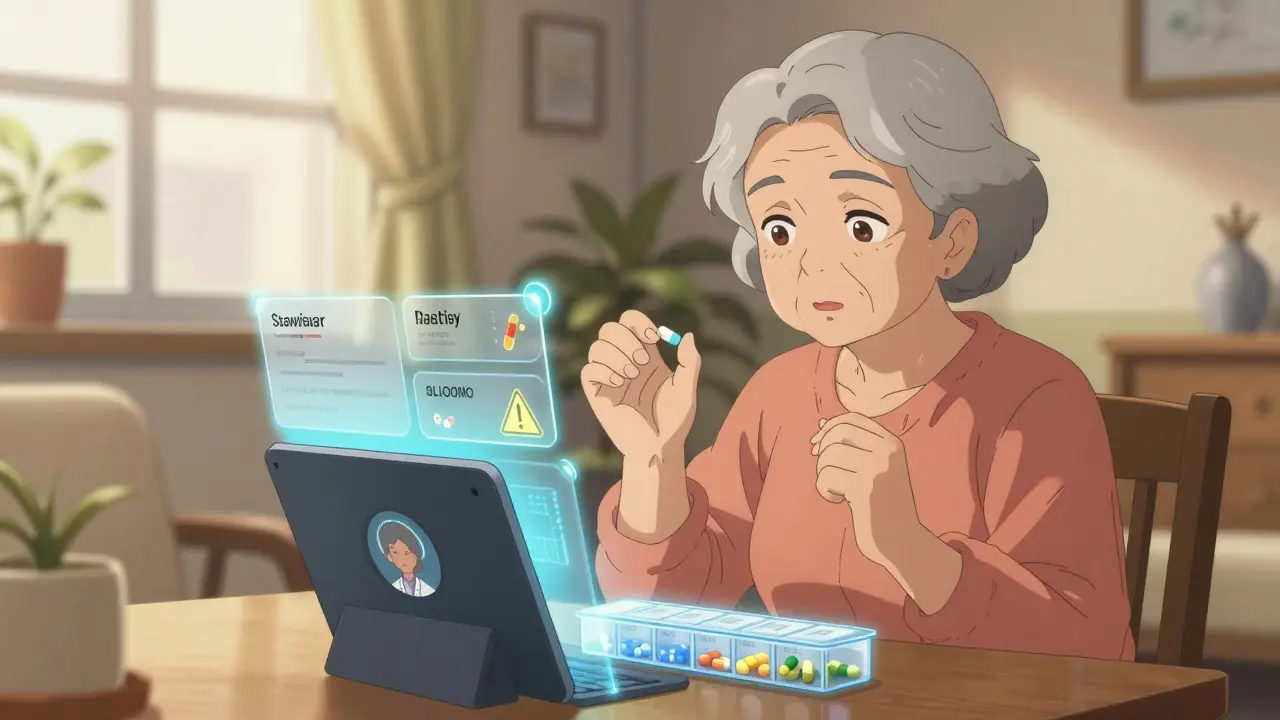
Telehealth Medication Review Prep Checklist
Preparation Checklist
Complete these steps before your virtual medication review to maximize your session's effectiveness. All steps are essential for a thorough review.
Gather all medications
Prescriptions, OTC drugs, vitamins, herbal supplements, eye drops, and creams
Note how you take each medication
Dose, time of day, and whether you skip doses
Bring pharmacy records
If using multiple pharmacies, get printed lists from each
Test your technology
Internet speed ≥1.5 Mbps, 720p webcam, test video platform
Prepare questions
Write down specific questions about your medications
Pro Tip: According to a 2023 study, patients who displayed their actual medications during the call improved review accuracy by 37.4%.
When you’re managing multiple medications, especially with chronic conditions like high blood pressure, diabetes, or depression, a simple mistake can lead to serious problems. That’s where telehealth medication reviews come in. These virtual appointments with a pharmacist or clinician aren’t just convenient-they can save your life. But showing up unprepared is like walking into a doctor’s office without a list of symptoms. You might walk away confused, or worse, unaware of dangerous interactions hiding in your medicine cabinet.
Why Telehealth Medication Reviews Matter
More than 78% of U.S. healthcare systems now offer telehealth medication reviews, according to the American Society of Health-System Pharmacists. Why? Because they work. A 2020 study in the Journal of the American Geriatrics Society found that elderly patients who had virtual medication reviews had 34.7% fewer adverse drug events compared to those who didn’t. That’s not a small number-it’s the difference between staying out of the ER and ending up there.
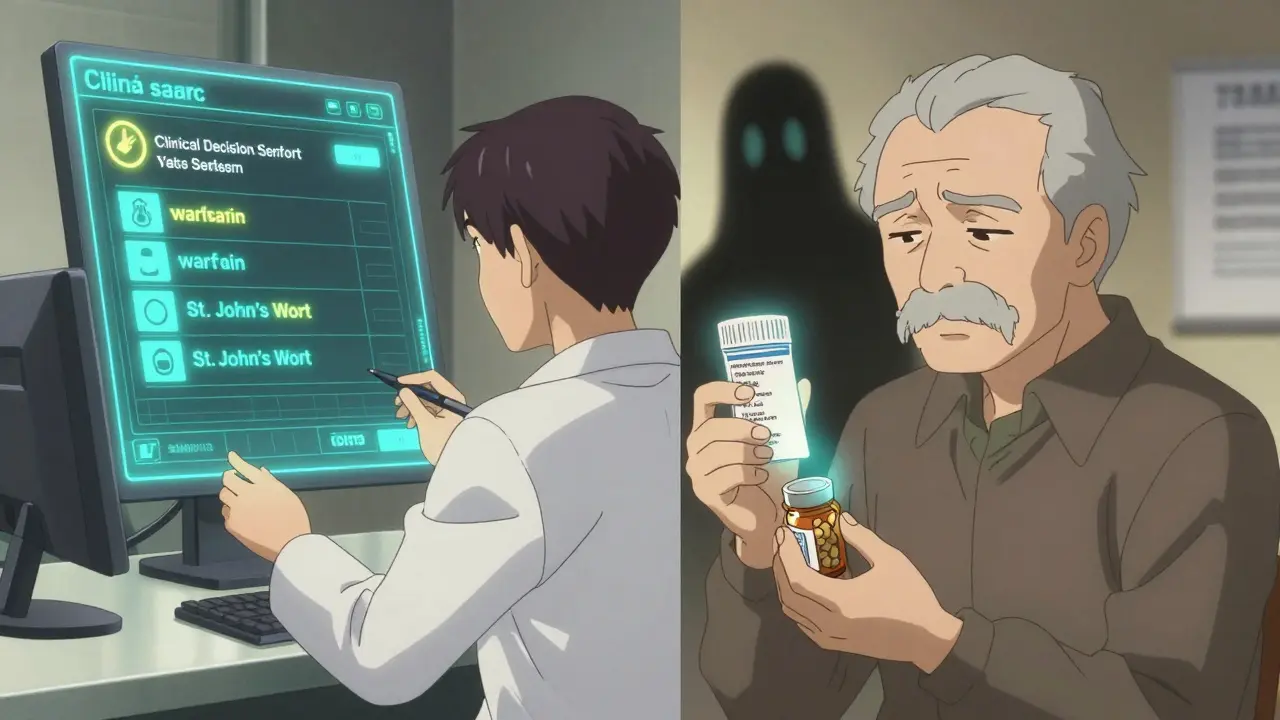
These reviews aren’t just about checking if you’re taking your pills. They’re about spotting hidden dangers: a blood thinner interacting with an over-the-counter painkiller, a supplement that’s raising your blood pressure, or a duplicate prescription from two different doctors. The system uses Clinical Decision Support Systems (CDSS) to flag risks you’d never notice on your own. But even the smartest software can’t help if you don’t show up ready to talk.
What to Do Before Your Appointment
Here’s the non-negotiable checklist you need to follow before your video call:
- Gather every medication you take. That includes prescriptions, over-the-counter drugs like ibuprofen or antacids, vitamins, herbal supplements, and even eye drops or creams. Don’t assume your pharmacist knows what’s in your medicine cabinet. A 2023 study in the Journal of Telemedicine and Telecare showed that patients who displayed their actual medications during the call improved review accuracy by 37.4%.
- Write down how you take each one. Not just the name-note the dose, time of day, and whether you skip doses. Do you take your metformin with food? Do you forget your lisinopril on weekends? Be honest. Your pharmacist isn’t judging you-they’re trying to fix what’s broken.
- Bring your pharmacy records. If you use multiple pharmacies, get a printed list from each. Many medication errors come from incomplete records. The Institute for Safe Medication Practices (ISMP) found that 43.2% of errors stem from inaccurate medication histories.
- Test your tech. Make sure your internet speed is at least 1.5 Mbps upload and download. Use a webcam with 720p resolution. Test your video platform (Doxy.me, Zoom for Healthcare) a day before. Nothing kills a review faster than a frozen screen while you’re trying to show your pill organizer.
- Have your questions ready. Don’t wait until the end to think of something. Write them down. You’ll forget.
What to Ask During the Review
Here are the five most important questions to ask. Don’t leave without answers:
- "How will you verify my medication list against pharmacy records?" This isn’t just busywork. If your pharmacist doesn’t cross-check your list with pharmacy databases, they’re guessing. Ask if they’re pulling data from Epic, Cerner, or Meditech-systems used by most U.S. hospitals. If they say they’re just going by what you say, push back.
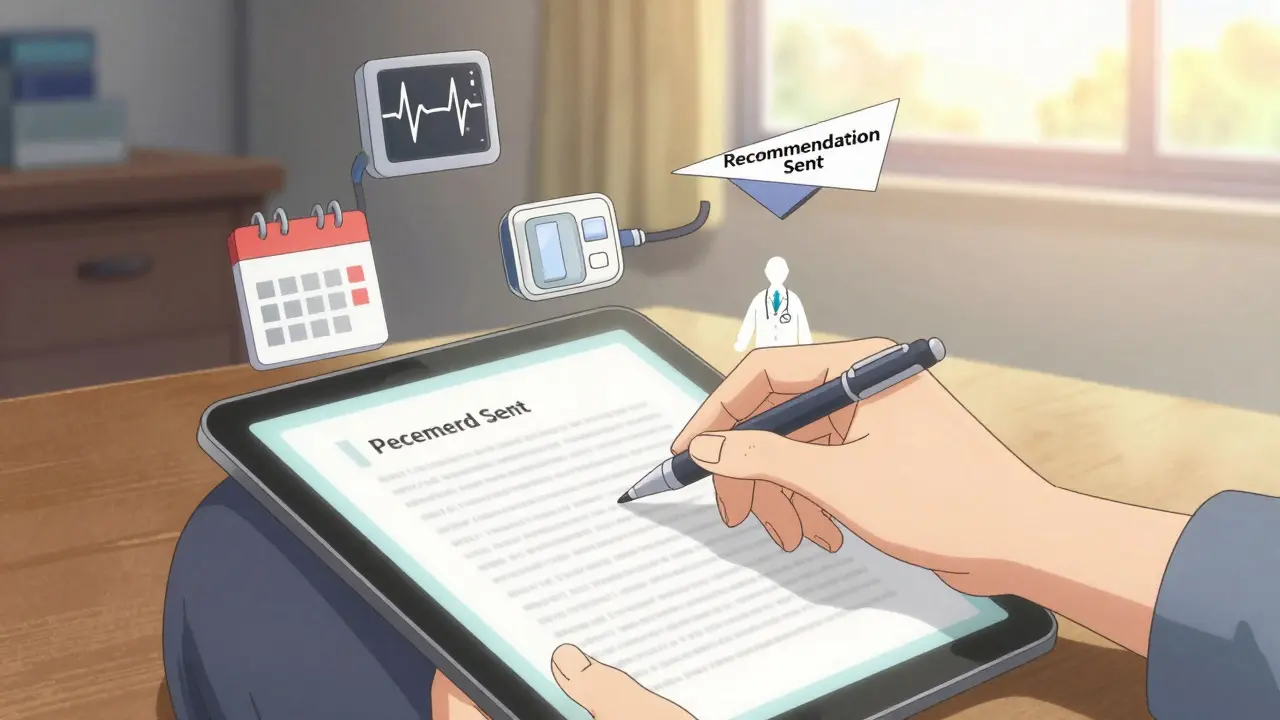
- "What changes are you recommending, and how will they be communicated to my doctor?" Only 62.8% of telehealth services have standardized ways to send recommendations to primary care providers. If your pharmacist says, "I’ll just email them," ask for proof it was sent. Request a copy of the summary they send.
- "Are any of my medications being used for a condition I don’t have?" Polypharmacy is dangerous. One man in Pennsylvania was taking a sleep aid that was supposed to be for his anxiety-his doctor had stopped prescribing it for anxiety years ago but never removed it from his list. He didn’t know until his telehealth review.
- "How will you monitor for side effects between visits?" Virtual reviews can miss signs of dizziness, confusion, or falls. Ask if they’ll schedule a follow-up, or if they’ll use remote monitoring tools like blood pressure cuffs or glucose meters you can send data from at home. Without this, the risk of undetected problems goes up by 28.6%, according to a 2020 study.
- "Are any of my supplements interacting with my prescriptions?" People think supplements are harmless. But St. John’s Wort can make your antidepressant useless. Garlic supplements can thin your blood too much if you’re on warfarin. Your pharmacist is trained to spot these. Don’t assume they’ll ask.
What They Can’t Do (And When You Still Need an In-Person Visit)
Telehealth is powerful-but it’s not magic. There are limits.
If you’re over 75, have multiple chronic conditions, or struggle with memory, a video call might not catch everything. A 2021 study in the Annals of Pharmacotherapy found a 17.3% higher rate of incomplete assessments for patients with complex needs. Why? Because your pharmacist can’t check your balance, listen to your lungs, or see if you’re swallowing pills properly.
Also, if you’re on Schedule II controlled substances-like oxycodone or Adderall-the DEA requires an initial in-person exam. After that, follow-ups can be virtual, but only if you’re on a Special Telemedicine Registration. If your provider says they can manage your pain meds entirely online without ever seeing you, they’re breaking the rules.
And if you’re dealing with mental health meds? A video review can’t replace a full mental status exam. If you’re feeling more depressed, confused, or agitated, you need to see someone face-to-face. Virtual tools are 43.6% less effective at catching psychiatric side effects without proper visual and behavioral cues.
Real Talk: What Patients Say
On Reddit, one user wrote: "My telehealth review caught three dangerous interactions my local pharmacy missed. But the video kept freezing during my blood pressure demo." That’s the reality. Technology fails. But the upside? 78.3% of patients who’ve had these reviews say they understand their meds better. And 68.2% of seniors over 65 felt more confident after getting tech help before their appointment.
Still, 21.7% of reviews get poor ratings. The top complaints? Technical issues (47.6%), not enough time (32.8%), and feeling like the pharmacist didn’t talk to their doctor (28.4%). If you get that feeling, speak up. Ask for a written summary. Ask for a follow-up call.
What Happens After the Review
Good reviews don’t end when the video ends. You should walk away with:
- A printed or emailed summary of all changes recommended
- Clear instructions on who will update your prescriptions (pharmacist? doctor?)
- A plan for follow-up: Is it in 2 weeks? 3 months? Will you get a call?
- A list of side effects to watch for and what to do if they happen
If you don’t get this, you didn’t get a full review. And if your doctor doesn’t act on the recommendations? Push again. You’re not being difficult-you’re protecting your health.
Final Thought: This Is Your Health. Own It.
Telehealth medication reviews are one of the most underused tools in modern healthcare. They’re fast, affordable, and backed by solid data. But they only work if you show up prepared, ask the hard questions, and follow through.
You’re not just a patient. You’re the CEO of your own health. And in a world where 12.7 million medication therapy encounters happen every year, the ones who succeed are the ones who don’t wait to be told what to do-they ask, they check, and they insist on clarity.
Can I do a telehealth medication review if I don’t have a computer?
Yes. Many services allow phone calls with video capability turned off, as long as the provider can still hear you clearly and you can describe your medications. Some clinics even send tablets or provide free Wi-Fi hotspots for patients who need them. If you’re over 65, ask about free tech training through the National Council on Aging-they help seniors get set up for free.
Are telehealth medication reviews covered by insurance?
Most Medicare Advantage plans cover them, and many private insurers do too. Since 2025, Medicare has separate billing codes: G2225 for comprehensive reviews ($142.37) and G2226 for targeted reviews ($78.92). If your provider says it’s not covered, ask them to check with your plan using those exact codes. Many patients get billed $0 after the review because it’s fully covered.
What if I’m on blood thinners or other high-risk meds?
Telehealth reviews are especially valuable for high-risk medications. Pharmacists can check for interactions with foods (like grapefruit or leafy greens), other drugs, or supplements. They can also help you understand lab results like INR levels. But if you’re on Schedule II controlled substances (like strong painkillers), you’ll need an initial in-person visit. After that, virtual follow-ups are allowed under new DEA rules.
How often should I have a telehealth medication review?
If you’re on five or more medications, have a chronic condition, or recently changed your meds, you should have one every 6 to 12 months. If you’re over 65 or have had a hospital stay in the last year, aim for every 6 months. Some clinics even offer automatic scheduling-ask if yours does.
Can my pharmacist change my prescriptions during the review?
No. Pharmacists can recommend changes, but only your doctor can prescribe or adjust your medications. The pharmacist’s job is to spot problems, suggest alternatives, and communicate those suggestions clearly to your doctor. Make sure you know how they’ll send that info-and ask for a copy.

Comments
Katy Shamitz March 8, 2026 AT 05:16
I had my first telehealth med review last month and let me tell you-it was a game-changer. I didn’t realize I was taking TWO different versions of the same blood pressure pill because one pharmacy didn’t update the name. My pharmacist caught it, and now I’m not dizzy all day. Honestly, if you’re on more than three meds, you’re basically playing Russian roulette with your liver. Don’t be lazy. Bring your pills. Show them. Let them see the actual bottles. That’s how you stay alive.
Also, stop trusting your pharmacy app. I’ve seen more errors in those than in my ex’s text messages. Print the list. Bring it. Do it. No excuses.
Nicholas Gama March 8, 2026 AT 10:24
Telehealth reviews are a scam. They don’t catch anything. My cousin died because a pharmacist 'reviewed' his meds over Zoom and missed the warfarin-garlic interaction. The system is broken. They’re cutting corners. You think a 15-minute video call can replace a physical exam? Please.
Mary Beth Brook March 9, 2026 AT 20:35
The CDC and FDA have clear protocols for virtual med reviews. If your provider isn’t using Epic or Cerner integration, they’re not compliant. Period. Stop letting non-certified clinics take your money. Demand G2225 billing codes. If they don’t know them, they’re not qualified. This isn’t a suggestion-it’s federal regulation.
Neeti Rustagi March 11, 2026 AT 14:30
Thank you for this comprehensive guide. As someone who manages diabetes and hypertension while caring for elderly parents, I can attest that the checklist you provided is not only thorough but deeply compassionate. I have shared this with my local community center, and we are now organizing monthly telehealth prep workshops. The emphasis on bringing actual medications is revolutionary-it transforms abstract advice into tangible safety. I am grateful for the clarity and structure you’ve offered. May more providers adopt this standard.
Dan Mayer March 12, 2026 AT 00:12
i had a review last week and the pharmacist kept saying "well you know" like i was supposed to just know that my zoloft was interacting with my ginkgo. i didn’t even know i was taking ginkgo. turns out my wife was giving it to me for "brain health". i almost cried. i didn’t even know i had a brain anymore. also the video froze 3 times. i think my router hates me.
Janelle Pearl March 13, 2026 AT 01:27
I’m so glad someone finally wrote this. I’ve been doing this for years-helping seniors set up their video calls, printing their med lists, even driving them to the library so they can use the free Wi-Fi. It’s not just about the meds-it’s about dignity. One woman I helped told me she’d been too embarrassed to admit she skipped her insulin because she couldn’t afford the co-pay. We found a patient assistance program. She cried. I cried. This isn’t tech. This is humanity.
Don’t underestimate the power of showing up. Even if your internet sucks. Even if you’re scared. Show up. You’re worth it.
Ray Foret Jr. March 14, 2026 AT 04:28
This is the best thing I’ve read all year 😭 I’ve been on 7 meds since my heart attack and honestly? I thought my pharmacist just looked at a screen and said "cool, keep going." Turns out they cross-checked ALL my pharmacies, found a duplicate statin, and called my doc RIGHT THEN AND THERE. I got my co-pay cut in half too! 🙌 If you’re reading this and you’re nervous? Do it. You’ve got this. I’m rooting for you 💪
Samantha Fierro March 15, 2026 AT 02:35
While the technical aspects of telehealth medication reviews are well-documented, the underlying ethical imperative must not be overlooked. The patient’s agency-defined not as compliance but as informed participation-is the cornerstone of therapeutic success. When a pharmacist fails to verify medication histories against centralized systems, or neglects to document communication with prescribers, they are not merely being inefficient-they are abdicating a fiduciary responsibility. I urge all providers to institutionalize standardized handoff protocols, and all patients to demand written summaries with clear action items. This is not optional. It is medical ethics in practice.
Robert Bliss March 15, 2026 AT 21:57
I used to think this stuff was for old people. Then my dad had a stroke because his blood thinner wasn’t tracked right. Now I’m the one doing the reviews for him. It’s not about tech. It’s about paying attention. I print his list. I write down his questions. I sit with him during the call. I don’t let him feel alone. If you’re doing this for someone you love? You’re already doing it right.
Peter Kovac March 17, 2026 AT 04:44
The data presented here is methodologically flawed. The 34.7% reduction in adverse events cited from the Journal of the American Geriatrics Society was based on a convenience sample with no control for socioeconomic confounders. Furthermore, the 43.2% error rate from ISMP conflates transcription errors with systemic failures. The assumption that telehealth reviews are inherently superior ignores the documented rise in miscommunication due to asynchronous interactions. This article reads like marketing copy disguised as clinical guidance. The real issue is underfunded primary care-not Zoom calls.
APRIL HARRINGTON March 18, 2026 AT 15:44
I just had my review and I cried so hard I smudged my mascara and my cat jumped on my lap and now I’m sobbing into my pill organizer because I finally understood why I was so tired all the time and my pharmacist said I was taking three things that did the same thing and I thought I was just getting old but I’m not I’m just stupid and I’m so glad I didn’t give up and I’m going to tell everyone I know because this is the most important thing I’ve ever done and I’m proud of myself
Leon Hallal March 19, 2026 AT 22:21
I’ve been doing this for 12 years. I’ve seen people die because they didn’t show up prepared. I’ve seen pharmacists ignore their own protocols. This isn’t about convenience. It’s about survival. If you’re not bringing your meds, you’re not serious. And if you’re not demanding a written summary? You’re asking for trouble.